
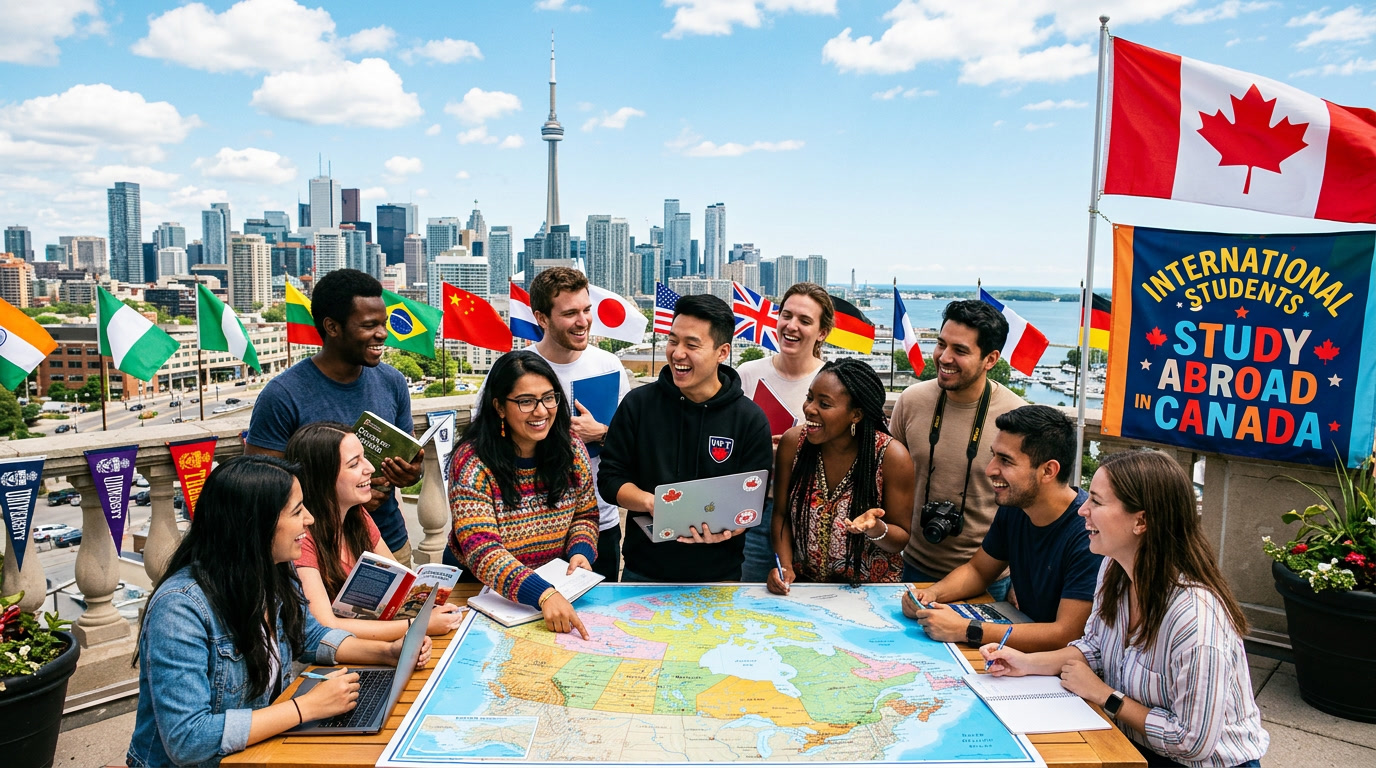
Okay, so maybe you’ve been tossing around the idea of going somewhere different for school. And honestly? Studying abroad in Canada wasn’t even on my radar at first—until I actually looked into it.
Montreal’s got this energy. Cobblestone, cafés, people switching between English and French mid-sentence. Vancouver? Totally different vibe. Mountains right there. Ocean. You can hit the slopes and still make it to class. It’s kinda wild.
For Americans, the flight from California’s under five hours. That’s… nothing. I’ve had longer layovers. And the whole French immersion thing—if you’re into that, Quebec’s basically a shortcut to fluency without the transatlantic ticket.
Anyway, this guide covers the real stuff: why it makes sense, what to do first, and how to actually pull it off. No fluff.
Why Studying Abroad in Canada is Your Smartest Move
Here’s the thing—you don’t have to choose between a good degree and not going broke. Or between feeling safe and actually having options. Study abroad in Canada and you get both. Weird, right? But it’s true.
Solid schools. Supportive communities. And yeah, the cost thing is real—tuition tends to run lower than a lot of other places where they teach in English. Let me break down why this actually works.
World-Class Education in a Global Hub
A Canadian degree—employers know it. The system’s got a reputation for high standards, and the teaching methods skew pretty innovative.
Over 100 universities to pick from. Six land in the global top 150. So you’re not settling for some random credential—you’re getting something that travels.
Programs? All over the map. Tech, environmental science, arts, whatever. You’ll find something that fits.
Affordable Tuition Compared to Other English-Speaking Countries
This is where it gets good. Tuition’s generally lower than in a lot of other English-speaking destinations. Same quality, less drain on your savings.
On-campus housing tends to be manageable. Cost of living overall? Same deal. You can actually focus on the experience instead of stressing about every dollar.
Safe, Welcoming Communities with Incredible Diversity
Feeling safe matters. Especially when you’re far from home. Canada’s known for being friendly—and the crime rates are low. Like, really low.
It’s a cultural mosaic up there. French, Scandinavian, Indigenous influences—every province’s got its own mix. Cities feel inclusive. You won’t stick out.
That environment lets you actually concentrate. On studying. On growing. You’re not constantly looking over your shoulder.
Unpacking the Top Benefits for U.S. Students
If you’re American, the border thing changes everything. You get a world-class education without half the usual international headaches.
Proximity to Home with Flights Under Five Hours from California
LA to Vancouver? San Francisco to Toronto? Under five hours. Your international experience is basically a long domestic flight.
Weekend visits home. Holiday returns. All doable. And way cheaper than flying to Europe or Asia.
You save on travel. Stay connected to your people. Less stress. It’s a big deal.
No Visa Required for Programs Under Six Months
Short programs? Under six months? You usually don’t need a student visa.
U.S. citizen? Valid visitor status works. eTA or passport—often that’s it. No permit circus.
One less thing to worry about. You can focus on your study plans instead of paperwork.
Opportunity to Work Part-Time While You Study
Money’s a real concern when you’re a student. So here’s the good part: you can work up to 20 hours a week during the academic year.
Comes with your study permit for longer programs. No separate work permit. Helps with rent, food, life.
You also get local experience. Real jobs. Real resume. But stick to the 20-hour limit. Go over and you risk your status. Seriously.
So—easy travel, simple entry for short courses, and you can earn. That combo turns a global education from “maybe someday” into “okay, I can actually do this.”
Choosing Your Canadian Adventure: Programs and Destinations
Two big choices: what you study, and where you live. Your home for the next few years.
Big cities. Small towns. Each place has its own student life and programs. This decision shapes everything.
Vibrant Urban Centers: Toronto, Vancouver, and Montreal
Toronto = finance, media, arts. Fast. Campus life plugs you straight into industries.
Vancouver? Urban + nature. Tech careers with mountains and ocean as your backdrop. If you love the outdoors, this city is it.
Montreal feels European. Cobblestones. French everywhere. Top pick for international students who want a bilingual experience.
Growing Communities in the Prairies and Maritime Provinces
Don’t sleep in the smaller centers. Alberta, Nova Scotia—they’ve got solid universities and colleges.
Lower living costs. Smaller classes. Professors who actually know your name. Tight-knit. Different pace.
Rugged coastlines. Maple forests. Historic seaports. Your travel adventures here are different. Slower. Deeper.
Specialized Programs from Environmental Studies to French Immersion
BC leads on environmental and forestry sciences. Hands-on stuff. A world-class natural lab.
Quebec = French immersion central. Live there, feel like you’re in France. Fluency speeds up. That skill? Employable everywhere.
These study abroad programs are often unique to this country. Study here and your career stands out. Your education becomes an adventure.
Look beyond the obvious university names. Match your goals to the place. Your study Canada fit is out there.
Step 1: Research and Select a Designated Learning Institution (DLI)
Before you pack anything—you need an acceptance letter. From the right school. And that school has to be a Designated Learning Institution (DLI).
No acceptance = no study permit. Choosing your institution is step one. Everything else builds from there.
Understanding Canada’s Education System and University Rankings
The education system is diverse. Big universities, career colleges, specialized institutes. Every school that hosts international students has a DLI number. Check it.
Over 100 universities. Six in the global top 150. Rankings aren’t everything—but they signal quality. Employers notice.
Don’t stop at rankings though. The right fit depends on you.
Factors to Consider: Campus Life, Class Sizes, and Co-op Opportunities
What kind of student life do you want? Campus culture. Support. Clubs. Activities.
Class size matters. Big cities = big lecture halls. Smaller towns = smaller classes. More face time with professors.
Co-op and internship programs? Game-changer for your career. Real work experience in your field. Pipeline to jobs.
Urban vs. small town—weigh it. More networking in the city. More community in the small campus. Your call.
Do the homework. Official sources first. Then—and this helps—reach out to current students or alumni. Ask them what it’s really like.
Their take on the program and city? Invaluable. Helps you picture yourself there.
Get the DLI right. Your study abroad journey starts here.
Step 2: Meet the Admission Requirements and Apply
School picked. Now you assemble the application. Transcripts, tests, essays—the whole package.
This is where you prove you’ve got the grades and language skills. A strong application = that acceptance letter.
Academic Transcripts and Standardized Tests
Transcripts from every school you’ve attended. High school. College. All of it.
Not in English or French? Get certified translations. Many universities want a credential evaluation too—confirms your diploma matches Canadian standards.
GMAT or GRE for business and grad programs. Check your program’s requirements. They vary.
Start early. Months early. Transcripts and test scheduling take time. One missing doc can derail your whole study abroad plan.
English or French Language Proficiency Proof
Instruction’s in English or French. So you prove you can keep up. Non-negotiable for almost every student.
IELTS and TOEFL for English. Competitive programs often want IELTS 6.5+ or TOEFL iBT 90+.
Quebec or bilingual? TEF or TCF for French. Thresholds vary by university.
Plan your test date. Score reports take weeks to reach schools. A strong score helps your whole application.
Personal statement. Letter of intent. Connect your past to your goals at their institution.
Recommendation letters—from people who know your work ethic. They add weight.
Deadlines are strict. Fall year? Popular. Some programs cut off months early. Mark the dates. Don’t miss them.
Medicine, engineering—extra stuff. Portfolios. Interviews. Prerequisites. Research it all.
It’s doable. One document at a time. Checklist. Timeline. You’ve got this.
A complete application shows you’re serious. Organized. Ready. That’s the bridge to your career in a welcoming country.
Step 3: Secure Your Study Permit and Travel Documents
Paperwork time. You need the right authorization to make this official.
Any program over six months? You need this. Detailed, but straightforward if you follow the rules.
Thousands of students do it every year. You can too.
When and How to Apply for a Study Permit
Application opens when you have your acceptance. Pay the tuition deposit if they ask for it.
Documents: proof of acceptance from a DLI. Proof of financial support. Valid passport. Letter explaining your goals.
Submit through IRCC (Immigration, Refugees and Citizenship Canada). Processing time? Several weeks usually.
Apply as soon as you’re ready. Delays can mess with your start date.
Approved? Your permit lets you study legally. With conditions. Follow them.
Electronic Travel Authorization (eTA) and Visitor Visas
Study permit ≠ entry visa. Different things.
Your permit = permission to study in the country. eTA or visitor visa = permission to enter.
U.S. citizens—usually simple. Study permit approved? You often get an eTA automatically.
Valid five years. Lets you board flights to Canada.
From a country that requires a visa? You get a visitor visa. Stamped in your passport.
eTA/visa = entry. Study permit = your academic life. You need both.
Navigating the Application Process from the U.S.
Americans have it easier. Apply online from home. Some can even apply at the port of entry.
Stay informed about IRCC guidelines before you travel. Rules change.
Your study permit lists conditions. Full-time student. That’s mandatory.
You can work up to 20 hours per week during term. Built into your status. Use it.
Break the rules? Risk losing your permission to stay. Don’t.
Paperwork’s a hassle. But it’s the last formal step before you’re there. This unlocks your study abroad year.
Step 4: Plan Your Finances and Seek Scholarships
Funding doesn’t have to wreck you. It’s a puzzle. Solvable.
Budget. Hunt for free money. A solid plan = you focus on growing, not panicking.
Estimating Tuition Fees and Cost of Living
Tuition’s the big one. Good news: fees here run lower than many other English-speaking destinations for a comparable education.
Varies by province and program. Arts are usually cheaper than engineering or business.
City choice matters. Toronto and Vancouver cost more. Smaller cities in the Prairies or Maritimes? Cheaper.
Budget for groceries, transport, life. Research your specific spot.
On-Campus Housing and Affordable Accommodation Options
Residence = instant community. Right in the middle of student life.
On-campus housing fills fast. Apply early. Often competitively priced.
Utilities and internet are usually included. No commute. Worth it for year one.
Off-campus? Shared apartments, homestays. Popular options. Different cultural experiences.
Your university’s housing office can help. See the place—in person or through someone you trust—before signing anything.
Scholarships and Financial Aid for International Students
Free money exists. Go after it. Scholarships aren’t just for valedictorians.
Universities have merit and need-based awards. Private orgs. Government programs. Some target students from specific countries.
Start with your school’s financial aid office. Other scholarship resources too. Apply to everything you qualify for.
Treat it like a part-time job. Strong essays. Good recommendations. It pays off.
This also helps your study permit—you need proof of financial support. Scholarship letters count.
With some planning, funding your dream is doable. You’re building the foundation for a real career.
Step 5: Leverage Work Opportunities During and After Studies
More than classes—you can earn. The rules here are generous for international students.
Offsets costs. Build your resume. Real experience while you finish your degree.
Working Up to 20 Hours Per Week on a Study Permit
Your study permit lets you work up to 20 hours a week during term.
Breaks? Summer? Full-time. No separate work permit.
Helps with living costs. Gives you local experience.
Campus jobs—career center, library, cafeteria, admin. Lots of students do it.
Off-campus: retail, hospitality, tutoring. Popular options. Stay under 20 hours. Seriously.
Go over? You risk your status. This welcoming country has rules. Follow them.
Post-Graduation Work Permit (PGWP) for Career Launch
The Post-Graduation Work Permit (PGWP)—this is a good one. Stay. Work. After you finish your program.
Graduate from an eligible DLI. Your program length determines how long you get.
Eight months can qualify you. Two years or more? Up to three years of work authorization.
Apply within 180 days of your final grades. Strict timeframe. Don’t miss it.
PGWP = work for any employer, anywhere in Canada. Switch jobs. Explore industries.
Direct path to permanent residency for a lot of grads. This benefit sets your experience apart from other countries.
Factor it into your long-term plan. Your degree becomes a launchpad for an international career.
Step 6: Prepare for Life and Culture in Canada
Beyond visas and money—the best part. Actually living there. New way of life.
Your success ties to your daily experience. The place. The people. Your education extends beyond the classroom.
You’ll grow. That’s the point of your study abroad plan.
Embracing the Outdoors and Natural Wonders from Coast to Coast
Longest coastline in the world. Dozens of national parks. The landscape’s no joke.
Rocky mountains. Glacial lakes. Wilderness. Endless.
Join your university hiking club. Ski trips. Weekend travel to parks—standard student activity. In British Columbia, the outdoors are just… part of life.
Skiing in winter. Hike in summer. Fall colors. The rhythm of the year.
Cultural Integration and Unique Canadian Experiences
Tolerance. Diversity. Canadians are famously friendly. You’ll feel it.
Make local friends. Campus events. Talk to classmates. It speeds everything up.
Politeness. Collaboration. Valued in this country.
Winter carnivals. French-Canadian festivals. Poutine in Quebec. Maple syrup season. Try it all.
Toronto’s neighborhoods—each one’s different. Food. Traditions. The nation’s heart.
Get a good winter coat. You’ll need it.
Learn the healthcare system. Your university will guide international students.
This immersion changes you. Soft skills. Perspective. Your time here becomes more than a program—it’s a chapter that shapes your future.
Your Pathway to a Transformative Education in Canada
So that’s the route. Research → DLI → application → permit → finances → work → life.
World-class education. Safe. Diverse. Stunning. Top universities. Affordable. Canada ranks fourth globally for quality. The value’s there.
Pick your DLI. Secure your study permit. Plan the money. PGWP after graduation. That combo builds a career that travels.
Americans—you’re close to home. Visit easily. Still get a unique life chapter.
Start your application. Picture it—you, a few years from now, with the degree, the memories, the credential. It’s waiting. You just have to decide.