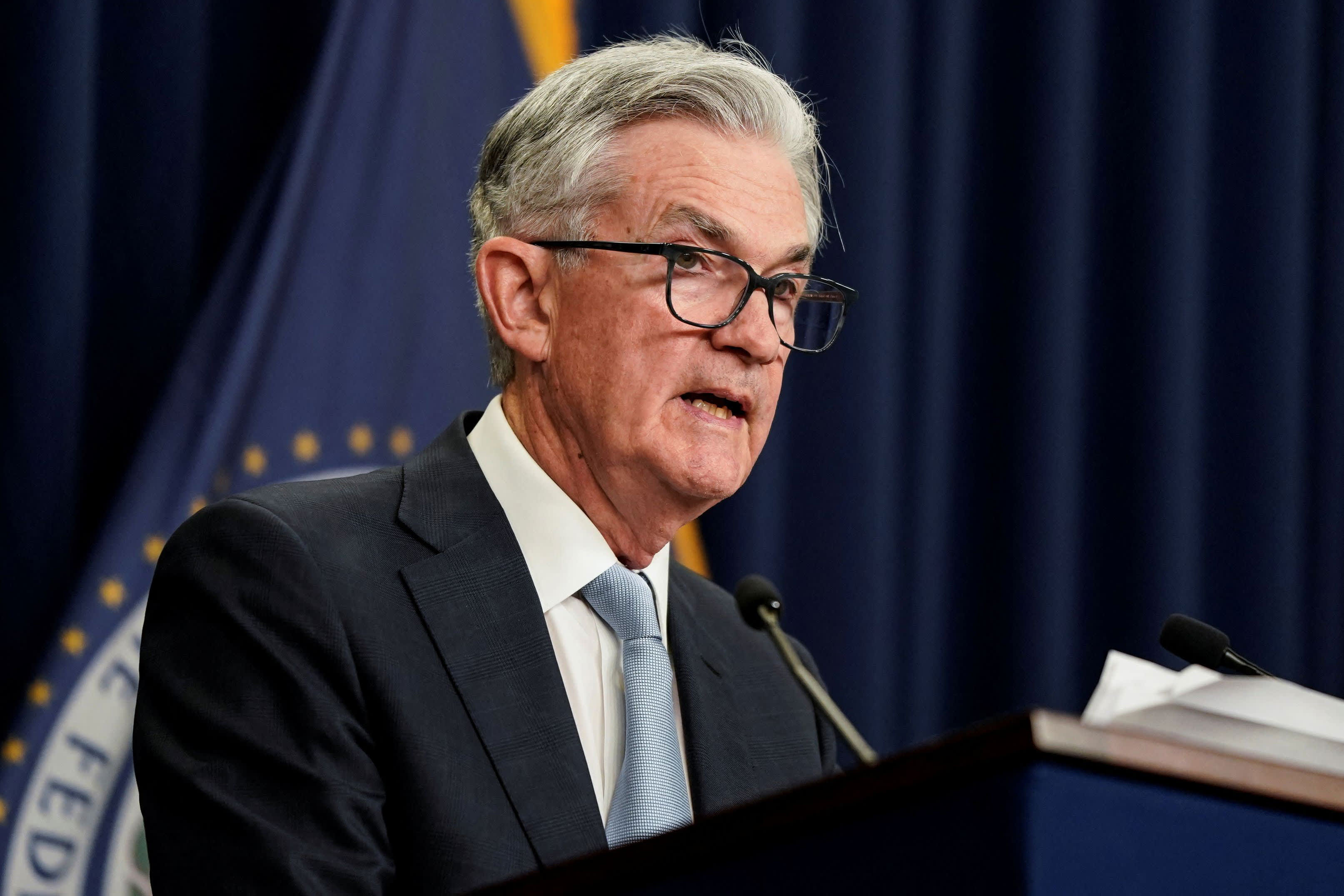
U.S. Treasury Secretary Janet Yellen testifies before a House Ways and Means Committee hearing on President Biden’s proposed 2023 U.S. budget, on Capitol Hill in Washington, June 8, 2022.
Jonathan Ernst | Reuters

The recession that many Americans fear is coming is not “at all imminent,” Treasury Secretary Janet Yellen said Sunday.

Talk of a recession has accelerated this year as inflation remains high and the Federal Reserve takes aggressive steps to counter it. On Wednesday, the Fed announced a 75 basis point interest rate hike, its largest since 1994. Fed Chair Jerome Powell also indicated the Federal Open Market Committee’s intent to continue its aggressive path of monetary policy tightening in order to rein in inflation.

At the same time, many expect the combination of resilience in consumer spending and job growth to keep the U.S. out of recession.

“I expect the economy to slow,” Yellen said in an interview with ABC’s “This Week.” “It’s been growing at a very rapid rate, as the economy, as the labor market, has recovered and we have reached full employment. It’s natural now that we expect a transition to steady and stable growth, but I don’t think a recession is at all inevitable.”

Although Yellen seemed optimistic about avoiding recession, the global economy is still facing serious threats in the coming months with the continued war in Ukraine, soaring inflation and the Covid-19 pandemic. “Clearly, inflation is unacceptably high,” Yellen said.

Still, she doesn’t believe a drop-off in consumer spending would be the cause of a recession. Yellen told ABC News that the U.S. labor market is the strongest of the post-war period and predicted that inflation would slow “in the months ahead.”

Read More

In this article

A woman pushes a shopping cart through the grocery aisle at Target in Annapolis, Maryland, on May 16, 2022, as Americans brace for summer sticker shock as inflation continues to grow.
Jim Watson | AFP | Getty Images

People still appear willing to shell out to travel, go to the movies and have a drink or two, even as surging prices and fears of a recession have them pulling back in other areas.

How people spend their money is shifting as the economy slows and inflation pushes prices higher everywhere including gas stations, grocery stores and luxury retail shops. The housing market, for example, is already feeling the pinch. Other industries have long been considered recession proof and may even be enjoying a bump as people start going out again after hunkering down during the pandemic.

Still, shoppers everywhere are feeling pressured. In May, an inflation metric that tracks prices on a wide range of goods and services jumped 8.6% from a year ago, the biggest jump since 1981. Consumers’ optimism about their finances and the overall economy sentiment fell to 50.2% in June, its lowest recorded level, according to the University of Michigan’s monthly index.

As gas and food prices climb, Brigette Engler, an artist based in New York City, said she’s driving to her second home upstate less often and cutting back on eating out.

“Twenty dollars seems extravagant at this point for lunch,” she said.

Here’s a look at how different sectors are faring in the slowing economy.

Movies, experiences holding up

Concerts, movies, travel and other experiences people missed during the height of the pandemic are among the industries enjoying strong demand.

Live Nation Entertainment, which owns concert venues and Ticketmaster, hasn’t seen people’s interest in attending concerts wane yet, CEO Joe Berchtold said at the William Blair Growth Stock Conference earlier this month.

In movie theaters, blockbusters like “Jurassic World: Dominion” and “Top Gun: Maverick” have also pulled in strong box office sales. The movie industry long been considered “recession proof,” since people who give up on pricier vacations or recurring Netflix subscriptions can often still afford movie tickets to escape for a few hours.

Alcohol is another category that’s generally protected from economic downturns, and people are going out to bars again after drinking more at home during the early days of the pandemic. Even as brewers, distillers and winemakers raise prices, companies are betting that people are willing to pay more for better-quality alcohol.

“Consumers continue to trade up, not down,” Molson Coors Beverage CEO Gavin Hattersley said on the company’s earnings call in early May. It might seem counterintuitive, but he said the trend is in line with recent economic downturns.

Alcohol sales have also been shielded in part because prices haven’t been rising as quickly as prices for other goods. In May, alcohol prices were up roughly 4% from a year ago, compared with the 8.6% jump for overall consumer price index.

Big airlines like Delta, American and United are also forecasting a return to profitability thanks to a surge in travel demand. Consumers have largely digested higher fares, helping airlines cover the soaring cost of fuel and other expenses, although domestic bookings have dipped in the last two months.

It isn’t clear whether the race back to the skies will continue after the spring and summer travel rushes. Business travel usually picks up in the fall, but airlines might not be able to count on that as some companies look for ways to curb expenses and even announce layoffs.

People’s desire to get out and socialize again is also boosting products like lipstick and high heels that were put away during the pandemic. That recently helped sales at retailers including Macy’s and Ulta Beauty, which last month boosted their full-year profit forecasts.

Luxury brands such as Chanel and Gucci are also proving to be more resilient, with wealthier Americans not as affected by climbing prices in recent months. Their challenges have been more concentrated in China of late, where pandemic restrictions persist.

But the fear is that this dynamic could change quickly, and these retailers’ short-term gains could evaporate. More than eight in 10 U.S consumers are planning to make changes to pull back on their spending in the next three to six months, according to a survey from NPD Group, a consumer research firm.

“There is a tug-of-war between the consumer’s desire to buy what they want and the need to make concessions based on the higher prices hitting their wallets,” said Marshal Cohen, chief retail industry advisor for NPD.

Homes, big-ticket items squeezed

The once red-hot housing market is among those clearly hurting from the slowdown.

Rising interest rates have dampened mortgage demand, which is now roughly half of what it was a year ago. Homebuilder sentiment has dropped to the lowest level in two years after falling for six consecutive months. Real estate firms Redfin and Compass both announced layoffs earlier this week.

“With May demand 17% below expectations, we don’t have enough work for our agents and support staff,” Redfin CEO Glenn Kelman wrote in an email to employees later posted on the company’s website.         

For the retail sector more broadly, data from the Commerce Department also showed a surprising 0.3% drop in overall in May from the previous month. That included declines at online retailers and miscellaneous store retailers such as florists and office suppliers.

And while demand for new and used cars remains strong, auto industry executives are starting to see signs of potential trouble. With the cost for new and used vehicles up by double digits over the last year, car and other motor vehicle dealers saw sales decline 4% decline in May from the previous month, according to the U.S. Department of Commerce.

Ford Motor CFO John Lawler said this week that delinquencies on car loans are starting to tick up too. Although the increase could signal tough times ahead, he said said it’s not yet a worry, since delinquencies had been low.

“It seems like we’re reverting back more towards the mean,” Lawler said at a Deutsche Bank conference.

The restaurant industry is also seeing signs of potential trouble, although how eateries are affected could vary.

Fast-food chains have also traditionally fared better in economic downturns since they’re more affordable and draw diners with promotional deals. Some restaurant companies are also betting people will keep dining out as long as grocery prices rise faster.

The cost of food away from home rose 7.4% over the 12 months ended in May, but prices for food at home climbed even faster, shooting up 11.9%, according to the Bureau of Labor Statistics. Restaurant Brands International CEO Jose Cil and Wendy’s CEO Todd Penegor are among the fast-food executives who have emphasized the gap as an advantage for the industry.

But McDonald’s CEO Chris Kempczinski said in early May that low-income consumers have started ordering cheaper items or shrinking the size of their orders. As the largest U.S. restaurant chain by sales, it’s often seen as a bellwether for the industry.

On top of that, traffic across the broader restaurant industry slowed to its lowest point of the year in the first week of June, according to market research firm Black Box Intelligence. That was after the number of visits also slowed in May, though sales ticked up 0.7% on higher spending per visit.

Barclays analyst Jeffrey Bernstein also said in a research note on Friday that restaurants are accelerating discounting, a sign that they’re expecting same-store sales growth to slow. Among the chains that have introduced new deals to draw diners are Domino’s Pizza, which is offering half-price pizzas, and Wendy’s, which brought back its $5 Biggie Bag meal.

Among those scrambling to adjust to a shift in shopper behavior are mass-merchant retailers like Target and Walmart, which issued cautious guidance for the year ahead.

Target warned investors earlier this month that its fiscal second-quarter profits would take a hit as it discounts people bought up during the pandemic but no longer want, such as small appliances and electronics. The big-box retailer is trying to make room on its shelves for the products in demand now: beauty products, household essentials and back-to-school supplies.

CEO Brian Cornell told CNBC that the company’s stores and website are still seeing strong traffic and “a very resilient customer” overall, despite the shift in their buying preferences. Rival Walmart has also been discounting less-desired items like apparel, although the retail giant said it’s been gaining share in grocery as shoppers look to save.

— Leslie Josephs, Lauren Thomas, Michael Wayland, John Rosevear, Sarah Whitten and Melissa Repko contributed reporting.

Read More

The exterior of the Marriner S. Eccles Federal Reserve Board Building is seen in Washington, D.C., June 14, 2022.
Sarah Silbiger | Reuters

After years of being a beacon for financial markets, the Federal Reserve suddenly finds itself second-guessed as it tries to navigate the economy through a wicked bout of inflation and away from ever-darkening recession clouds.

Complaints around the Fed have a familiar tone, with economists, market strategists and business leaders weighing in on what they feel is a series of policy mistakes.

Essentially, the complaints center on three themes for actions past, present and future: That the Fed didn’t act quickly enough to tame inflation, that it isn’t acting aggressively enough now even with a series of rate increases, and that it should have been better at seeing the current crisis coming.

“They should have known inflation was broadening and becoming more entrenched,” said Quincy Krosby, chief equity strategist at LPL Financial. “Why haven’t you seen this coming? This shouldn’t have been a shock. That, I think is a concern. I don’t know if it’s as stark a concern as ‘the emperor has no clothes.’ But it’s the man in the street vs. the PhDs.”

Consumers in fact had been expressing worries over price increases well before the Fed started raising rates. The Fed, however, stuck to its “transitory” script on inflation for months before finally enacting a meager quarter-point rate hike in March.

Then things accelerated suddenly earlier this week, when word leaked out that policymakers were getting more serious.

‘Just doesn’t add up’

The path to the three-quarter-point increase Wednesday was a peculiar one, particularly for a central bank that prides itself on clear communication.

After officials for weeks had insisted that hiking 75 basis points was not on the table, a Wall Street Journal report Monday afternoon, with little sourcing, said that it was likely more aggressive action was coming than the planned 50-basis-point move. The report was followed with similar accounts from CNBC and other outlets. (A basis point is one-one hundredth of 1 percentage point.)

Ostensibly, the move came about following a consumer sentiment survey Friday showing that expectations were ramping up for longer-run inflation. That followed a report that the consumer price index in May gained 8.6% over the past year, higher than Wall Street expectations.

Addressing the notion that the Fed should have been more prescient about inflation, Krosby said it’s hard to believe the data points could have caught the central bankers so off guard.

“You come to something that just doesn’t add up, that they didn’t see this before the blackout,” she said, referring to the period before Federal Open Market Committee meetings when members are prohibited from addressing the public.

“You could applaud them for moving quickly, not waiting six weeks [until the next meeting]. But then you go back to, if it was that dire that you couldn’t wait six weeks, how is it that you didn’t see it before Friday?” Krosby added. “That’s the market’s assessment at this point.”

Fed Chair Jerome Powell did himself no favors at Wednesday’s news conference when he insisted that there is “no sign of a broader slowdown that I can see in the economy.”

On Friday, a New York Fed economic model in fact pointed to elevated inflation of 3.8% in 2022 and negative GDP growth in both 2022 and 2023, respectively at minus-0.6% and minus-0.5%.

The market did not look kindly on the Fed’s actions, with the Dow Jones Industrial Average losing 4.8% for the week to fall below 30,000 for the first time since January 2021 and wiping out all the gains achieved since President Joe Biden took office.

Why the market moves in a particular way in a particular week is generally anybody’s guess. But at least some of the damage seems to have come from impatience with the Fed.

The need to be bold

Though the 75 basis point move was the biggest one-meeting increase since 1994, there’s a feeling among investors and business leaders that the approach still smacks of incrementalism.

After all, bond markets already have priced in hundreds of basis points of Fed tightening, with the 2-year yield rising about 2.4 percentage points to around its highest level since 2007. The fed funds rate, by contrast, is still only in a range between 1.5% and 1.75%, well behind even the six-month Treasury bill.

So why not just go big?

“The Fed is going to have to raise rates much higher than they are now,” said Lewis Black, CEO of Almonty Industries, a Toronto-based global miner of tungsten, a heavy metal used in a multitude of products. “They’re going to have to start getting up into the high single digits to nip this in the bud, because if they don’t, if this gets hold, really gets hold, it’s going to be very problematic, especially for those with the least.”

Black sees inflation’s impact up close, beyond what it will cost his business for capital.

He expects the workers in his mines, based largely in Spain, Portugal and South Korea, to start demanding more money. That’s because many of them took advantage of easily accessed mortgages in Europe and now will have higher housing costs as well as sharp increases in the daily cost of living.

In retrospect, Black thinks the Fed should have started hiking last summer. But he sees pointing fingers as useless at this point.

“Ultimately, we should stop looking for who is to blame. There was no choice. This was the best strategy they thought they had to deal with Covid,” he said. “They know what has to be done. I don’t think you can possibly say with the amount of money in circulation that they can just say, ‘let’s raise 75 basis points and see what happens.’ That’s not going to be sufficient, that’s not going to slow it down. What you need now is to avoid recession.”

What happens now

Powell has repeatedly said he thinks the Fed can manage its way through the minefield, notably quipping in May that he thinks the economy can have a “soft or softish” landing.

But with GDP teetering on a second consecutive quarter of negative growth, the market is having its doubts, and there’s some feeling the Fed should just acknowledge the painful path ahead.

“Since we’re already in recession, the Fed might as well go for broke and give up on the soft landing. I think that’s what investors are expecting now for the short term,” said Mitchell Goldberg, president of ClientFirst Strategy.

“We could argue that the Fed went too far. We could argue that too much money was handed out. It is what it is, and now we have to correct it. We have to look forward now,” he added. “The Fed is way behind the inflation curve. They have to move quickly and they have to move aggressively, and that’s what they’re doing.”

While the S&P 500 and Nasdaq are in bear markets — down more than 20% from their last highs — Goldberg said investors shouldn’t despair too much.

He said the current market run will end, and investors who keep their heads and stick to their longer-term goals will recover.

“People just had this sense of invincibility, that the Fed would come to the rescue,” Goldberg said. “Every new bear market and recession seems like the worst one ever in history and that things will never be good again. Then we climb out of each one with a new set of stock market winners and a new set of winning sectors in the economy. It always happens.”

Read More

Federal Reserve Board Chairman Jerome Powell speaks to reporters after the Federal Reserve raised its target interest rate by three-quarters of a percentage point to stem a disruptive surge in inflation, during a news conference following a two-day meeting of the Federal Open Market Committee (FOMC) in Washington, U.S., June 15, 2022.
Elizabeth Frantz | Reuters

Federal Reserve Chairman Jerome Powell reiterated the central bank’s commitment to bringing down inflation, saying Friday it’s essential for the global financial system.

“The Federal Reserve’s strong commitment to our price stability mandate contributes to the widespread confidence in the dollar as a store of value. To that end, my colleagues and I are acutely focused on returning inflation to our 2 percent objective,” Powell said in introductory remarks for a Fed-sponsored conference on the global role of the U.S. currency.

Those comments come two days after the Federal Open Market Committee voted to raise the benchmark interest rate by three-quarters of a percentage point to a targeted range of 1.5%-1.75%. Banks use the rate to set borrowing costs for short-term loans they provide to each other, but it also feeds through to a multitude of consumer products like credit cards, home equity loans and auto financing.

Inflation has been soaring over the past year, with the consumer price index in May posting an 8.6% increase over the past year.

Fed officials target 2% inflation as healthy for a growing economy and have said they will continue raising rates until prices return to that range.

While inflation hurts consumers through the prices they pay at the grocery store and gas pump as well as a multitude of other activities, Powell’s Friday remarks focused on its global financial importance.

“Meeting our dual mandate also depends on maintaining financial stability,” Powell said. “The Fed’s commitment to both our dual mandate and financial stability encourages the international community to hold and use dollars.”

In a addition to price stability, the Fed is charged with maintaining full employment.

Powell cited the importance of the dollar in global financing, noting in particular the significance of vehicles such as the one the Fed put in place during the Covid pandemic that loaned greenbacks to global central banks in need of liquidity.

He also noted coming changes to the global financial system, including the use of digital currencies and payments systems like FedNow, a service expected to come online in 2023.

A digital currency, as has been discussed by Fed officials, could help support the dollar as the world’s reserve currency, he said.

“Looking forward, rapid changes are taking place in the global monetary system that may affect the international role of the dollar in the future,” Powell added.

Read More

The Federal Reserve on Wednesday launched its biggest broadside yet against inflation, raising benchmark interest rates three-quarters of a percentage point in a move that equates to the most aggressive hike since 1994.

Ending weeks of speculation, the rate-setting Federal Open Market Committee took the level of its benchmark funds rate to a range of 1.5%-1.75%, the highest since just before the Covid pandemic began in March 2020.

Stocks were volatile after the decision but turned higher as Fed Chairman Jerome Powell spoke in his post-meeting news conference.

“Clearly, today’s 75 basis point increase is an unusually large one, and I do not expect moves of this size to be common,” Powell said. He added, though, that he expects the July meeting to see an increase of 50 or 75 basis points. He said decisions will be made “meeting by meeting” and the Fed will “continue to communicate our intentions as clearly as we can.”

“We want to see progress. Inflation can’t go down until it flattens out,” Powell said. “If we don’t see progress … that could cause us to react. Soon enough, we will be seeing some progress.”

FOMC members indicated a much stronger path of rate increases ahead to arrest inflation moving at its fastest pace going back to December 1981, according to one commonly cited measure.

The Fed’s benchmark rate will end the year at 3.4%, according to the midpoint of the target range of individual members’ expectations. That reflects an upward revision of 1.5 percentage points from the March estimate. The committee then sees the rate rising to 3.8% in 2023, a full percentage point higher than what was expected in March.

2022 growth outlook cut

Officials also significantly cut their outlook for 2022 economic growth, now anticipating just a 1.7% gain in GDP, down from 2.8% from March.

The inflation projection as gauged by personal consumption expenditures also rose to 5.2% this year from 4.3%, though core inflation, which excludes rapidly rising food and energy costs, is indicated at 4.3%, up just 0.2 percentage point from the previous projection. Core PCE inflation ran at 4.9% in April, so the projections Wednesday anticipate an easing of price pressures in coming months.

The committee’s statement painted a largely optimistic picture of the economy even with higher inflation.

“Overall economic activity appears to have picked up after edging down in the first quarter,” the statement said. “Job gains have been robust in recent months, and the unemployment rate has remained low. Inflation remains elevated, reflecting supply and demand imbalances related to the pandemic, higher energy prices, and broader price pressures.”

Indeed, the estimates as expressed through the committee’s summary of economic projections see inflation moving sharply lower in 2023, down to 2.6% headline and 2.7% core, expectations little changed from March.

Longer term, the committee’s outlook for policy largely matches market projections which see a series of increases ahead that would take the funds rate to about 3.8%, its highest level since late 2007.

The statement was approved by all FOMC members except for Kansas City Fed President Esther George, who preferred a smaller half-point increase.

Banks use the rate as a benchmark for what they charge each other for short-term borrowing. However, it feeds directly through to a multitude of consumer debt products, such as adjustable-rate mortgages, credit cards and auto loans.

The funds rate also can drive rates on savings accounts and CDs higher, though the feed-through on that generally takes longer.

‘Strongly committed’ to 2% inflation goal

The Fed’s move comes with inflation running at its fastest pace in more than 40 years. Central bank officials use the funds rate to try to slow down the economy – in this case to tamp down demand so that supply can catch up.

However, the post-meeting statement removed a long-used phrase indicating that the FOMC “expects inflation to return to its 2 percent objective and the labor market to remain strong.” The statement only noted that the Fed “is strongly committed” to the goal.

The policy tightening is happening with economic growth already tailing off while prices still rise, a condition known as stagflation.

First-quarter growth declined at a 1.5% annualized pace, and an updated estimate Wednesday from the Atlanta Fed, through its GDPNow tracker, put the second quarter as flat. Two consecutive quarters of negative growth is a widely used rule of thumb to delineate a recession.

Fed officials engaged in a public bout of hand-wringing heading into Wednesday’s decision.

For weeks, policymakers had been insisting that half-point – or 50 basis point – increases could help arrest inflation. In recent days, though, CNBC and other media outlets reported that conditions were ripe for the Fed to go beyond that. The changed approach came even though Powell in May had insisted that hiking by 75 basis points was not being considered.

However, a recent series of alarming signals triggered the more aggressive action.

Inflation as measured by the consumer price index rose 8.6% on a yearly basis in May. The University of Michigan consumer sentiment survey hit an all-time low that included sharply higher inflation expectations. Also, retail sales numbers released Wednesday confirmed that the all-important consumer is weakening, with sales dropping 0.3% for a month in which inflation rose 1%.

The jobs market has been a point of strength for the economy, though May’s 390,000 gain was the lowest since April 2021. Average hourly earnings have been rising in nominal terms, but when adjusted for inflation have fallen 3% over the past year.

The committee projections released Wednesday see the unemployment rate, currently at 3.6%, moving up to 4.1% by 2024.

All of those factors have combined to complicate Powell’s hopes for a “soft or softish” landing that he expressed in May. Rate-tightening cycles in the past often have resulted in recessions.

Correction: Core PCE inflation ran at 4.9% in April. An earlier version misstated the month.

Read More

Federal Reserve Chair Jerome Powell said Wednesday the central bank could raise interest rates by a similar magnitude at the next policy meeting in July as it did in June.

“From the perspective of today, either a 50 basis point or a 75 basis point increase seems most likely at our next meeting,” Powell said at a news conference following the central bank’s policy decision. “We anticipate that ongoing rate increases will be appropriate.”

“The pace of those changes will continue to depend on incoming data and evolving outlook on the economy,” Powell said. “Clearly, today’s 75 basis point increase is an unusually large one, and I do not expect moves of this size to be common.”

Federal Reserve Chair Jerome Powell.
Xinhua News Agency | Xinhua News Agency | Getty Images

The central bank on Wednesday raised benchmark interest rates by three-quarters of a percentage point to a range of 1.5%-1.75%, the most aggressive hike since 1994.

Powell leaving the door open to another big increase came as a positive surprise to markets as many investors urged the Fed chief to show his seriousness in combating surging prices. Major equity averages jumped to session highs after Powell’s remarks.

Pershing Square’s Bill Ackman said earlier this week that the Fed “has allowed inflation to get out of control. Equity and credit markets have therefore lost confidence in the Fed.”

Ackman called on the central bank to act more aggressively to restore market confidence, saying a series of 1 percentage point hikes would be more efficient in tamping down inflation.

The Fed’s move Wednesday comes with inflation running at its fastest pace in more than 40 years. The Federal Open Market Committee said in a statement that it is “strongly committed” to returning inflation to its 2% objective.

According to the “dot plot” of individual members’ expectations, the Fed’s benchmark rate will end the year at 3.4%, an upward revision of 1.5 percentage points from the March estimate. The committee then sees the rate rising to 3.8% in 2023, a full percentage point higher than what was seen earlier this year.

“We will however make our decisions meeting by meeting and we’ll continue to communicate our thinking as clearly as we can,” Powell said.

Read More

The Federal Reserve raised its target federal funds rate by 0.75 percentage points, the largest increase in nearly three decades, at the end of its two-day meeting Wednesday, in an effort to quell runaway inflation.

“We at the Fed understand the hardship that high inflation is causing,” Federal Reserve Chairman Jerome Powell said in a press briefing Wednesday. “We’re strongly committed to bringing inflation back down and we’re moving expeditiously to do so.”

More from Invest in You:
What new graduates need to know about money and jobs
What Gen Z and millennials want from their employers
Employers boost mental wellness perks amid Great Resignation

The latest move is only one part of a rate-hiking cycle, which aims to crush inflation without tipping the economy into a recession, as some fear could happen. The Fed last raised rates by 75 basis points in November 1994.

“The motivation for all of this is that prices are going up,” said Chester Spatt, a professor of finance at Carnegie Mellon University’s Tepper School of Business. “The Fed is trying to fight that with higher interest rates to reduce demand.”

For consumers, this aggressive approach could eventually bring relief from surging prices. It also comes at a cost.

What the federal funds rate means to you

The federal funds rate, which is set by the central bank, is the interest rate at which banks borrow and lend to one another overnight. Although that’s not the rate consumers pay, the Fed’s moves still affect the borrowing and saving rates consumers see every day.

“We’re certainly going to see the cost of borrowing escalate relatively quickly,” Spatt said.

With the backdrop of rising rates and future economic uncertainty, consumers should be taking specific steps to stabilize their finances — including paying down debt, especially costly credit card and other variable rate debt, and increasing savings, said Greg McBride, chief financial analyst at Bankrate.com.

Pay down high-rate debt

Since most credit cards have a variable interest rate, there’s a direct connection to the Fed’s benchmark, so short-term borrowing rates are already heading higher.

Credit card rates are currently 16.61%, on average, significantly higher than nearly every other consumer loan, and may be closer to 19% by the end of the year — which would be a new record, according to Ted Rossman, a senior industry analyst at CreditCards.com.

If the APR on your credit card rises to 18.61% by the end of 2022, it will cost you another $832 in interest charges over the lifetime of the loan, assuming you made minimum payments on the average $5,525 balance, Rossman calculated.

If you’re carrying a balance, try consolidating and paying off high-interest credit cards with a lower interest home equity loan or personal loan or switch to an interest-free balance transfer credit card, he advised.

Consumers with an adjustable-rate mortgage or home equity lines of credit may also want to switch to a fixed rate, Spatt said. 

Because longer-term 15-year and 30-year mortgage rates are fixed and tied to Treasury yields and the broader economy, those homeowners won’t be immediately impacted by a rate hike.

However, the average interest rate for a 30-year fixed-rate mortgage is also on the rise, reaching 6.28% this week — up more than 3 full percentage points from 3.11% at the end of December.

“Given that they’ve already gone up so dramatically, it’s difficult to say just how much higher mortgage rates will go by year’s end,” said Jacob Channel, senior economic analyst at LendingTree.

On a $300,000 loan, a 30-year, fixed-rate mortgage would cost you about $1,283 a month at a 3.11% rate. If you paid 6.28% instead, that would cost an extra $570 a month or $6,840 more a year and another $205,319 over the lifetime of the loan, according to Grow’s mortgage calculator.

Even though auto loans are fixed, payments are getting bigger because the price for all cars is rising, so if you are planning to finance a new car, you’ll shell out more in the months ahead.

Federal student loan rates are also fixed, so most borrowers won’t be impacted immediately by a rate hike. However, if you have a private loan, those loans may be fixed or have a variable rate tied to the Libor, prime or T-bill rates — which means that as the Fed raises rates, borrowers will likely pay more in interest, although how much more will vary by the benchmark.

That makes this a particularly good time to identify the loans you have outstanding and see if refinancing makes sense.

Hunt for higher savings rates

While the Fed has no direct influence on deposit rates, they tend to be correlated to changes in the target federal funds rate. As a result, the savings account rates at some of the largest retail banks are barely above rock bottom, currently a mere 0.07%, on average.

“The rates paid by bigger banks are largely unchanged, so where you have your savings is really important,” McBride said.

Thanks, in part, to lower overhead expenses, the average online savings account rate is closer to 1%, much higher than the average rate from a traditional, brick-and-mortar bank.

“If you have money sitting in a savings account earning 0.05%, moving that to a savings account paying 1% is an immediate twentyfold increase with further benefits still to come as interest rates rise,” according to McBride.

Top-yielding certificates of deposit, which pay about 1.5%, are even better than a high-yield savings account.

However, because the inflation rate is now higher than all of these rates, any money in savings loses purchasing power over time. 

To that end, “one main opportunity out there is the possibility of buying some I bonds from the U.S. government,” Spatt said. 

These inflation-protected assets, backed by the federal government, are nearly risk-free and pay a 9.62% annual rate through October, the highest yield on record.

Although there are purchase limits and you can’t tap the money for at least one year, you’ll score a much better return than a savings account or a one-year CD.

What’s coming next for interest rates

Consumers should prepare for even higher interest rates in the coming months.

Even though the Fed has already raised rates multiple times this year, more hikes are on the horizon as the central bank grapples with inflation.

While expectations for those increases had been quarter and half-point hikes at each meeting, the central bank could hand out further 50 or 75 basis point increases if inflation doesn’t start to cool down.

Subscribe to CNBC on YouTube.

Read More

Cleveland Federal Reserve President Loretta Mester said Friday that she doesn’t see ample evidence that inflation has peaked and thus is on board with supporting a series of aggressive interest rate increases.

“I think the Fed has shown that we’re in the process of recalibrating our policy to get inflation back down to our 2% goal. That’s the job before us,” Mester said in a live interview on CNBC’s “The Exchange.”

“I don’t want to declare victory on inflation before I see really compelling evidence that our actions are beginning to do the work in bringing down demand in better balance with aggregate supply,” she added.

Mester spoke the same day the Bureau of Labor Statistics reported that nonfarm payrolls rose by 390,000 in May, and, importantly, that average hourly earnings had increased 0.3% from a month ago, a bit lower than the Dow Jones estimate.

While other recent data points have shown that at least the rate of inflation increases has diminished, the policymaker said she will need to see multiple months of that trend before she’ll feel comfortable.

“It’s too soon to say that that’s going to change our outlook or my outlook on policy,” Mester said. “The No. 1 problem in the economy remains very, very high inflation, well above acceptable levels, and that’s got to be our focus going forward.”

Recent statements from the rate-setting Federal Open Market Committee indicate that 50 basis point — or half-point — rate increases are likely at the June and July meetings. Officials are then likely to evaluate the progress that the policy tightening and other factors have had on the inflation picture. A basis point equals 0.01%.

But Mester said any type of pause in rate hikes is unlikely, though the magnitude of the increases could be reduced.

“I’m going to come into the September meeting, if I don’t see compelling evidence [that inflation is cooling], I could easily be at 50 basis points in that meeting as well,” she said. “There’s no reason we have to make the decision today. But my starting point will be do we need to do another 50 or not, have I seen compelling evidence that inflation is on the downward trajectory. Then maybe we can go 25. I’m not in that camp that we think we stop in September.”

Mester’s comments were similar to statements Thursday from Fed Vice Chair Lael Brainard, who told CNBC that “it’s very hard to see the case” for pausing rate hikes in September. She also stressed that quashing inflation, which is running near 40-year highs, is the Fed’s top priority.

Read More

The U.S. economy added 390,000 jobs in May, better than expected despite fears of an economic slowdown and with a roaring pace of inflation, the Bureau of Labor Statistics reported Friday.

At the same time, the unemployment rate held at 3.6%, just above the lowest level since December 1969.

Economists surveyed by Dow Jones had been looking for nonfarm payrolls to expand by 328,000 and the unemployment rate to edge lower to 3.5%. May’s total represented a pullback from the upwardly revised 436,000 in April and was the lowest monthly gain since April 2021.

“Despite the slight cooldown, the tight labor market is clearly sticking around and is shrugging off fears of a downturn,” said Daniel Zhao, Glassdoor’s senior economist. “We continue to see signs of a healthy and competitive job market, with no signs of stepping on the brakes yet.”

Average hourly earnings increased 0.3% from April, slightly lower than the 0.4% estimate. The year-over-year increase for wages of 5.2% was in line with expectations.

Stock market futures were volatile and pointed to a lower open on Wall Street following the report. Government bond yields moved higher.

Job gains were broad-based. Leisure and hospitality led, adding 84,000 positions. Professional and business services rose by 75,000, transportation and warehousing contributed 47,000, and construction jobs increased by 36,000.

Other areas that saw notable gains included state government education (36,000), private education (33,000), health care (28,000), manufacturing (18,000) and wholesale trade (14,000).

Retail trade took a hit on the month, however, losing 61,000 in May, though the BLS noted that the sector remains 159,000 above its February 2020 pre-pandemic level.

“That’s not really consistent with a consumer that’s itching to spend on goods,” Drew Matus, chief market strategist at MetLife Investment Management, said of the retail numbers. “The accommodation and food services story is telling you people have shifted from goods spending to services spending. The real question is how long will they sustain that.”

Despite the job gains, the BLS household survey showed that the labor market has yet to recover all the positions lost during the pandemic. Total employment remains 440,000 below the pre-Covid level.

Labor force participation edged higher, rising to 62.3% though still 1.1 percentage points below February 2020, as the labor force is smaller by 207,000 from that mark.

A more encompassing measure of unemployment that takes into account those not looking for jobs and those holding part-time positions for economic reasons moved higher to 7.1%, up one-tenth of a percentage point from April. Unemployment for Asians fell to 2.4%, the lowest in nearly three years, while the rate for Blacks was 6.2%, an increase of 0.3 percentage point.

Revisions to the March and April job estimates shaved 22,000 off the previously reported totals.

Matus said the market reaction probably indicates that investors are both anticipating more Federal Reserve interest rate hikes and a slowing jobs market. Fed officials have said they are looking to bring the jobs picture back into balance from the current high demand and low labor supply.

“I wouldn’t call it the calm before the storm, but it might be the last bit of sunlight before the clouds get a little deeper and darker,” Matus said.

The report comes amid fears that higher inflation along with geopolitical developments including the war in Ukraine and Covid restrictions in China could impact a U.S. economy that contracted at a 1.5% rate in the first quarter.

Though there have been recent signs that inflation could be slowing, the current pace is still around the fastest in 40 years. Prices at the pump specifically are at historical highs, with a gallon of regular unleaded at $4.76, up 13% from a month ago and more than 56% from a year ago, according to AAA.

That is coming with a slowing economy that is currently on track to grow just at a 1.3% rate in the second quarter, according to the Federal Reserve.

In an effort to control inflation, the Fed is trying to slow the economy with a series of interest rate hikes. Fed Governor Lael Brainard told CNBC on Thursday that she anticipates further increases in the months ahead until inflation comes down to the central bank’s 2% goal.

Businesses have been hampered in the current environment, not least by a shortage of workers that has left nearly two job openings for every available worker. A Fed report earlier this week said businesses are expressing increasing concerns about future prospects – eight of the central bank’s 12 districts reported slowing growth while four specifically cited recession fears.

Read More

Federal Reserve Vice Chair Lael Brainard said Thursday that it’s unlikely the central bank will be taking a break from its current rate-hiking cycle anytime soon.

Though she stressed that Fed policymakers will remain data-dependent, Brainard said the most likely path will be that the increases will continue until inflation is tamed.

“Right now, it’s very hard to see the case for a pause,” she told CNBC’s Sara Eisen during a live “Squawk on the Street” interview that was her first since being confirmed to the vice chair position. “We’ve still got a lot of work to do to get inflation down to our 2% target.”

The idea of implementing two more 50 basis point rate increases over the summer then taking a step back in September has been floated by a few officials, most notably Atlanta Fed President Raphael Bostic. Minutes from the May Federal Open Market Committee meeting indicated some support for the idea of evaluating where things stand in the fall, but there were no commitments.

In recent days, however, policymakers including San Francisco Fed President Mary Daly and Governor Christopher Waller have stressed the importance of using the central bank’s policy tools aggressively to bring down inflation running around its fastest pace since the early 1980s.

“We’re certainly going to do what is necessary to bring inflation back down,” Brainard said. “That’s our No. 1 challenge right now. We are starting from a position of strength. The economy has a lot of momentum.”

Economic data lately, though, has been mixed.

ADP reported Thursday that private payrolls increased by just 128,000 in May, the slowest month yet for a jobs recovery that started in May 2020. Labor productivity in the first quarter contracted at the fastest pace since 1947, and the Atlanta Fed is tracking an anemic 1.3% growth rate for second-quarter GDP, which contracted 1.5% in the first quarter.

Brainard said, however, that bringing inflation down remains the top priority and shouldn’t significantly harm an economy where household and corporate balance sheets are strong.

Markets already are pricing in two 50 basis point increases at the next meetings, which Brainard called “a reasonable kind of path.” Beyond that, though, “it’s a little hard to say,” she added, noting both upside and downside risks to growth.

In separate remarks, Cleveland Fed President Loretta Mester also said she sees consecutive 50 basis point moves ahead. While she noted that the Fed then can evaluate the progress made towards bringing down inflation, she said additional rate increases probably will be needed.

“In my view, with inflation as elevated as it is, the funds rate will probably need to go above its longer-run neutral level to rein in inflation,” Mester said in remarks to the Philadelphia Council for Business Economics. “But we cannot make that call today because it will depend on how much demand moderates and what happens on the supply side of the economy.”

In addition to the rate increases, the Fed in June has begun reducing the asset holdings on its nearly $9 trillion balance sheet. The process will entail allowing a capped level of proceeds from maturing bonds to roll off each month and reinvesting the rest.

By September, the balance sheet reduction will be as much as $95 billion a month, which Brainard said will equate to two or three more rate hikes by the time the process is finished.

Read More