Federal Reserve Chairman Jerome Powell testifies during a Senate Banking, Housing and Urban Affairs Committee hearing on the CARES Act, at the Hart Senate Office Building in Washington, DC, U.S., September 28, 2021.
Kevin Dietsch | Reuters

The CNBC Fed Survey shows market expectations have turned aggressive for Federal Reserve policy tightening this year and next, with respondents looking for multiple rate hikes and significant balance sheet reduction.

The first hike is now firmly seen coming in March, compared with a June expectation in the December survey. Respondents expect 3.5 rate hikes this year, showing that three are agreed but there is debate over whether there’s a fourth. Half of the 36 respondents see two or three hikes this year, and half see four or five.

CNBC Fed Survey

An additional three hikes are expected next year. That makes the forecast for a funds rate of just over 1% this year, compared to around zero now, 1.8% in 2023 and a terminal rate, or the end-point of the hiking cycle, at 2.4% reached in March 2024.

“The Fed has pivoted from patient to panicked on inflation in record time,” Diane Swonk, chief economist at Grant Thornton, wrote in response to the survey. “That ups the risk of a misstep in policy, especially in light of the complexity of inflation dynamics today.”

The central bank’s two-day meeting ends Wednesday, where it is expected to give more clues as to when it will hike rates and begin shrinking the balance sheet. Chairman Jerome Powell will also address the media.

CNBC Fed Survey

The balance sheet runoff is seen beginning in July, much earlier than the last survey, which pegged the beginning in November. While the Fed has yet to formulate a plan for balance sheet runoff, here is a first look at how respondents believe it could happen: 

  • $380 billion to come off the $9 trillion balance sheet this year and $860 billion in 2023.
  • Monthly runoff pace of $73 billion eventually, far faster than the last runoff in 2018, but the Fed will phase in this monthly pace.
  • $2.8 trillion in total runoff or about a third of the balance sheet over 3 years.

Most support the Fed reducing the mortgage portfolio before Treasurys, letting short-term Treasurys runoff before long-term ones and only reducing the balance sheet by not replacing securities that mature, rather than outright asset sales.

CNBC Fed Survey

“Investors are under-appreciating risk in the financial system,” said Chad Morganlander, portfolio manager at Stifel Nicolaus. “The wave of liquidity and the zero-interest policy have distorted all markets. The Federal Reserve should have shifted policy a year ago.”

91% of respondents say the Fed is significantly or somewhat late in addressing inflation.

“The Fed should start by raising rates aggressively, that is, 50 bps initially, so it can throttle back later when/if supply chain issues start resolving themselves and inflation comes down as a result,” wrote Joel L. Naroff, president, Naroff Economics LLC, in response to the survey.

Respondents marked down their outlook for stocks but only modestly compared to how much they boosted their outlook for Fed rate hikes. The S&P 500 is seen ending the year at 4,658, or a 5.6% increase from the Monday close. That’s down from the December forecast of 4752. The S&P is forecast to rise to 4889 in 2023.

The CNBC Risk-Reward ratio, which gauges the probability of a 10% increase or decline in stocks over the next six months, fell to -14 from -11 in the last survey. There is an average 52% probability of a 10% decline in the next six months, compared to just a 38% probability of a 10% gain.

With an increase in the outlook for Fed tightening and the recent Omicron wave, respondents’ economic forecasts have come down. The forecast for GDP fell to 3.5% for this year, down from 3.9% in the December outlook, and 2.7% for 2023, down from 2.9%. The average CPI forecast was raised by about 0.4 percentage points this year to 4.4% and to 3.2% next year.

The unemployment rate is expected to fall to 3.6% this year, compared to the current rate of 3.9%. The chance of recession in the next year rose to 23% from 19% but remains about average. Inflation is seen as the No 1. threat to the expansion and 51% believe the Fed will have to raise rates above neutral to slow the economy.

“Assuming the pandemic continues to recede – each new wave of the virus is less disruptive than the previous one – the economy will be at full employment and inflation near the Fed’s target by this time next year,” wrote Mark Zandi, chief economist, Moody’s Analytics.

(Due to an error in a response to the survey, an earlier version of this story reported that respondents’ GDP forecasts rose for 2022 and 2023. They actually declined to 3.5% from 3.9% in the December survey for 2023 and to 2.7% from 2.9% for 2023.)

Read More

U.S. Federal Reserve Board Chairman Jerome Powell attends his re-nominations hearing of the Senate Banking, Housing and Urban Affairs Committee on Capitol Hill, in Washington, U.S., January 11, 2022.
Graeme Jennings | Reuters

Accelerating inflation could cause the Federal Reserve to get even more aggressive than economists expect in the way it raises interest rates this year, according to a Goldman Sachs analysis.

With the market already expecting four quarter-percentage-point hikes this year, Goldman economist David Mericle said the omicron spread is aggravating price increases and could push the Fed into a faster pace of rate increases.

“Our baseline forecast calls for four hikes in March, June, September, and December,” Mericle said in a Saturday note to clients. “But we see a risk that the [Federal Open Market Committee] will want to take some tightening action at every meeting until the inflation picture changes.”

The report comes just a few days ahead of the policymaking group’s two-day meeting starting on Tuesday.

Markets expect no action regarding interest rates following the gathering but do figure the committee will tee up a hike coming in March. If that happens, it will be the first increase in the central bank’s benchmark rate since December 2018.

Raising interest rates would be a way to head off spiking inflation, which is running at its highest 12-month pace in nearly 40 years.

Mericle said that economic complications from the Covid spread have aggravated imbalances between booming demand and constrained supplies. Secondly, wage growth is continuing to run at high levels, particularly at lower-paying jobs, even though enhanced unemployment benefits have expired and the labor market should have loosened up.

“We see a risk that the FOMC will want to take some tightening action at every meeting until that picture changes,” Mericle wrote. “This raises the possibility of a hike or an earlier balance sheet announcement in May, and of more than four hikes this year.”

Traders are pricing in nearly a 95% chance of a rate increase at the March meeting, and a more than 85% chance of four moves in all of 2022, according to CME data.

However, the market also is now starting to tilt to a fifth hike this year, which would be the most aggressive Fed that investors have seen going back to the turn of the century and the efforts to tamp down the dot-com bubble. Chances of a fifth rate increase have moved to nearly 60%, according to the CME’s FedWatch gauge.

In addition to hiking rates, the Fed also is winding down its monthly bond-buying program, with March as the current date to end an effort that has more than doubled the central bank balance sheet to just shy of $9 trillion. While some market participants have speculated that the Fed could shut down the program at next week’s meeting, Goldman does not expect that to happen.

The Fed could, though, provide more indication about when it will start unwinding its bond holdings.

Goldman forecasts that process will begin in July and be done in $100 billion monthly increments. The process is expected to run for 2 or 2½ years and shrink the balance sheet to a still-elevated $6.1 trillion to $6.6 trillion. The Fed likely will allow some proceeds from maturing bonds to roll off each month rather than selling the securities outright, Mericle said.

However, the unexpectedly strong and durable inflation run has posed upside risks to forecasts.

“We also increasingly see a good chance that the FOMC will want to deliver some tightening action at its May meeting, when the inflation dashboard is likely to remain quite hot,” Mericle wrote. “If so, that could ultimately lead to more than four rate hikes this year.”

There are a few key economic data points out this week, though they will come after the Fed meets.

Fourth-quarter GDP is out Thursday, with economists expecting growth around 5.8%, while the personal consumption expenditures price index, which is the Fed’s preferred inflation gauge, is due out Friday and forecast to show a monthly gain of 0.5% and a year-over-year increase of 4.8%.

Read More

Mortgage rates have moved to their highest level in more than a year, and that may have potential homebuyers nervous that their affordability window is closing faster than expected. Home prices are still gaining, and winter is historically the slowest season for the housing market, but mortgage demand from buyers moved higher.

Last week purchase loan application volume rose 2% compared with the previous week, according to the Mortgage Bankers Association’s seasonally adjusted index. This jibes with anecdotal comments from real estate agents that they are seeing higher-than-normal early January demand. Applications were still 17% lower than the same week one year ago, but some of that is due to much lower supply in the market. Supply usually increases in December, but it did not last month.

This, as the average contract interest rate for 30-year fixed-rate mortgages with conforming loan balances ($647,200 or less) increased to 3.52% from 3.33%, with points decreasing to 0.45 from 0.48 (including the origination fee) for loans with a 20% down payment. That is the highest rate since March 2020. It was 64 basis points lower the same week one year ago.

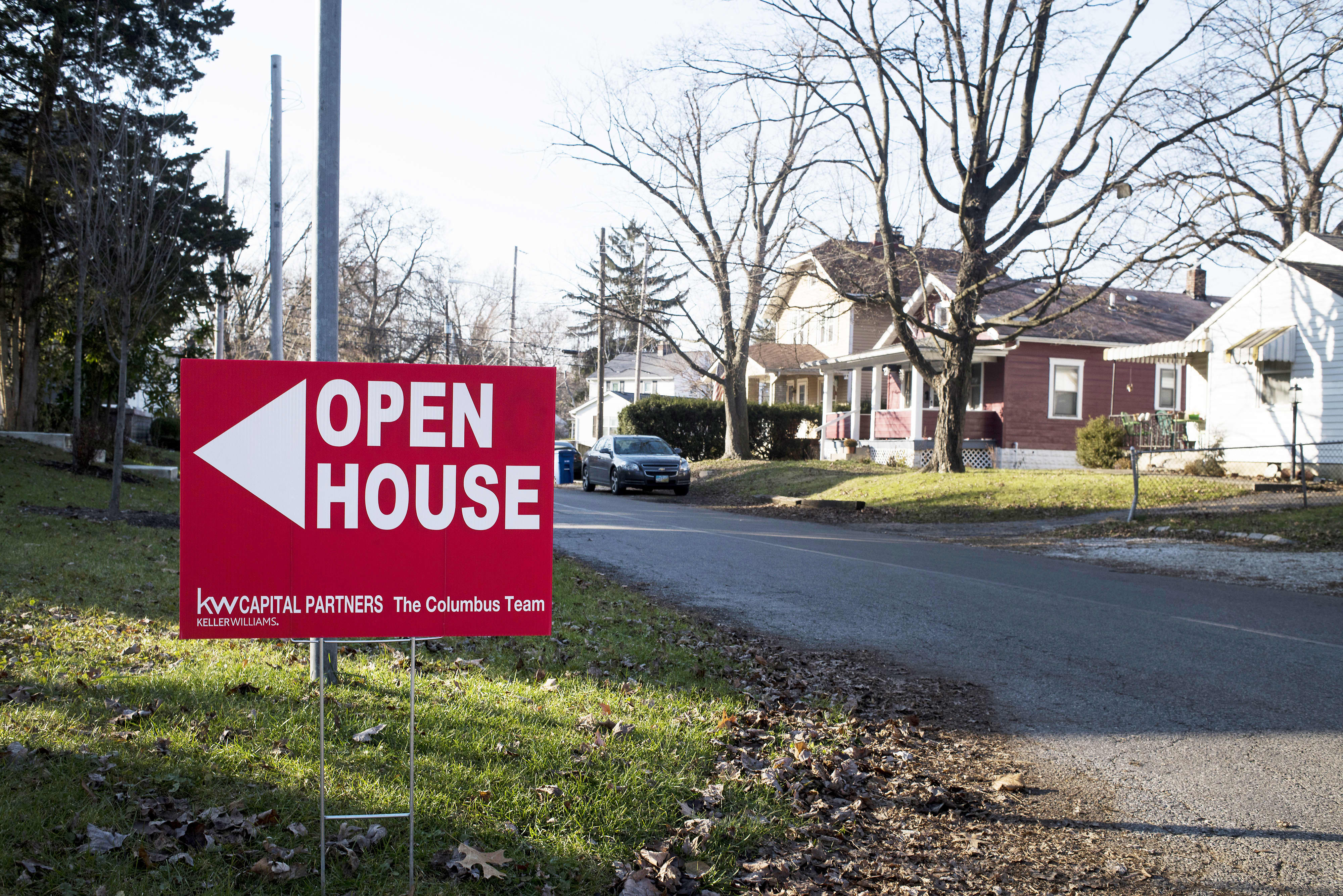
An “Open House” sign is displayed in the front yard of a home for sale in Columbus, Ohio.
Ty Wright | Bloomberg via Getty Images

“Mortgage rates increased significantly across all loan types last week as the Federal Reserve’s signaling of tighter policy ahead pushed U.S. Treasury yields higher,” said Joel Kan, an MBA economist. “The housing market started 2022 on a strong note. Both conventional and government purchase applications showed increases, with FHA purchase applications increasing almost 9%, and VA applications increasing more than 5%.”

FHA and VA loans are low and no down payment options often used by first-time buyers.

Applications to refinance a home loan fell 0.1% from the previous week and were 50% lower than the same week one year ago. Refinance volume is now at the lowest level in more than a month. As mortgage rates rise, fewer and fewer borrowers can benefit from a refinance.

Mortgage rates rose sharply on Monday of this week, according to Mortgage News Daily, but settled back slightly on Tuesday.

The big question now is whether the worst is now over for this abrupt move toward higher rates. The answer is a definitive ‘maybe!’ It might even be ‘probably,'” wrote Matthew Graham, chief operating officer at Mortgage News Daily. “Unfortunately, that doesn’t mean rates can’t go higher, simply that the pace may be moderating from here.”

Read More

Inflation plowed ahead at its fastest 12-month pace in nearly 40 years during December, according to a closely watched gauge the Labor Department released Wednesday.

The consumer price index, a metric that measures costs across dozens of items, increased 7%, according to the department’s Bureau of Labor Statistics. On a monthly basis, CPI rose 0.5%.

Economists surveyed by Dow Jones had been expecting the gauge to increase 7% on an annual basis and 0.4% from November.

The annual move was the fastest increase since June 1982 and comes amid a shortage of goods and workers and on the heels of unprecedented cash flowing through the U.S. economy from Congress and the Federal Reserve.

Despite the strong gain, stocks rose after the news while government bond yields were mostly negative.

“The December CPI report of a 7% increase over the last 12 months will be shocking for some investors as we haven’t seen a number that high” in almost 40 years, said Brian Price, head of investment management at Commonwealth Financial Network. “However, this print was largely anticipated by many, and we can see that reaction in the bond market as longer-term interest rates are declining so far this morning.”

Excluding food and energy prices, so-called core CPI increased 5.5% year over year and 0.6% from the previous month. That compared with estimates of 5.4% and 0.5%. For core inflation, it was the largest annual growth since February 1991.

Shelter costs, which make up nearly one-third of the total rose 0.4% for the month and 4.1% for the year. That was the fastest pace since February 2007.

Used vehicle prices, which have been a major component of the inflation increase during the Covid pandemic due to supply chain constraints that have limited new vehicle production, rose another 3.5% in December, bringing the increase from a year ago to 37.3%.

Conversely, energy prices mostly declined for the month, falling 0.4% as fuel oil was down 2.4% and gasoline fell 0.5%. Still, the complex as a whole rose 29.3% in the 12-month period, including a gain of 49.6% for gasoline.

Fed officials are watching the inflation data closely and are widely expected to raise interest rates this year in an effort combat increasing prices and as the jobs picture approaches full employment. Though the central bank uses the personal consumption expenditures price index as its primary inflation measure, policymakers take in a wide range of information in making decisions.

“This morning’s CPI read really only solidifies what we already know: Consumer wallets are feeling pricing pressures and in turn the Fed has signaled a more hawkish approach. But the question remains if the Fed will pick up the pace given inflation is seemingly here to stay, at least in the medium-term,” said Mike Loewengart, managing director for investment strategy at E-Trade. “With Covid cases continuing to rise, the impact on the supply chain and labor shortages could persist, which only fuels higher prices.”

Inflation has been eating into otherwise strong wage gains for workers. However, real average hourly earnings posted a small 0.1% increase for the month, as the 0.6% total gain outweighed the 0.5% CPI headline increase. On a year-over-year basis, real earnings declined 2.4%, according to BLS calculations.

Fed officials largely attribute rising inflation pressures to pandemic-specific issues in which a shortage of workers has led to clogged supply chains and empty store shelves. Though there are signs the omicron variant cases could peak soon, lingering Covid issues combined with cold weather in the Northeast point “to renewed upward pressure on food prices,” wrote Paul Ashworth, chief U.S. economist at Capital Economics.

Food prices broadly rose 0.5% for December and were up 6.3% on a 12-month basis, the biggest rise since October 2008.

Investors largely expect the Fed to start raising rates in March. Fed Chairman Jerome Powell, at his confirmation hearing Tuesday before the Senate banking panel, did not provide any specific dates but acknowledged that as long as current conditions persist, rate hikes are on the way.

Markets are pricing a nearly 79% chance for the first quarter-percentage point increase to come in May, and see about a 50% chance the Fed could enact four such hikes in 2022, according to the CME’s FedWatch Tool.

Read More

In this article

Bread aisle shelves at a Target are seen nearly empty as the U.S. continues to experience supply chain disruptions in Washington, U.S., January 9, 2022.
Sarah Silbiger | Reuters

Empty shelves have returned at supermarkets as grocery employees call out sick and truckloads of food arrive late.

That’s one of the latest outcomes of the omicron variant, which is straining the workforce. Investors are seeing the pressure and bracing for a longer period of high costs for labor, transportation and food.

Shares of major grocers including Albertsons, Kroger and Walmart fell Tuesday. Albertsons shares fell 9.75% to $28.79 at market close, after the company detailed the supply chain challenges and inflated costs it’s seeing on its earnings call. The dive in its stock occurred even though the grocer raised its fiscal 2021 forecast. Shares of Kroger fell about 3%, while Walmart shed less than 1%.

Covid cases and hospitalizations have hit records in the U.S., as the highly contagious variant spreads. The country reported about 1.5 million new cases on Monday, according to data compiled by Johns Hopkins University. Hospitalizations have surpassed last winter’s peak, with 144,441 Americans hospitalized with the virus as of Sunday, according to data tracked by the Department of Health and Human Services.

Workers feel the strain

Grocery store workers are feeling the effects of omicron, too. Samantha Webster helps replenish coolers with butter, gallons of milk and more as dairy manager of a Safeway store in the San Francisco Bay Area. Safeway is owned by Albertsons.

Since early December, she said more and more employees have had to take off from work because of getting Covid or having close contact with someone who is sick. She said 15 employees are currently out of the store’s nearly 60-person staff.

Fewer pallets are arriving from Safeway’s warehouses and there are not enough grocery workers to help unload them, she said.

In the dairy department, there are gaping holes where there used to be cream cheese and yogurts. Fresh bagels and loaves of bread are missing in the bakery aisle. And in the produce department, potatoes are running low.

In other aisles, she said there are signs of strain, too, such as a shelf filled with cans of clam chowder soup because other varieties, like minestrone and pea soup, did not arrive.

“The shelves are becoming more and more bare,” she said. “One person can’t keep an entire department going.”

CEO says Covid prolonging out-of-stocks

Albertsons CEO Vivek Sankaran said on the call that the grocer has had low inventory or missing items in some categories for several months. He said the latest spike in Covid cases is prolonging some of those out-of-stocks.

“We were expecting that supply issues to get more resolved as we go into this period right now,” he said on the call. “Omicron has put a bit of a dent on that. So there are more supply challenges and we would expect more supply challenges over the next four weeks to six weeks.”

The new coronavirus variant is exacerbating worker shortages across industries, from restaurants and retailers to airlines. Company leaders are being forced to make tough decisions, such as slashing service hours, canceling flights and closing stores. That has started to show up in the sales numbers, too. Lululemon is among the retailers that have warned that fourth-quarter earnings and revenue would be on the low end of estimates as it feels the effects of having reduced hours and limited staff.

For grocers, though, the challenge may be felt more because it is low-margin business where companies often have less room to raise employee wages, pay for overtime or pass on higher costs to customers. Some shoppers have less money to spend, too. The child tax credit, which gave families monthly payments, ended in December.

On Tuesday, Albertsons leaders said that costs have risen on ingredients, packaging, transportation and labor. They said the grocer has passed through some of that inflation, but has tried to hold the line on prices of essential items that customers buy frequently.

Read More

U.S. Federal Reserve Board Chairman Jerome Powell speaks during his re-nominations hearing of the Senate Banking, Housing and Urban Affairs Committee on Capitol Hill, in Washington, U.S., January 11, 2022.
Graeme Jennings | Reuters

Federal Reserve Chairman Jerome Powell, with a seemingly clear path to a second term heading the central bank, declared Tuesday that the U.S. economy is both healthy enough and in need of tighter monetary policy.

As part of his confirmation hearing before the U.S. Senate Committee on Banking, Housing and Urban Affairs, Powell said he expects a series of interest rate hikes this year, along with other reductions in the extraordinary help the Fed has been providing during the pandemic era.

“As we move through this year … if things develop as expected, we’ll be normalizing policy, meaning we’re going to end our asset purchases in March, meaning we’ll be raising rates over the course of the year,” he told committee members. “At some point perhaps later this year we will start to allow the balance sheet to run off, and that’s just the road to normalizing policy.”

He made the remarks during a 2½-hour session that included both praise for the Fed’s handling of the economy and criticism over perceived ethical lapses from central bank officials. Some Republican senators also expressed worries over whether the Fed was veering too far from its stated objectives of price stability, full employment and banking oversight.

Ultimately, though, Powell appeared headed toward a successful confirmation from the full Senate. Committee Chairman Sherrod Brown, D-Ohio, and Pennsylvania Sen. Patrick Toomey, the ranking Republican, both said they plan on supporting President Joe Biden’s nomination. Sen. Elizabeth Warren, D-Mass., has said she will oppose the nomination, after calling Powell “dangerous” during a hearing last year.

Many of the questions from both sides of the aisle centered on inflation, which is running at a close to 40-year high. After declaring the surge “transitory” for much of 2021, the Fed has pivoted on inflation and is expected to raise rates three or four times this year in quarter percentage-point increments.

Higher interest rates control inflation by slowing down the flow of money, which has been running rapidly through the economy as the Fed and Congress have combined to provide more than $10 trillion worth of stimulus.

“If we see inflation persisting at high levels longer than expected, then if we have to raise interest more over time, we will,” Powell said. “We will use our tools to get inflation back.”

Supporting jobs, fighting inflation

In addition to rate hikes, the Fed also is tapering its monthly bond purchases, which have added more than $4.5 trillion to its balance sheet since the early days of the pandemic. Officials also have indicated they will start decreasing the balance sheet later this year, mostly likely by allowing a set level of proceeds to run off each month, though the Fed also could sell assets outright.

Powell said the moves are in response to an economy that has both a strong jobs picture, with an unemployment rate at 3.9% in December, but with inflation expected to top 7% year over year for the same period.

“What that’s really telling us is that the economy no longer needs or wants the very highly accommodative policies that we’ve had in place to deal with the pandemic and its aftermath,” Powell said. “We’re really just going to be moving over the course of this year to a policy that is closer to normal. But it’s a long road to normal from where we are.”

He faced some questioning about why the Fed got its inflation call wrong, and he again cited issues mostly related to the pandemic, which has seen clogged supply chains, sparsely stocked store shelves and rising prices that Powell said could threaten the recovery.

“If inflation does become persistent, if these high levels of inflation get entrenched in our economy and people’s thinking, then inevitably that will lead to much higher monetary policy from this,” he said. “That could lead to a recession and that will be bad for workers.”

Powell also faced questions about a controversy in recent months over the financial activities of several officials around the time the Fed was about to implement a series of rescue measures just before the pandemic declaration.

Fed Vice Chairman Richard Clarida announced Monday that he is resigning a few weeks ahead of the end of his term following additional disclosures about his buying and selling of equity funds. Regional Fed presidents Eric Rosengren of Boston and Robert Kaplan of Dallas resigned in 2021 following similar disclosures.

Powell said the Fed soon would be publishing rules that would prohibit similar activities without 45 days’ notice.

“The old system was in place for decades and then suddenly it was revealed insufficient,” he said of the prior rules.

Read More

[The stream is slated to start at 10 a.m. ET. Please refresh the page if you do not see a player above at that time.]

Federal Reserve Chairman Jerome Powell testifies Tuesday before the Senate Banking Committee as part of his confirmation process to head the central bank for a second term.

Powell will deliver prepared remarks then take questions from panel members. In making his case for another term, he said the economy is recovering strongly from the pandemic plunge and the banking system is in solid shape.

At the same time, he expressed concerns about inflation and said the Fed will take the necessary steps to control rising prices.

“The Federal Reserve works for all Americans. We know our decisions matter to every person, family, business, and community across the country,” he said in his statement to the committee. “I am committed to making those decisions with objectivity, integrity, and impartiality, based on the best available evidence, and in the long-standing tradition of monetary policy independence.”

Powell’s appearance will be followed Thursday by a hearing for current Fed Governor Lael Brainard, who has been nominated for the vice chair position.

Read More

Jamie Dimon said the U.S. is headed for the best economic growth in decades.

“We’re going to have the best growth we’ve ever had this year, I think since maybe sometime after the Great Depression,” Dimon told CNBC’s Bertha Coombs during the 40th Annual J.P. Morgan Healthcare Conference. “Next year will be pretty good too.”

Dimon, the longtime CEO and chairman of JPMorgan Chase, said his confidence stems from the robust balance sheet of the American consumer. JPMorgan is the biggest U.S. bank by assets and has relationships with half of U.S. households.

“The consumer balance sheet has never been in better shape; they’re spending 25% more today than pre-Covid,” Dimon said. “Their debt-service ratio is better than it’s been since we’ve been keeping records for 50 years.”

Dimon said growth will come even as the Fed raises rates possibly more than investors expect. Goldman Sachs predicted four rate hikes this year and Dimon said he would be surprised if the central bank only raises four times.

“It’s possible that inflation is worse than they think and they raise rates more than people think,” Dimon said. “I personally would be surprised if it just four increases.”

However, Dimon said that while the underlying economy looks strong, stock market investors may endure a tumultuous year as the Fed goes to work.

“The market is different,” Dimon said. “We’re kind of expecting that the market will have a lot of volatility this year as rates go up and people kind of redo projections.”

“If we’re lucky, the Fed can slow things down and we’ll have what they call a `soft landing’,” Dimon added.

The bank was forced to move its annual healthcare conference to a virtual format because of the spread of the omicron variant of Covid-19.

This story is developing. Please check back for updates.

Read More

The leisure and hospitality sector led hiring in December as restaurant and bar managers added wait staff, cooks and bartenders to payrolls ahead of the holidays.

That sector saw net job growth of 53,000 workers, with eateries accounting for 42,600 of that gain and hotels, motels and other accommodation businesses adding 10,000. Amusement parks, casinos and other recreational firms shed 6,600 workers in December.

For the year, leisure and hospitality added 2.6 million jobs, but employment itself was off 1.2 million jobs, or 7.2%, since February 2020. Employment in food services is still down by 653,000 since February 2020.

The broad professional and business services sector also proved another bright spot in December as computer programmers, management consultants and building service workers (including janitors, landscapers and chimney sweeps) all saw decent gains. The sector added 43,000 net positions.

The hiring in the hospitality and professional services sectors helped the broader U.S. economy add 199,000 jobs in December, according to the Labor Department data. The unemployment rate fell under 4% for the first time since February 2020 and wages rose 4.7% compared with December 2020.

Still, many economists were perplexed by the headline jobs number given expectations for a gain north of 400,000 jobs.

“Overall, this print had mixed messaging – the payrolls growth number may look disappointing, but the underlying story is lack of availability of labor, which is manifesting itself in faster wage growth,” Anu Gaggar, global investment strategist for Commonwealth Financial Network, said in an email.

Manufacturing and construction both saw decent hiring.

Manufacturers, which added 26,000 jobs overall, added 7,700 machinery workers, 4,200 motor vehicle workers and 1,600 furniture employees. The Labor Department noted that about 8,000 of the net gains in machinery reflected the return of workers from a strike.

Construction added 22,000 as companies staffed up on heavy and civil engineers (10,400) and specialty trade contractors (12,900). Construction employment is off 88,000 jobs from its February 2020 level.

December was a lackluster month for retail as consumer-facing shops actually lost a modest 2,100 jobs in the middle of the all-important shopping season. The Labor Department said sporting goods, hobby, book and music stores lost 12,500 net positions in December but that warehouse clubs and supercenters tacked on 15,000.

Government payrolls also saw net losses in the final month of 2021 as state and local governments shed 5,100 and 7,800 workers, respectively. Overall public-sector employment dropped 12,000.

CNBC’s Nate Rattner contributed reporting.

Enjoyed this article?
For exclusive stock picks, investment ideas and CNBC global livestream
Sign up for CNBC Pro
Start your free trial now

Read More