Thanks to the rollout of coronavirus vaccines, the global economy is slowly starting to emerge from the pandemic.

But Covid-19 has left one very destructive economic issue in its wake: disruption to global supply chains.

The rapid spread of the virus in 2020 prompted shutdowns of industries around the world and, while most of us were in lockdown, there was lower consumer demand and reduced industrial activity.

As lockdowns have lifted, demand has rocketed. And supply chains that were disrupted during the global health crisis are still facing huge challenges and are struggling to bounce back.

This has led to chaos for the manufacturers and distributors of goods who cannot produce or supply as much as they did pre-pandemic for a variety of reasons, including worker shortages and a lack of key components and raw materials.

Cargo trucks parked at the Port of Los Angeles in Los Angeles, California, U.S., on Wednesday, Oct. 13, 2021.
Kyle Grillot | Bloomberg | Getty Images

Different parts of the world have experienced supply chain issues that have been exacerbated for different reasons, too. For instance, power shortages in China have affected production in recent months, while in the U.K., Brexit has been a big factor around a shortage of truck drivers. The U.S. is also battling a shortage of truckers, as is Germany, with the former also experiencing large backlogs at its ports.

Read more: As the U.K. battles food, fuel and labor crises, Boris Johnson promises change

Situation ‘will get worse’

Unfortunately, experts like Tim Uy of Moody’s Analytics say that supply chain problems “will get worse before they get better.”

“As the global economic recovery continues to gather steam, what is increasingly apparent is how it will be stymied by supply-chain disruptions that are now showing up at every corner,” Uy said in a report last Monday.

“Border controls and mobility restrictions, unavailability of a global vaccine pass, and pent-up demand from being stuck at home have combined for a perfect storm where global production will be hampered because deliveries are not made in time, costs and prices will rise, and GDP growth worldwide will not be as robust as a result,” he said.

“Supply will likely play catch up for some time, particularly as there are bottlenecks in every link of the supply chain—labor certainly, as mentioned above, but also containers, shipping, ports, trucks, railroads, air and warehouses.”

A sea of cargo trucks wait in long lines to enter The Port of Los Angeles as the port is set to begin operating around the clock on Wednesday, Oct. 13, 2021 in San Pedro, CA.
Jason Armond | Los Angeles Times | Getty Images

Supply chain bottlenecks — congestion and blockages in the production system — have affected a variety of sectors, services and goods ranging from shortages of electronics and autos (with problems exacerbated by the well-known semiconductor chip shortage) to difficulties in the supplies of meat, medicines and household products.

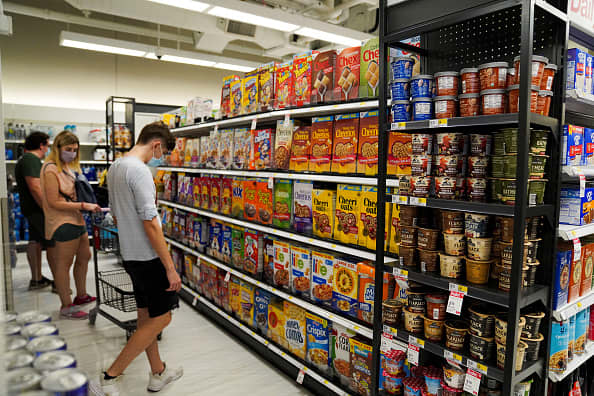
Amid higher consumer demand for goods that have been in short supply, freight rates for merchandise coming from China to the U.S. and Europe have soared, while a shortage of truck drivers across both the latter regions has exacerbated the problem of getting goods to their final destinations, and has led to high prices once those products hit store shelves.

The pandemic has only served to highlight how interconnected, and how easily destabilized, global supply chains can be.

At their best, global supply chains lower costs for businesses, often due to reduced labor and operating costs linked to the manufacturer of the products they want, and can spur innovation and competition.

But the pandemic has highlighted deep fragilities in these networks, with disruption in one part of the chain having a ripple-down effect on all parts of the chain, from manufacturers to suppliers and distributors with disruptions ultimately affecting consumers and economic growth.

Supply chain crisis hits growth

As economies get back on their feet, the supply chain crisis has come to the fore as one of the biggest challenges governments now face. Covid-weary citizens are eager to spend again but are finding goods either absent or much more expensive.

The issue is now looming large ahead of Christmas, too, and last week, White House officials told Reuters that Americans could face higher prices and sparser shelves this festive season with the Biden administration trying to alleviate blockages at ports.

Read more: White House plan aims to help key West Coast ports stay open 24/7 to ease supply chain bottlenecks

China and Europe are also experiencing growth problems on the back of supply chain issues. On Monday, China reported its third-quarter GDP grew a disappointing 4.9% from the previous quarter, as industrial activity rose less than expected in September (increasing by 3.1% below the 4.5% expected by Reuters) — with supply chain issues contributing to the slowdown in activity.

“Manufacturing was hit hard by supply chain disruptions due to Covid as some port operations were hit in the third quarter of 2021, and chip shortages continued in the quarter,” Iris Pang, chief economist of Greater China at ING, noted Monday.

She said that “supply chain disruptions are expected to last as freight rates are still high and chip shortages are still a critical issue for industries like equipment, automobiles and telecommunication devices.” 

Last week, Germany’s top economists warned that “supply bottlenecks will continue to weigh on manufacturing production for the time being” and were likely to hamper growth in export-oriented Germany, Europe’s biggest economy.

Earnings impacted

Experts note that earnings are already starting to show the impact of the supply chain crisis. Invesco’s chief global market strategist, Kristina Hooper, noted last week that “supply chain fears are brewing with a number of U.S. companies flagging up warnings about rising costs related to supply chain disruptions and potentially lower earnings.

Hooper believed some of the factors contributing to supply chain issues, such as the labor shortage, will be worked out sooner than others. But she said the problem could have longer-lasting effects on some sectors.

“No matter where companies are, they are likely experiencing supply chain disruptions, higher input costs and some issues sourcing labor,” she said in a note last Thursday.

“However, some companies will be far more impacted than others. … A rise in cost will generally have the greatest impact on low-margin companies, which tend to be found in sectors such as transportation, general retail, construction and autos. Companies that should be least impacted are those with wide profit margins, limited raw material costs and small workforces. That should include growth sectors such as tech and health care,” she said, adding that “unfortunately, those sectors’ stock prices may temporarily suffer as bond yields rise.”

“Financials may be the standouts in this environment, especially as these companies would welcome higher yields. Another differentiating factor may be how much investment companies have made in technology to increase productivity.”

Hooper noted that some shortages, of semiconductors in particular, could improve soon, with projections for a return to normal levels of production by the second quarter of 2022. “However, more general supply chain disruptions are likely to continue in the shorter term, especially if there are additional Covid waves,” she added.

“In general, supply chain disruptions and higher input costs seem likely to be relatively transitory. … And so, for me, I’ll be paying close attention to this quarter’s earnings season, but I’ll be most concerned about companies’ guidance for the fourth quarter and beyond — especially how long they expect these conditions to last,” she said.

Read More

A worker carries lumber as he builds a new home in Petaluma, California.
Getty Images

Rising interest rates will result in a sharp drop in refinance demand in 2022, meaning a lot less business for mortgage bankers, according to the Mortgage Bankers Association’s just-released annual forecast. It predicts total origination volume will drop 33% to $2.59 trillion.

The average rate on the popular 30-year fixed loan will rise to 4%, a full percentage point higher than it is now, MBA economists say.

That will result in a 62% drop in refinance originations to just $860 billion. It deepens the anticipated 14% decline in 2021 to $2.26 trillion

“The economy and labor market rebounded in 2021, but overall growth fell short of expectations because of stubborn supply chain issues that fueled faster inflation, slowed consumer spending, and presented challenges in filling the record number of job openings available,” said Michael Fratantoni, chief economist at the MBA. “With inflation elevated and the unemployment rate dropping fast, the Federal Reserve will begin to taper its asset purchases by the end of this year and will raise short-term rates by the end of 2022.” 

Originations for the purpose of buying a home, however, are forecast to rise 9% to a record of $1.73 trillion in 2022.

Overall, this will mark a change from the record-high production profits of 2020, when interest rates fell to record lows and homebuyer demand soared due to the coronavirus pandemic. The drop will likely result in increased competition among lenders.

“Many lenders will rely more heavily on their servicing business to achieve financial goals,” said Marina Walsh, vice president of industry analysis at the MBA. “The servicing outlook is more complicated today, with the expiration of many COVID-19-related forbearances and the need to place borrowers into post-forbearance workouts.”

Walsh added that servicing costs may rise as servicers work to meet the needs and requirements of borrowers, investors and regulators.

Read More

Residential single family homes construction by KB Home are shown under construction in the community of Valley Center, California, June 3, 2021.
Mike Blake | Reuters

The nation’s homebuilders aren’t seeing any relief from supply chain issues that have slowed construction recently, but high buyer demand appears to be making up for it.

Builder confidence in the single-family home construction market rose 4 points to 80 in October on the National Association of Home Builders/Wells Fargo Housing Market Index. That is still down from 85 in October 2020 and from the record high 90 in November of last year. Anything above 50 is considered positive.

“Although demand and home sales remain strong, builders continue to grapple with ongoing supply chain disruptions and labor shortages that are delaying completion times and putting upward pressure on building material and home prices,” said NAHB Chairman Chuck Fowke, a homebuilder from Tampa, Florida, in a release.

Of the index’s three components, current sales conditions rose 5 points to 87. Sales expectations in the next six months increased 3 points to 84 and buyer traffic climbed 4 points to 65.

The biggest concern for builders now is affordability, as they raise prices to meet the rising costs of land, labor and materials.

The median price of a newly built home sold in August was 20% higher than August of 2020, according to the U.S. Census. While some of that is the mix of homes selling — more on the high end of the market — it also reflects builder increases.

Some builders have actually slowed home sales due to construction hurdles, as they are concerned they won’t be able to deliver houses at a normal pace.

Homebuyers are turning more and more to new construction, as the supply of existing homes for sale continues to be both incredibly lean and pricey.

“Building material price increases and bottlenecks persist and interest rates are expected to rise in coming months as the Fed begins to taper its purchase of U.S. Treasuries and mortgage-backed debt,” said Robert Dietz, chief economist at the NAHB.

A forecast just released by the Mortgage Bankers Association predicts the average rate on the 30-year fixed mortgage will hit 4% by the end of 2022, up from around 3% now.

Regionally, looking at the three-month moving averages builder sentiment in the Midwest rose 1 point to 69. In the Northeast it was unchanged at 72. Both the South and West were also unchanged at 80 and 83, respectively.

Read More

Richmond Federal Reserve President Thomas Barkin said Friday he’s on board with reducing the amount of economic help the central bank is providing as concerns grow about inflation.

With the Fed indicating that it’s likely to start pulling back on its monthly bond purchases, Barkin said that seems reasonable, and he’s leaning toward beginning the process in November. Minutes from the September Fed meeting indicated that officials want to start tapering either next month or in December.

“If we do decide to taper at the next meeting, we’re going to have a discussion on which of those two dates, I’m sure, and my instinct would be if you’re going to decide it, go ahead and move,” he told CNBC’s Steve Liesman during a live “Squawk Box” interview. “But I’m certainly going to be open to debates on both sides.”

Fed officials have indicated they’ve met their inflation goal of 2%, though the full and inclusive employment part of the mandate remains elusive despite significant progress.

Like many of his colleagues, Barkin pointed to temporary factors like supply chain problems that have pushed car prices higher as a major factor in driving inflation, which is running around a 30-year high.

But he also conceded that it’s been a bigger problem that he expected.

“I do think there’s risk on the inflation side, and I’m watching that very carefully,” he said.

The minutes showed that the pace of bond purchases likely will slow by about $15 billion each month — $10 billion in Treasurys and $5 billion in mortgage-backed securities.

Fed officials have stressed that even after the start of tapering, it will be some time before interest rate hikes begin. Market pricing currently is for the first increase to come in July 2022, with another likely before the end of the year, according to the CME’s FedWatch tracker.

Barkin said he would base his rates decision on two factors — whether inflation is going to stay elevated or come back to its norm of around 1.5% to 2% of the past 25 years or so, and how close the labor market is to full employment.

“Is the labor market going to be this tight over the next six months? Is inflation going to come down or not?” he said. “Different answers to those questions in my mind would lead me to different points of view on when we would start to increase rates.”

He also was asked his position on whether Fed officials should be allowed to own individual stocks, but declined to answer pending an inquiry Chairman Jerome Powell is leading into best practices. Several officials have come under fire for trading stocks, and two regional presidents have resigned following controversies over their activities.

Become a smarter investor with CNBC Pro.
Get stock picks, analyst calls, exclusive interviews and access to CNBC TV.
Sign up to start a free trial today.

Read More

Consumers spent at a much faster pace than expected in September, defying expectations for a pullback amid pervasive supply chain problems, the Census Bureau reported Friday.

Retail sales for the month increased by 0.7%, against the Dow Jones estimate for a decline of 0.2%. Excluding auto-related sales, the number rose 0.8%, better than the 0.5% forecast.

Compared with a year ago, sales were up 13.9% on the headline number and 15.6% excluding autos.

The increase came during a month when the government ended the enhanced benefits it had been providing during the Covid-19 pandemic and against forecasts that growth would slow in the third quarter due to the delta variant spread and a perceived pullback in consumer activity.

But spending accelerated as coronavirus cases continued to drop.

“Students heading back to school and workers returning to the office are likely the catalysts for the increased retail sales,” said Natalie Kotlyar, national leader of BDO’s retail and consumer products practice. “People who are back to working in a downtown office may be taking more shopping trips on their lunch break or after work. With school back in session and many teens vaccinated, parents may also be more comfortable allowing their teens to take shopping trips to the mall.”

Sporting goods, music and book stores led the way with a 3.7% increase. General merchandise increased 2% while miscellaneous retailers rose 1.8%. As gas prices pushed higher, spending at fuel stations jumped 1.8%, for a 38.2% surge over the past year.

Food and beverage spending increased 0.7%, though restaurants and bars saw a gain of just 0.3%, a sign that fears over the virus may have kept some people at home. Food and drinking establishment spending is up 29.5% over the past year.

Online sales rose 0.6% for the month, while auto sales increased 0.5% despite inventory problems brought on by a shortage in semiconductors.

However, doubts remained about whether the sales strength can continue.

“Services spending may see some renewed strength over the next couple of months, as virus cases continue to drop back,” Capital Economics senior U.S. economist Andrew Hunter wrote. “But with goods shortages likely to persist, and the resulting surge in prices eating into real incomes, we expect consumption growth to remain subdued.”

The spending increases persisted against a backdrop of unexpectedly resilient inflation, which is running around 30-year highs. The consumer price index, which measures the cost of a variety of goods and services, rose another 0.4% in September and is up 5.4% from a year ago, though the gain was smaller when stripping out food and energy.

Inflation is being pushed higher by supply chain problems that have seen massive backups at ships along the California coast and prompted President Joe Biden to order the ports to stay open 24 hours.

Still, there are concerns that the supply problem will hamper the upcoming holiday shopping season, and consumers are being encouraged to shop now to avoid problems later.

Become a smarter investor with CNBC Pro.
Get stock picks, analyst calls, exclusive interviews and access to CNBC TV.
Sign up to start a free trial today.

Correction: Natalie Kotlyar is the national leader of BDO’s retail and consumer products practice. A previous version misspelled her last name.

Read More

Federal Reserve officials could begin reducing the extraordinary help they’ve been providing to the economy by as soon as mid-November, according to minutes from the central bank’s September meeting released Wednesday.

The meeting summary indicated members feel the Fed has come close to reaching its economic goals and soon could begin normalizing policy by reducing the pace of its monthly asset purchases.

In a process known as tapering, the Fed would reduce the $120 billion a month in bond buys slowly. The minutes indicated the central bank probably would start by cutting $10 billion a month in Treasurys and $5 billion a month in mortgage-backed securities. The Fed is currently buying at least $80 billion in Treasurys and $40 billion in MBS.

The target date to end the purchases should there be no disruptions would be mid-2022.

The minutes noted “participants generally assessed that, provided that the economic recovery remained broadly on track, a gradual tapering process that concluded around the middle of next year would likely be appropriate.”

“Participants noted that if a decision to begin tapering purchases occurred at the next meeting, the process of tapering could commence with the monthly purchase calendars beginning in either mid-November or mid-December,” the summary said.

The Fed next meets Nov. 2-3. Starting the tapering process in November is on the aggressive side of market expectations.

The minutes said members’ estimates “were consistent with a gradual tapering of net purchases being completed in July of next year.”

“If they announce [tapering] in November, I don’t see why they would wait. Just go ahead and get going,” said Kathy Jones, chief fixed income strategist at Charles Schwab. Jones said she was a bit surprised by a notation in the minutes that “several” members “preferred to proceed with a more rapid” tapering pace.

“That would be pretty aggressive,” she said. “There must be some outspoken people who are pretty concerned that they need to move even faster.”

St. Louis Fed President James Bullard is one such member, telling CNBC on Tuesday that he thinks tapering should be more aggressive in case the Fed needs to rate interest rates next year to combat persistent inflation.

At the September policymaking session, the committee voted unanimously to hold the central bank’s benchmark short-term borrowing rate at zero to 0.25%.

The committee also released the summary of its economic expectations, including projections for GDP growth, inflation and unemployment. Members scaled back their GDP estimates for this year but upped their outlook for inflation, and indicated they expect unemployment to be lower than earlier estimates.

Concerns about inflation

In the “dot plot” of individual members’ expectations for interest rates, the committee indicated it could begin raising interest rates as soon as 2022. Markets currently are pricing in the first rate hike for next September, according to the CME FedWatch tool. Following the release of the minutes, traders increased the likelihood of a September hike to 65% from 62%.

Officials, though, stressed that a tapering decision should not be seen as implying pending interest rate hikes.

However, some members at the meeting showed concern that current inflation pressures might last longer than they had anticipated. Traders are pricing in a 46% chance of two rate hikes in 2022.

“Most participants saw inflation risks as weighted to the upside because of concerns that supply disruptions and labor shortages might last longer and might have larger or more persistent effects on prices and wages than they currently assumed,” the minutes stated.

The document noted that “a few participants” said there could be some “downside risks” for inflation as long-standing factors that have kept prices in check come back into play. The majority of Fed officials have been holding to theme that the current price increases are transitory and due to supply chain bottlenecks, and other factors likely to subside.

Inflation pressures have continued, though, with a reading Wednesday showing that consumer prices are up 5.4% over the past year, the fastest pace in decades.

Become a smarter investor with CNBC Pro.
Get stock picks, analyst calls, exclusive interviews and access to CNBC TV.
Sign up to start a free trial today.

Read More

Consumer prices increased slightly more than expected in September as food and energy price rises offset declines in used cars, the Labor Department reported Wednesday.

The consumer price index for all items rose 0.4% for the month, compared with the 0.3% Dow Jones estimate. On a year-over-year basis, prices increased 5.4% versus the estimate for 5.3% and the highest since January 1991.

However, excluding volatile food and energy prices, the CPI increased 0.2% on the month and 4% year over year, against respective estimates for 0.3% and 4%.

Dow futures were slightly positive following the news but fell sharply through the morning, while government bond yields were mostly lower as investors gravitated toward safe-haven fied income.

Gasoline prices rose another 1.2% for the month, bringing the annual increase to 42.1%. Fuel oil shot up 3.9%, for a 42.6% year over year surge.

Food prices also showed notable gains for the month, with food at home rising 1.2%. Meat prices rose 3.3% just in September and increased 12.6% year over year.

“Food and energy are more variable, but that’s where the problem is,” said Bob Doll, chief investment officer at Crossmark Global Investments. “Hopefully, we start solving our supply shortage problem. But when the dust settles, inflation is not going back to zero to 2 [percent] where it was for the last decade.”

Used car prices, which have been at the center of much of the inflation pressures in recent months, fell 0.7% for the month, pulling the 12-month increase down to 24.4%. However, the continued rise in prices even with the drop in vehicle costs could lend credence to the notion that inflation is more persistent than policymakers think.

Airline fares tumbled 6.4% for the month after falling 9.1% in July.

Shelter prices, which make up about a third of the CPI, increased 0.4% for the month and are up 3.2% for the 12-month period. Owners’ equivalent rent or how much an owner of a property would have to pay to rent it, increased 0.4% as well, its largest monthly gain since June 2006.

“This might just be an overshoot after a couple of relatively modest increases, but we can’t rule out the idea that the fundamentals — rapid house price gains, more aggressive landlord pricing, low inventory, and faster wage growth — are pushing up the trend,” wrote Ian Shepherdson, chief economist at Pantheon Macroeconomics.

Apparel prices also declined 1.1% in September while transportation services dropped 0.5%. Both sectors have been rising consistently and still showed respective annual gains of 3.4% and 4.4%.

Federal Reserve officials have called the current inflation run “transitory,” and attribute it largely to supply chain and demand issues that they expect to subside in the months ahead.

However, that view has been receiving substantial pushback lately.

“This is one more data point to say, ‘Fed, your trying to convince us that inflation is transitory is just not believable,'” Doll said. “If you know anybody who doesn’t have to live somewhere, doesn’t eat any food and doesn’t use energy, then inflation is maybe not a particular problem. But come on.”

On Tuesday, the International Monetary Fund warned that the Fed and its global peers should be preparing contingency plans should inflation prove persistent. That would mean raising interest rates sooner than expected to control the price gains.

Later in the day, St. Louis Fed President James Bullard told CNBC that he thinks the Fed should be more aggressive in withdrawing its economic support, and in particular its monthly bond purchases, should inflation prove a problem and require rate hikes next year. Also on Tuesday, Atlanta Fed President Raphael Bostic said the factors that have pushed inflation higher “will not be brief.”

“Today’s number shouldn’t move the needle for the Fed,” said Seema Shah, chief investment strategist at Principal Global Investors. “Inflation has already surpassed its goal and, if anything, the higher-than-expected September CPI just reinforces the need to start tapering. November tapering, here we come.”

JPMorgan Chase CEO Jamie Dimon on Monday took the transitory side of the argument, saying that the current conditions will clear up and inflation won’t be a factor in 2022.

Become a smarter investor with CNBC Pro.
Get stock picks, analyst calls, exclusive interviews and access to CNBC TV.
Sign up to start a free trial today.

Read More

Workers left their jobs at a record pace in August, with bar and restaurant employees as well as retail staff quitting in droves, the Labor Department reported Tuesday.

Quits hit a new series high going back to December 2000, as 4.3 million workers left their jobs. The quits rate rose to 2.9%, an increase of 242,000 from the previous month, which saw a rate of 2.7%, according to the department’s Job Openings and Labor Turnover Survey. The rate, which is measured against total employment, is the highest in a data series that goes back to December 2000.

Quits have been seen historically as a level of confidence from workers who feel they are secure in finding employment elsewhere, though labor dynamics have changed during Covid-19 crisis. Workers have left their jobs because of health concerns and child care issues unique to the pandemic’s circumstances.

A total of 892,000 workers in the food service and accommodation industries left their jobs, while 721,000 retail workers departed along with 534,000 in health care and social assistance.

“As job openings and hires fell in August, the quits rate hit a new series high, surging along with the rise in Covid cases and likely growing concerns about working in the continuing pandemic,” said Elise Gould, senior economist at the Economic Policy Institute.

Covid cases have since been on the decline nationally, though some health care professionals worry about another rise during the colder months.

Job openings also declined sharply in August as hiring fell.

Employment vacancies fell to 10.44 million during the month, a drop of 659,000 from July’s upwardly revised 11.1 million, according to the department’s Job Openings and Labor Turnover Survey. Federal Reserve officials watch the JOLTS report closely for signs of slack in the labor market.

The total fell well short of market expectations for 10.96 million openings, according to FactSet.

“There is an enormous labor shortage in the country right now and it is not just because people are quitting or have child care problems, or can’t get to work due to the Delta variant,” wrote Chris Rupkey, chief economist at Fwdbonds. “The economy is strong as a bull, that is why there is a tremendous demand for labor.”

The job posting rate fell to 6.6% in August from 7% in July. That level was just 4.4% a year ago as the economy was still struggling to escape the Covid downturn.

Hires declined by 439,000 for a month in which nonfarm payrolls increased by 366,000. The hires rate fell to 4.3% from 4.6%, due largely to a plunge in leisure and hospitality. The sector, which took the hardest pandemic hit, saw hiring decline by 233,000, sending the rate down to 7.9% from 9.5% in July.

Government hiring also fell sharply during the month, down to 1.4% from 2.2%.

The JOLTS data runs a month behind the nonfarm payrolls report but still carries weight at the Fed. Central bank officials are mulling whether to begin pulling back the unprecedented policy help they provided during the pandemic, and are expected later this year to slow monthly bond purchases.

However, Fed officials have said they will not begin increasing interest rates until the labor market firms up.

Become a smarter investor with CNBC Pro.
Get stock picks, analyst calls, exclusive interviews and access to CNBC TV.
Sign up to start a free trial today.

Read More

September’s wage gains provided more fuel to the argument that the current pace of inflation could run longer than many economists anticipate.

Average hourly earnings rose 0.6% for the month, making the year-over-year increase 4.6%. Over the past six months, wages are running at an average 6% annual gain.

Excluding a brief spike in 2020, that’s the fastest annual pace since the Bureau of Labor Statistics started tracking the measure in March 2007. It’s also the third month in a row that the annual rise has been more than 4% and comes amid a tightening labor market and inflation that has been more persistent than many experts have expected.

“You’re getting the perfect recipe for a secular shift in inflation,” said Joseph LaVorgna, chief economist for the Americas at Natixis and a former chief White House economist. “You’re having a hard time getting the goods you want and restocking your inventory because of the supply chain disruptions. It’s the perfect storm for be-careful-what-you-wish-for if you want higher inflation.”

Though inflation is running around a 30-year high, many economists and Federal Reserve officials believe it is “transitory,” the product of temporary pressures that will ease soon and return the rate back to its usual level around 2%.

However, the pressures being felt in the marketplace don’t feel transitory.

Calego President David Rapps, whose company makes luggage as well as multiple other consumer products for major retailers, scoffed at the notion that inflation will fade soon.

“I laugh when I read very smart people in suits, especially the Fed, say that it’s temporary,” Rapps said. “I don’t know the last time you had all these pressures happening at once in the market around consumer products.”

He said it’s forced his company to make adjustments along supply chain lines and scale to ensure it can keep up.

“We have to get as nimble as we possibly can,” Rapps said. “We have to figure out just on the container front how to get containers in the first place, and in the second place how to get them at the most competitive prices.”

The persistent price increases have multiple ramifications.

Impact on consumers and the Fed

At the most basic level, they raise questions on how long cash-flush consumers will keep up a rapid spending pace that saw retail sales rise 0.7% in August although economists thought consumer purchases would decline.

But it’s also important at the policy level.

The Fed is considering pulling back on some of the extraordinary economic help it has provided during the pandemic, and September’s weak 194,000 nonfarm payroll increase might otherwise serve as a deterrent.

“The report was certainly good enough to initiate tapering,” LaVorgna said, using the market’s term for a reduction in the Fed’s monthly bond purchases. “There’s no reason for the Fed to wait.”

Other economists share the sentiment that the central bank can go ahead and start gently easing back on its purchases, which are now set at a minimum of $120 billion a month. Fed officials have indicated they could start tapering in December and conclude the asset purchase program by mid-2022.

While the payroll growth has slowed over the past two months, the inflationary pressures through wages and prices are enough to convince many economists that the economy no longer needs as much help.

“Overall, the most important takeaway in terms of the economic outlook is the increasing inflationary pressure evident in the [September jobs] report,” Citigroup economist Andrew Hollenhorst wrote. “Firms are paying higher wages and extending hours of work as they react to the shortage of labor.”

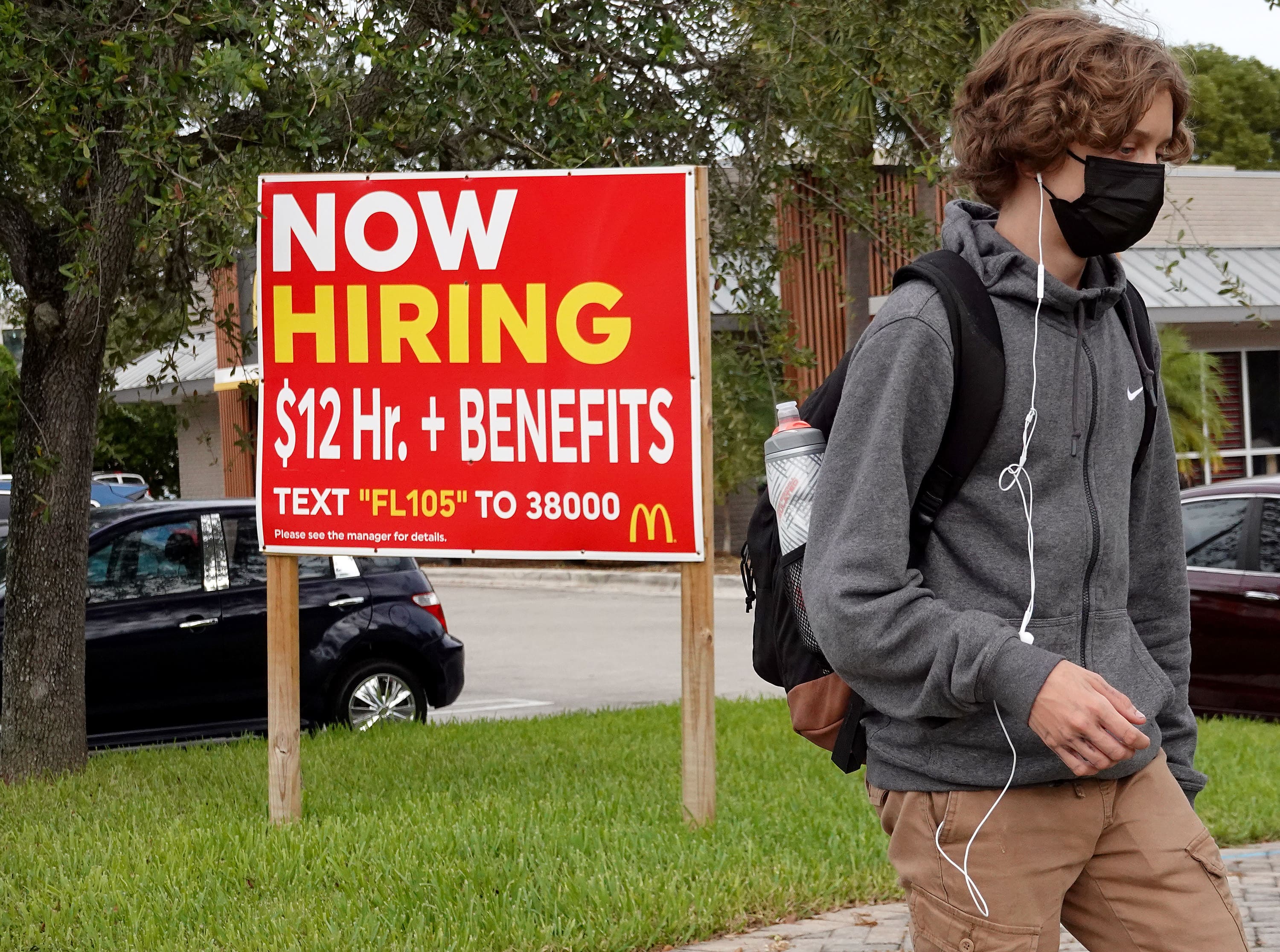
Wages are clearly on the rise, particularly in some of the pandemic’s hardest-hit sectors.

Leisure and hospitality saw a roughly 0.5% monthly increase in wages, putting the industry up about 10.8% from a year ago. Retail wages rose 0.7% in September and are up 6.2% from the same period in 2020.

“Upward pressure on wages is almost certain to persist for some time – a detriment to employers and another source of inflation pressure, but also a factor that should support consumer spending in the coming months,” Plante Moran Financial Advisors Jim Baird wrote.

That in turn should keep the Fed on its tapering schedule — an announcement in November, with reductions likely starting in December.

Become a smarter investor with CNBC Pro.
Get stock picks, analyst calls, exclusive interviews and access to CNBC TV.
Sign up to start a free trial today.

Read More

The U.S. economy created jobs at a much slower-than-expected pace in September, a pessimistic sign about the state of the economy though the total was held back substantially by a sharp drop in government employment.

Nonfarm payrolls rose by just 194,000 in the month, compared with the Dow Jones estimate of 500,000, the Labor Department reported Friday. The unemployment rate fell to 4.8%, better than the expectation for 5.1% and the lowest since February 2020.

The headline number was hurt by a 123,000 decline in government payrolls, while private payrolls increased by 317,000.

The drop in the jobless rate came as the labor force participation rate edged lower, meaning more people who were sidelined during the coronavirus pandemic have returned to the workforce. A more encompassing number that also includes so-called discouraged workers and those holding part-time jobs for economic reasons declined to 8.5%, also a pandemic-era low.

“This is quite a deflating report,” said Nick Bunker, economic research director at job placement site Indeed. “This year has been one of false dawns for the labor market. Demand for workers is strong and millions of people want to return to work, but employment growth has yet to find its footing.”

Nevertheless, markets reacted little to the news, with Dow futures around flat for the morning and government bond yields mixed as investors digested what was a mixed bag of a report.

Despite the weak jobs total, wages increased sharply. The monthly gain of 0.6% pushed the year-over-year rise to 4.6% as companies use wage increases to combat the persistent labor shortage. The available workforce declined by 183,000 in September and is 3.1 million shy of where it was in February 2020, just before the pandemic was declared.

“Labor shortages are continuing to put severe upward pressure on wages … at a time when the return of low-wage leisure and hospitality workers should be depressing the average,” wrote Andrew Hunter, senior U.S. economist at Capital Economics.

Leisure and hospitality again led job creation, adding 74,000 positions, as the unemployment rate for the sector plunged to 7.7% from 9.1%. Professional and business services contributed 60,000 while retail increased by 56,000.

Job gains were spread across a variety of other sectors: Transportation and warehousing (47,000), information (32,000), social assistance (30,000), manufacturing (26,000), construction (22,000) and wholesale trade (17,000).

Local government education jobs fell by 144,000, which may have been due to seasonal adjustments in the numbers, according to Gus Faucher, chief economist at PNC.

The survey week of Sept. 12 came just as Covid cases were peaking in the U.S. The delta variant spread since has cooled, with cases most recently dropping below an average of 100,000 a day.

Unemployment for Blacks fell to 7.9% from 8.8%, due largely to a drop to 66% from 66.7% in the labor force participation rate for males.

There was some good news in Friday’s report from previous months.

July’s already-strong gains were revised higher by 38,000 to 1.0913 million, while August’s big letdown also was revised up, to 366,000 from the initially reported 235,000.

The employment-to-population level increased to 58.7%, its highest since March 2020.

The report comes at a critical time for the economy, with recent data showing solid consumer spending despite rising prices, growth in the manufacturing and services sector, and surging housing costs.

Federal Reserve officials are watching the jobs numbers closely. The central bank recently has indicated it’s ready to start pulling back on some of the extraordinary help it has provided during the pandemic crisis, primarily because inflation has met and exceeded the Fed’s 2% goal.

However, officials have said they see the jobs market still well short of full employment, a prerequisite for interest rate hikes. Market pricing currently indicates the first rate increase likely will come in November 2022.

“After looking like almost a done deal, today’s jobs number has thrown expectations for tapering into disarray. The Fed doesn’t seem to need much to convince it that tapering should begin imminently, but at just 194,000, jobs numbers are suggesting that the labor market is further from hitting the substantial progress goal than they expected,” said Seema Shah, chief strategist at Principal Global Investors.

Become a smarter investor with CNBC Pro.
Get stock picks, analyst calls, exclusive interviews and access to CNBC TV.
Sign up to start a free trial today.

Read More