A trader on the NYSE, March 11, 2022.
Source: NYSE

Investors may take the Federal Reserve’s first post-pandemic interest rate hike in stride, while uncertainty over the Ukraine crisis continues to hang over markets.

The Fed has clearly broadcast that it intends to raise its target fed funds rate by a quarter percentage point from zero, and it is expected to announce that move at the end of its two-day meeting Wednesday. The central bank should also reveal new forecasts for interest rates, inflation and the economy.

There are a few economic reports of note in the week ahead, including the producer price index Tuesday, retail sales Wednesday and existing home sales Friday.

“Earnings are over. Monetary policy is obviously going to be important here. I don’t see the Fed surprising anyone next week,” said Steve Massocca, managing director at Wedbush Securities. “It’s going to be a quarter point and then step into the background and watch what’s happening in Europe.”

Stocks fell for the past week, with the Nasdaq Composite the worst performer with a 3.5% decline. Meanwhile, the small-cap Russell 2000, which outperformed the three major indexes, lost 1% for the week.

A surge in oil prices spooked investors, with crude spiking to $130 at the beginning of the week but trading back below $110 on Friday.

Loading chart…

The S&P 500 was down about 2.9% for the week. Energy stocks were the top performers, up nearly 1.9% and the only positive major sector.

Fed ahead

The impact of Russian sanctions on commodities markets and the lack of clarity around the outcome of the war in Ukraine are likely to keep volatility high across the financial markets.

The central bank’s statement and comments from Fed Chair Jerome Powell on Wednesday will be closely watched for guidance on how central bank officials view the Ukraine crisis, and how much it could affect their outlook and the path for interest rates.

“His guidance is probably not going to be all that different from what he had to say in the [congressional] testimony. Basically, downside risks to the growth outlook have increased, upside risks to inflation have risen,” said Mark Cabana, head of U.S. short rates strategy at Bank of America.

Because Russia is a giant commodities producer, its assault on Ukraine and resulting sanctions have set off a rally in commodities markets that has made already-scorching inflation even hotter. February’s consumer price index was up 7.9%, and economists said rising gasoline prices could send it above 9% in March.

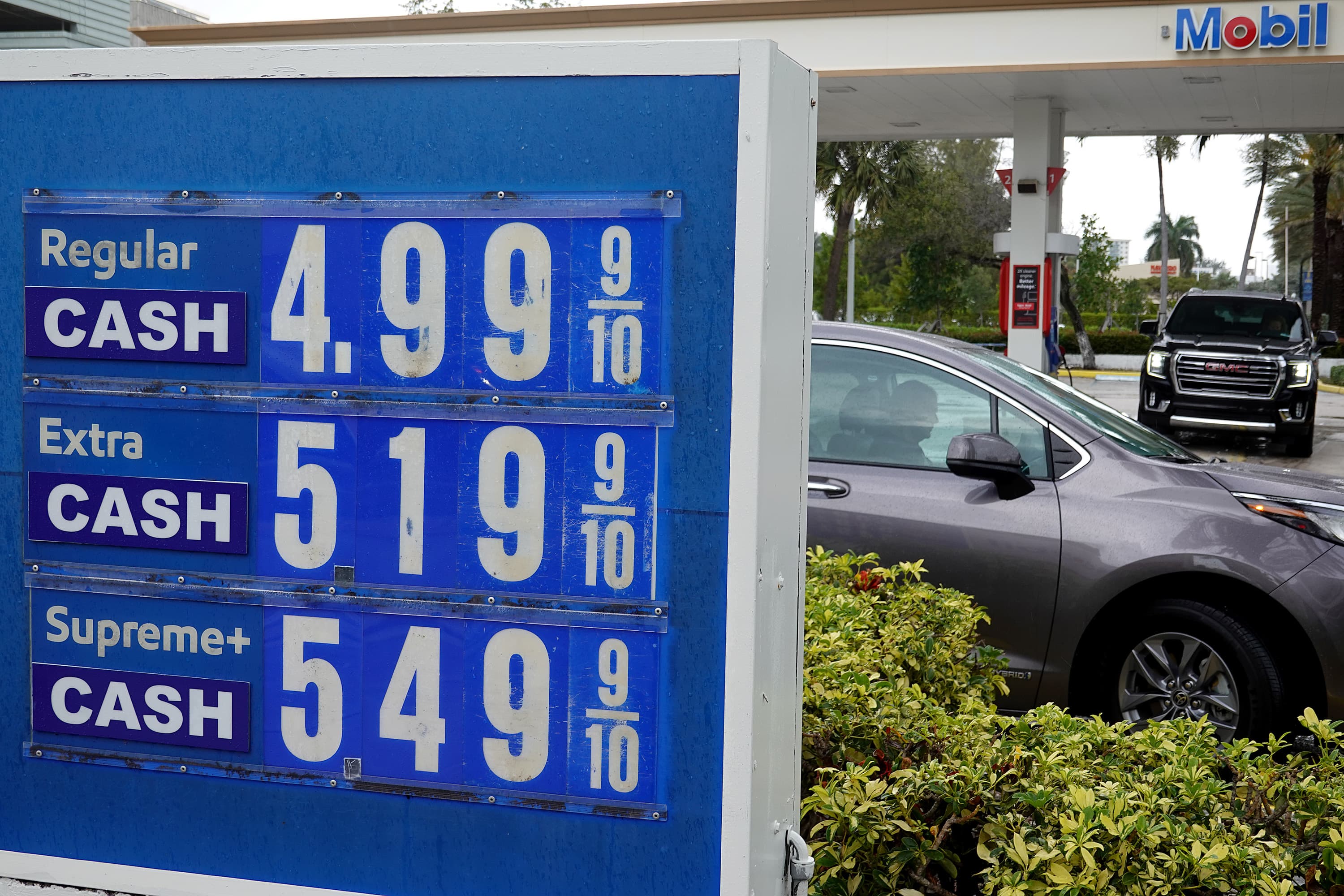
Gasoline at the pump jumped nearly 50 cents in the past week to $4.33 per gallon of unleaded, according to AAA.

Market pros see surging inflation as a catalyst that will keep the Fed on track to raise interest rates. However, uncertainty about the economic outlook could also mean the central bank might not hike as much as the seven rate increases that some economists forecast for this year.

Cabana expects Fed officials to forecast five hikes for 2022 and another four next year. The Fed previously anticipated three increases in both years. Cabana said the Fed could cut its forecast for 2024 to just one hike from the two in their last outlook.

Any comments from the Fed on what it plans for its nearly $9 trillion balance sheet will also be important, since officials have said they would like to begin to scale it back this year after they start hiking interest rates. The Fed replaces maturing Treasury bonds and mortgages as they roll off, and it could slow that in a process Wall Street has dubbed “quantitative tightening,” or QT.

“That they will be ready to flip the switch on QT in May is our base case, but we acknowledge there are risks that this will be skewed later,” said Cabana. He said if the Fed finds it is not in a position to raise interest rates as much as it hoped, it could delay shrinking the balance sheet right away, which would leave policy looser.

Loading chart…

Bond market liquidity

The 10-year Treasury yield topped 2% at its highest level Friday, after dipping below 1.7% earlier this month as investors sought safety in bonds. Bond yields move opposite price.

“It’s inflation and inflation expectations. Treasurys behave in this environment a little differently than a flight to quality asset,” Cabana said “That’s a different dynamic than we’ve observed. You may see a flight to quality into Treasurys, but the Treasurys are reflecting higher inflation expectations.”

Cabana said the markets are showing signs of concern around the uncertainty in Ukraine. For instance, the Treasury market is less liquid.

“We have seen that the Treasury market has become more volatile. We’re seeing bid-ask spreads have widened. Some of the more traditionally less liquid parts of the market may have become less liquid, like TIPS and the 20-year. We’re also seeing market depth thinning out,” he said. “This is all due to elevated uncertainty and lack of risk-taking willingness by market participants, and I think that should worry the Fed.”

But Cabana said markets are not showing major stress.

“We’re not seeing signs the wheels are falling off in funding or that counterparty credit risks are super elevated. But the signs there are very much that all is not well,” he said.

“The other thing we continue to watch loosely are funding markets, and those funding markets are showing a real premium for dollars. Folks are paying up a lot to get dollars in a way they haven’t since Covid,” he said.

Cabana said the market is looking for reassurance from the Fed that it is watching the conflict in Ukraine.

“I think it would upset the market if the Fed reflected a very high degree of confidence in one direction or another,” he said. “That seems very unlikely.”

Dollar strength

The dollar index was up 0.6% on the week and it has been rising during Russia’s attack on Ukraine. The index is the value of the dollar against a basket of currencies and is heavily weighted toward the euro.

Marc Chandler, chief market strategist at Bannockburn Global Forex, also points out that the dollar funding market is seeing some pressure but it is not strained.

“The dollar is at five-year highs today against the yen. That’s not what you would expect in a risk-off environment,” he said. “That’s a testament to the dollar’s strength.”

Loading chart…

Chandler said it’s possible the dollar weakens in the coming week if it follows its usual interest rate hike playbook.

“I think there might  be a buy the rumor, sell the fact on the Fed,” he said. “That’s typical for the dollar to go up ahead of the rate hike and sell off afterwards.”

Oil on the boil

Oil gyrated wildly this past week, touching a high not seen since 2008, as the market worried there would not be enough oil supply due to sanctions on Russia. Buyers have shunned Moscow’s oil for fear of running afoul of financial sanctions, and the U.S. said it would ban purchases of Russian oil.

West Texas Intermediate crude futures jumped to $130.50 per barrel at the beginning of the week but settling Friday at $109.33.

“I think the market getting bid up to $130 was a little premature,” said Helima Croft, head of global commodities strategy at RBC, noting the U.S. ban on Russian oil. She said the run-up in prices Monday came as market players speculated there would be a broader embargo on Russian oil, including Europe, its main customer.

“Right now, the market is too extreme in either way. I think it’s justified at $110. I think it’s justified over $100. I don’t think we’re headed for an off-ramp, and I think we have room to go higher,” she said.

Week ahead calendar

Monday

Earnings: Vail Resorts, Coupa Software

Tuesday

FOMC meeting begins

Earnings: Volkswagen

8:30 a.m. PPI

8:30 a.m. Empire State manufacturing

4:00 p.m. TIC data

Wednesday

Earnings: Lands’ End, Shoe Carnival, DouYu, Lennar, PagerDuty

8:30 a.m. Retail sales

8:30 a.m. Import prices

8:30 a.m. Business leaders survey

10:00 a.m. Business inventories

10:00 a.m. NAHB survey

2:00 p.m. Federal Reserve interest rate decision and economic projections

2:30 p.m. Briefing by Federal Reserve Chair Jerome Powell

Thursday

Earnings: FedEx, Accenture, Commercial Metals, Signet Jewelers, Dollar General. Designer Brands, Warby Parker

8:30 a.m. Initial jobless claims

8:30 a.m. Housing starts

8:30 a.m. Philadelphia Fed manufacturing

9:15 a.m. Industrial production

Friday

10:00 a.m. Existing home sales

2:00 p.m. Chicago Fed President Charles Evans

Get CyberSEO Lite (https://www.cyberseo.net/cyberseo-lite) – a freeware plugin for WordPress to pull full-text RSS articles šŸ“ƒ
Read More

Inflation grew worse in February amid the escalating crisis in Ukraine and price pressures that became more entrenched.

The consumer price index, which measures a wide-ranging basket of goods and services, increased 7.9% over the past 12 months, a fresh 40-year high for the closely followed gauge, according to the Labor Department’s Bureau of Labor Statistics.

The February acceleration was the fastest pace since January1982, back when the U.S. economy confronted the twin threat of higher inflation and reduced economic growth.

On a month-over-month basis, the CPI gain was 0.8%. Economists surveyed by Dow Jones had expected headline inflation to increase 7.8% for the year and 0.7% for the month.

Food prices rose 1% and food at home jumped 1.4%, both the fastest monthly gains since April 2020, in the early days of the Covid-19 pandemic.

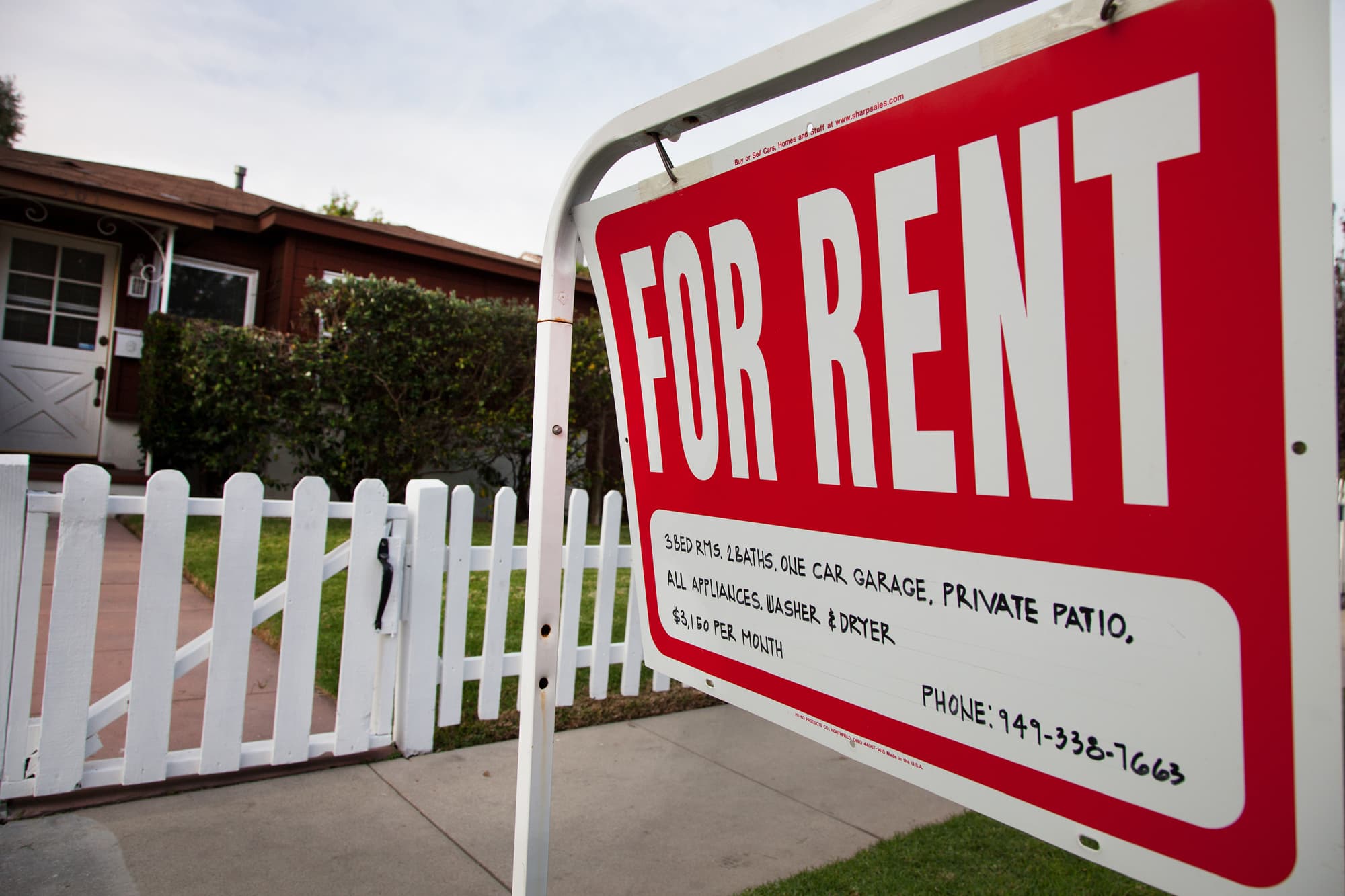
Energy also was at the forefront of ballooning prices, up 3.5% for February and accounting for about one-third of the headline gain. Shelter costs, which account for about one-third of the CPI weighting, accelerated another 0.5%, for a 12-month rise of 4.7%, the fastest annual increase since May 1991.

A customer refuels at a Chevron gas station with prices above $4 a gallon in Seattle, Washington, U.S., on Monday, March 7, 2022.
David Ryder | Bloomberg | Getty Images

Excluding volatile food and energy prices, so-called core inflation rose 6.4%, in line with estimates and the highest since August 1982. On a monthly basis, core CPI was up 0.5, also consistent with Wall Street expectations.

The rise in inflation meant worker paychecks fell further behind despite what otherwise would be considered strong increases.

Real inflation-adjusted average hourly earnings for the month fell 0.8% in February, contributing to a 2.6% decline over the past year, according to the BLS. That came even though headline earnings rose 5.1% from a year ago, but were outweighed by the price surge.

Markets indicated a negative open on Wall Street, with stocks pressured by faltering Russia-Ukraine cease-fire talks. Government bond yields turned higher after the CPI report.

“Inflation is coming in hot but the reality is there are no real surprises in this report,” said Mike Loewengart, managing director of investment strategy for E-Trade. “The market likely already priced the inflation increase in accordingly, and is instead intently focused on Ukraine and the downstream impact from commodities, which are already sending shockwaves through the market.”

The inflation surge is in keeping with price gains over the past year. Inflation has roared higher amid an unprecedented government spending blitz coupled with persistent supply chain disruptions that have been unable to keep up with stimulus-fueled demand, particularly for goods over services.

Policymakers have been expecting inflation to abate as supply chain issues ease. The New York Fed’s supply chain index shows pressure has eased in 2022, though it is still near historically high levels.

Vehicle costs have been a powerful inflationary force but showed signs of easing in February. Used car and truck prices actually declined 0.2%, their first negative showing since September 2021, but are still up 41.2% over the past year. New car prices rose 0.3% for the month and 12.4% over the 12-month period.

A raging crisis in Europe has only fed into the price pressures, as sanctions against Russia have coincided with surging gasoline costs. Prices at the pump are up about 24% over just the past month and 53% in the past year, according to AAA.

Moreover, business are raising costs to keep up with the price of raw goods and increasing pay in a historically tight labor market in which there are about 4.8 million more job openings than there are available workers.

Recent surveys, including one this week from the National Federation of Independent Business, show a record level of smaller companies are raising prices to cope with surging costs.

To try to stem the trend, the Federal Reserve is expected next week to announce the first of a series of interest rate hikes aimed at slowing inflation. It will be the first time the central bank has raised rates in more than three years, and mark a reversal of a zero interest rate policy and unprecedented levels of cash injections for an economy that in 2021 grew at its fastest pace in 37 years.

However, inflation is not a U.S.-centric story.

Global prices are subject to many of the same factors hitting the domestic economy, and central banks are responding in kind. On Thursday, the European Central Bank said it was not moving its benchmark interest rate but would end its own asset purchase program sooner than planned.

In other economic news, jobless claims for the week ended March 5 totaled 227,000, higher than the 216,000 estimate and up 11,000 from the previous week, the Labor Department said. Continuing claims rose slightly to just below 1.5 million, though the four-week moving average remained at its lowest level since 1970.

Get CyberSEO Lite (https://www.cyberseo.net/cyberseo-lite) – a freeware plugin for WordPress to pull full-text RSS articles šŸ“ƒ
Read More

Running a business is like playing poker. A game table is the best place to learn aspects essential to business life and train yourself. You can observe how some of the most outstanding entrepreneurs deal with financial problems similar to playing cards. However, is the business-running poker-playing link just a loose simile, or is there […]

The post How Running a Business is like Playing Poker, and How it isn’t appeared first on Entrepreneurship Life.

Read More