U.S. economist Joseph Stiglitz believes now is a good time to rewire the U.S. economy, arguing that “we shouldn’t let a crisis go to waste.”
The former senior vice president and chief economist of the World Bank said on Thursday that the coronavirus pandemic has highlighted how the economic system isn’t working, referencing inequality, the climate crisis and the lack of resilience of the market economy.
Stiglitz said he’s optimistic that many existing problems can be tackled simultaneously, since they’re related.
Mike Green | CNBC
“You can get a two-for-one,” he told CNBC’s Steve Sedgwick at the annual Ambrosetti Forum on the shores of Lake Como in Italy.
The U.S. should, for example, invest in building “green” infrastructure that creates jobs and helps bring down inequality, Stiglitz said. “Once you put your mind to it, you realize that we can attack two or three of these problems simultaneously,” the 78-year-old said, adding that the U.S. has the labor and the capital.
Stiglitz said it would be “healthy” for the U.S. economy to raise taxes “a little bit” to finance “some of the things we need for the common good.”
In July, 130 countries backed a global minimum corporate tax rate of 15%, and Stiglitz said that move has ended the race to the bottom on taxes, highlighting how the U.S. is considering a 25% rate.
A successful economy is not defined just by tax rates but also by other factors such as infrastructure and research and development efforts, Stiglitz said.
He said there’s a growing consensus that the U.S. needs to change outdated laws that have been in place for 125 years and address excessive market power across the whole of America. “The concentration of market power has increased enormously in the last 35 years” he said.
Overregulation and overtaxing won’t see the West lose its competitive edge to emerging powers and China, according to Stiglitz. “I’m actually quite confident that this new agenda will actually strengthen us,” he said.
Competition makes market economies more innovative, while monopolies reduce innovation, Stiglitz said. “We’ve seen how the big giants actually squash innovation,” he said.
Entrepreneurs are go-getters who strive to succeed no matter how challenging the situation is. They find paths no one sees or build one where none exist by using their creativity and perseverance. However, even they struggle sometimes, and it is good to seek guidance from reliable sources during these times. These sources can be anyone, […]
It’s Thursday, 8 PM. I’m relaxing at home, doing normal things, and scrolling social media. Tomorrow is a big day. There are lots of things to do with moving pieces of furniture because I’m moving to another city. On top of that, a repairman is coming to my house at 8AM, so I’ll have to […]
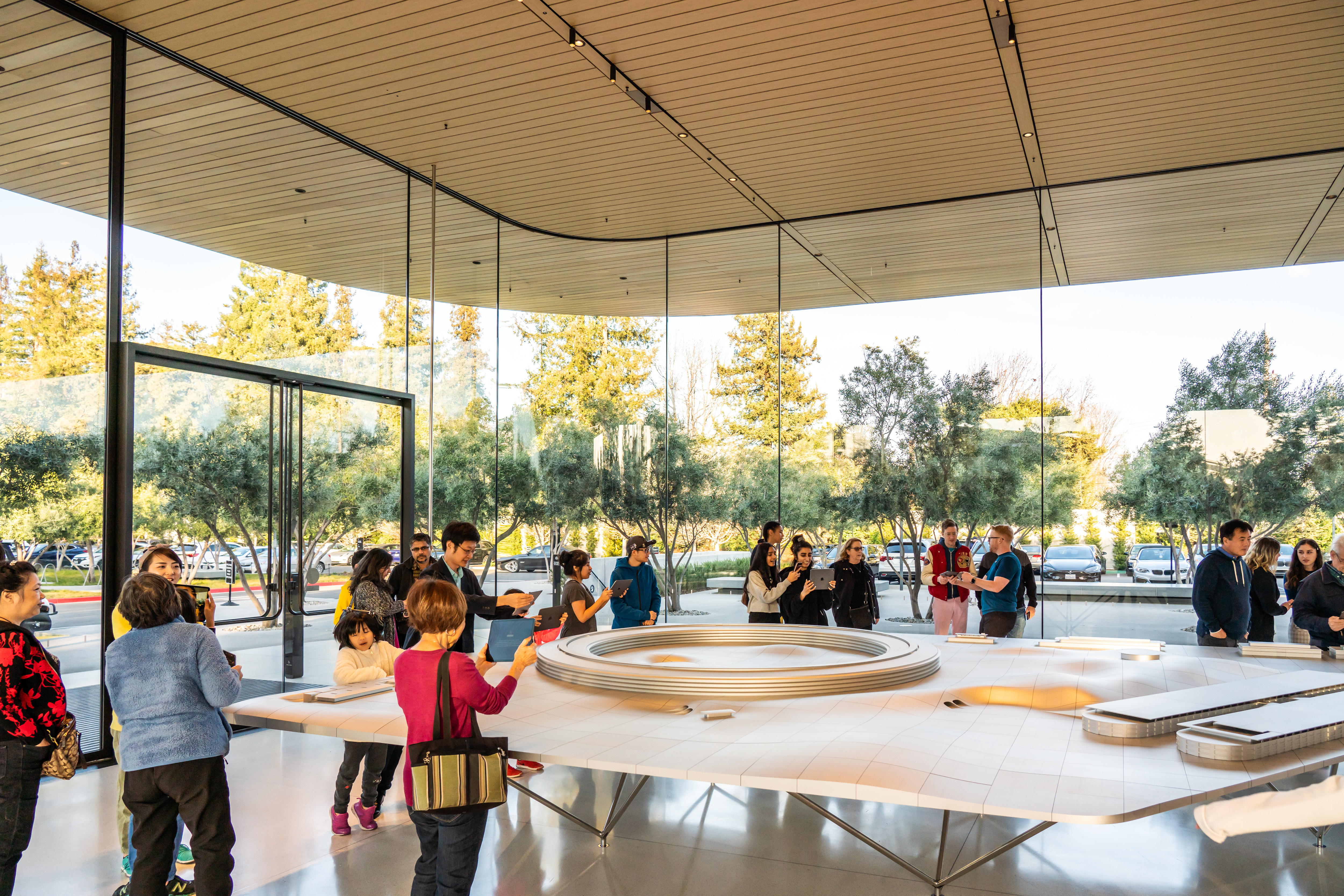
Apple has asked all of its US employees to share their vaccination status voluntarily. According to Bloomberg, the company recently sent out a memo requesting workers, whether they currently work out of an office or not, to share that information by September 17th. Apple reportedly plans to use the data it collects to inform its ongoing COVID-19 response.
Bloomberg reports the company told employees it would keep their vaccine status “confidential and secure” by aggregating the information but said that could change in the future. “It is possible your vaccination status may be used in an identifiable manner, along with other information about your general work environment such as your building location, if we determine or, if it is required that, this information is necessary in order to ensure a healthy and safe work environment,” Apple said in the memo, according to the outlet. It’s not clear what repercussions if any an employee will face if they do not provide their vaccination status by the deadline.
We’ve reached out to the company for comment.
Unlike Google, Apple currently does not require employees to be vaccinated before they can come to the office. Still, the company has started to nudge its workers in that direction more forcefully. For example, it recently began a campaign encouraging workers to get their shot.
The company’s request, and the admission that the information employees share with it may be used in an identifiable manner, come as Apple faces increasing scrutiny over how it handles the privacy of its workers. A recent report from The Verge detailed some of the company’s policies on that front. For instance, one such rule prohibits employees from wiping their work devices before returning them to the company. This latest policy may further fuel those concerns.
All products recommended by Engadget are selected by our editorial team, independent of our parent company. Some of our stories include affiliate links. If you buy something through one of these links, we may earn an affiliate commission.
The Pixel 6 is the first significant reinvention to Google’s smartphone series we’ve seen in years. It’s not just a design change, either — thanks to the new Tensor SoC, we’re hoping to see the company’s most powerful flagship device yet. Pixel phones are only one entry in Google’s ever-expanding lineup of hardware, of course. If you’ve been waiting to see a Chromebook powered by custom silicon, you might not have to wait too much longer.
According to a new report from Nikkei Asia (via 9to5Google), Google is developing CPUs for both Chromebooks and Chrome OS-powered tablets, currently slated for a 2023 launch. As you might expect, these processors are based on ARM rather than x86, just like this year’s Tensor SoC. Although Intel processors still power plenty of mainstream Chromebooks today, chips like Qualcomm’s Snapdragon 7c are slowly appearing in more devices.
Google’s move into working on its own custom processors for devices outside of smartphones is reportedly inspired by Apple’s switch to the M1 chip in last year’s MacBook lineup. Considering the praise heaped upon Apple for pulling off the seemingly impossible — especially on the first generation — probably played a role in these new plans as well.
Although we have yet to see Tensor in action, Google feels strong about the Pixel 6’s potential. Nikkei Asia also reports that the company asked suppliers to ready 50% more production capacity for its smartphones than in 2019. Considering that year was the company’s best on record for Pixel sales — 7 million devices, compared to just 3.7 million last year — it’s certainly an ambitious goal. As the only US-based manufacturer still making Android phones, Google sees a chance to hit it big in the global market.
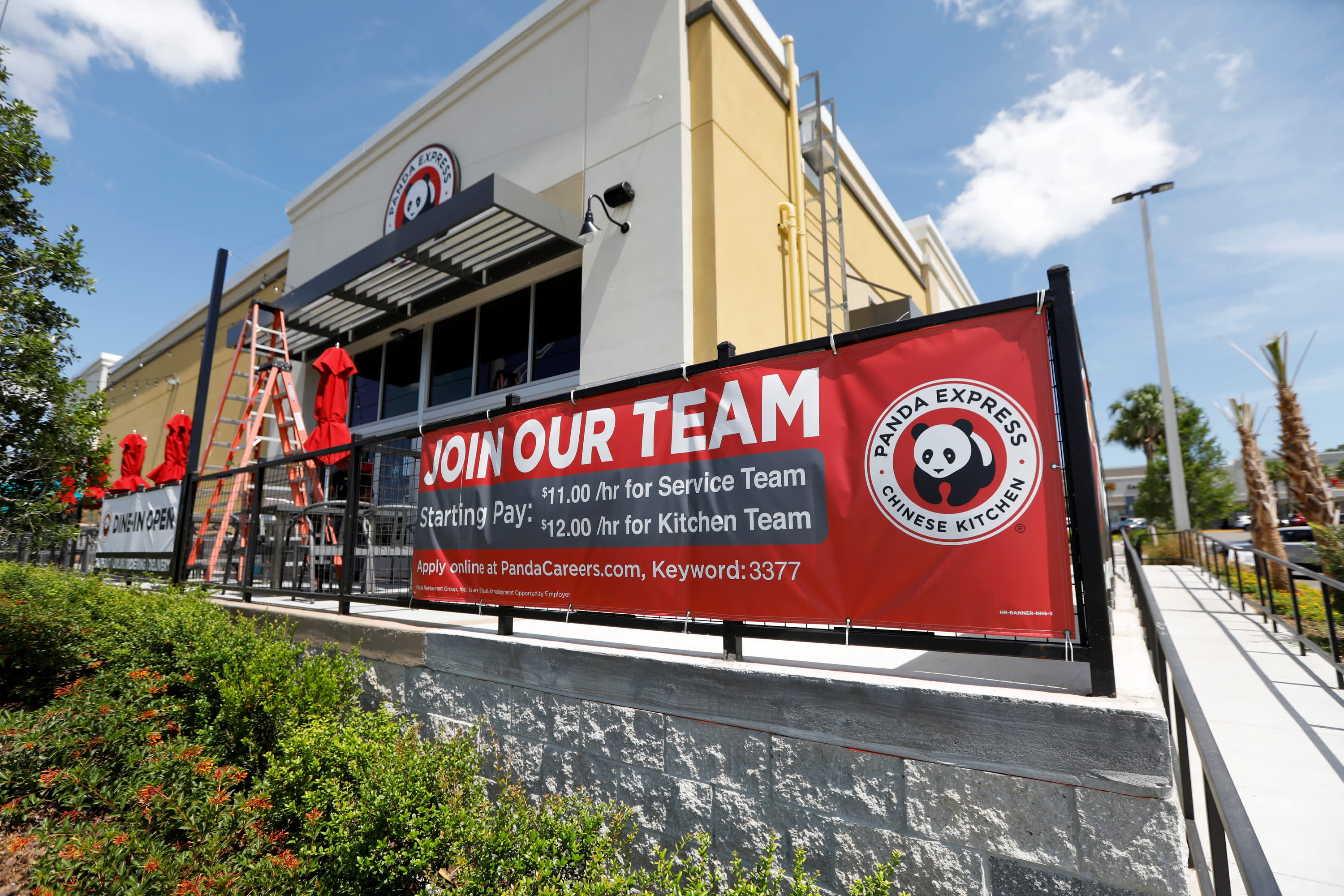
A Panda Express restaurant displays a “Now Hiring” sign in Tampa, Florida, June 1, 2021.
Octavio Jones | Reuters
U.S. companies created far fewer jobs than expected in August as the Covid resurgence coincided with cutbacks in hiring, according to a report Wednesday from payroll services firm ADP.
Private payrolls rose just 374,000 for the month, well below the Dow Jones estimate of 600,000 though above July’s 326,000, which was revised downward slightly from initial 330,000 reading.
Most of the new jobs came from leisure and hospitality, which added 201,000 positions in a somewhat hopeful sign that an industry beset by a labor shortage continues to recover.
Education and health services combined to add 59,000 for the month as hospitals in some parts of the country were swamped with virus cases and schools begin to reopen.
“The delta variant of COVID-19 appears to have dented the job market recovery,” said Mark Zandi, chief economist at Moody’s Analytics, which works with ADP on the report. “Job growth remains strong, but well off the pace of recent months. Job growth remains inextricably tied to the path of the pandemic.”
The apparent letdown comes at a pivotal time.
Following a robust recovery from the shortest but steepest recession in U.S. history, economic data of late has been disappointing, possibly reflecting pullbacks from this summer’s surge of the Covid delta variant. The U.S. has been averaging about 150,000 new cases a day following a burst in July and August.
Markets are awaiting Friday’s nonfarm payrolls report, which is expected to show 720,000 new jobs added and an unemployment rate falling to 5.2%, according to Dow Jones estimates.
Wall Street initially shrugged off the ADP report, with stock market futures still pointing to a higher open. However, major averages were mixed in late-morning trade and government bond yields were little changed.
Differences between job counts
The ADP numbers could be pointing to a softer Labor Department report, though the firm’s count has been an unreliable indicator in 2021.
ADP’s tally averaged a growth of 495,000 jobs per month through July; the Labor report showed an average increase of 617,000 during that period. The two reports also diverged sharply in July, with the official count at 943,000 compared with ADP’s 326,000.
Goldman Sachs said the ADP report “suggests potential downside” for Friday’s Bureau of Labor Statistics number. Goldman already is forecasting below-consensus payroll growth of 600,000.
According to ADP, the weakest job growth for August came in small businesses, which added just 86,000 positions. Companies with 50 to 499 employees led with 149,000, while big business contributed 138,000.
Elsewhere at the sector level, services accounted for 329,000 of the total, with professional and business services growing by 19,000 and trade, transportation and utilities adding 18,000.
Of the 45,000 goods-producing jobs, 30,000 came from construction, 9,000 from natural resources and mining and 6,000 from manufacturing.
Federal Reserve officials are watching the jobs numbers carefully.
Recent statements out of the central bank indicate that it likely will slow the pace of its monthly purchases of bonds so long as job growth continues apace. Officials have been largely optimistic about the employment picture, though they note that about 6 million fewer workers are holding jobs now than before the pandemic.
Become a smarter investor with CNBC Pro. Get stock picks, analyst calls, exclusive interviews and access to CNBC TV. Sign up to start a free trial today.
The balance between life and business is an interesting conundrum. There are articles, books, podcasts, and videos that talk about the need for work-life balance. The reality is that the balance has to be specific to your situation, and it’s a lifelong process to attain. Business leaders should be more focused on optimization strategies that […]
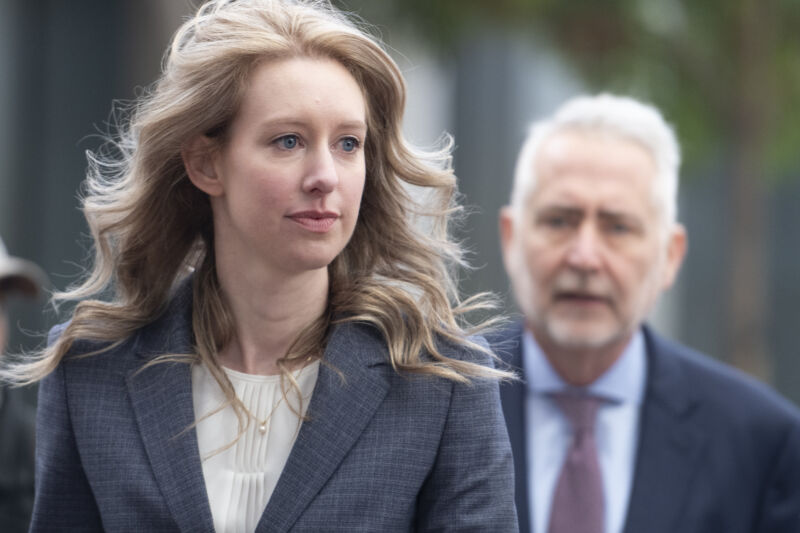
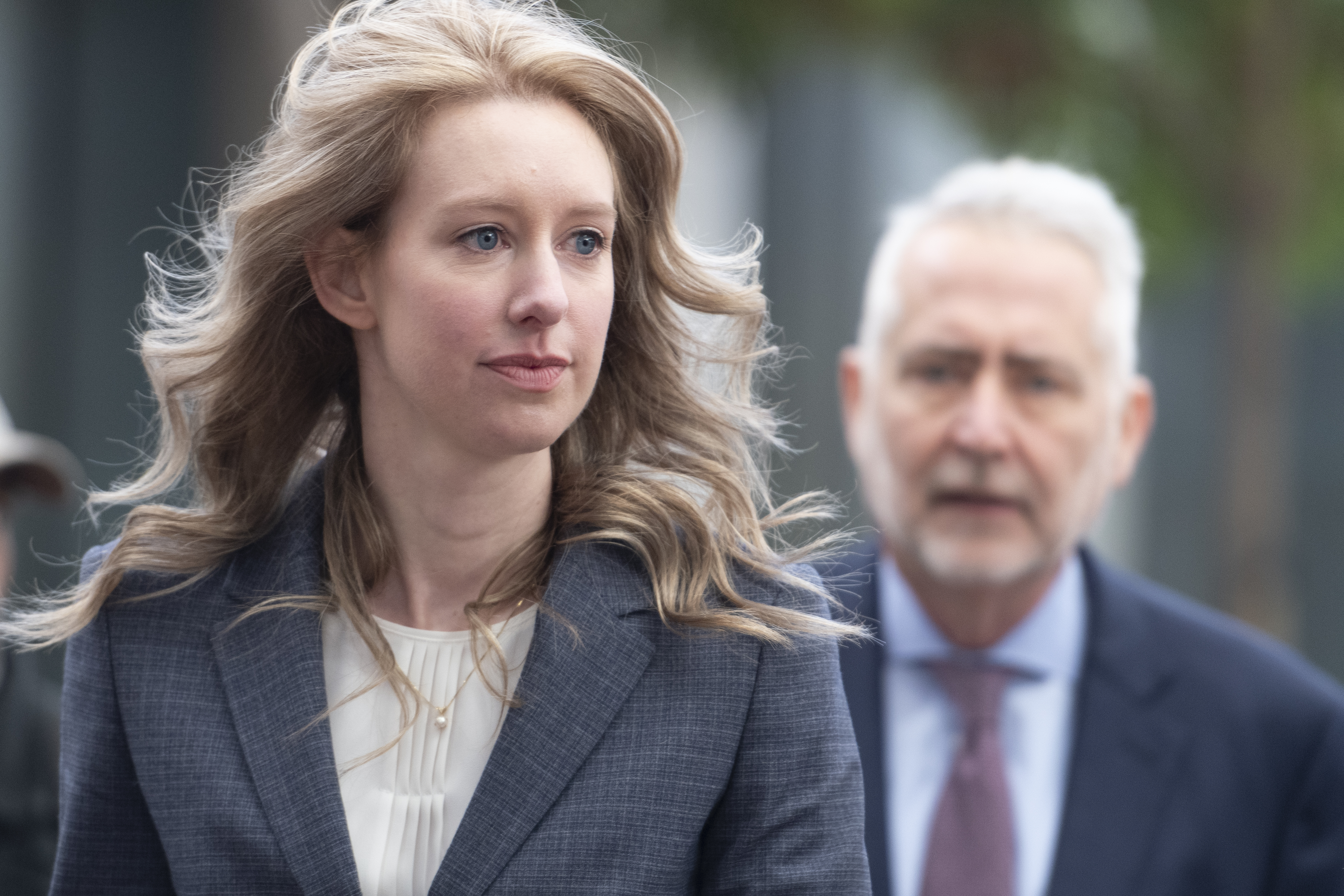
Enlarge/ Elizabeth Holmes, founder and former CEO of Theranos, arrives for motion hearing on Monday, November 4, 2019, at the US District Court House in San Jose, California.
Nearly a decade ago, Theranos touted a revolutionary diagnostic device that could run myriad medical tests without having to draw blood through a needle. Today, the startup’s founder, Elizabeth Holmes, goes to court, where she’s facing 12 criminal counts for statements she made to investors and consumers about her company’s technology.
Holmes founded Theranos in 2003 after dropping out of Stanford University at the age of 19. Driven by her phobia of needles, Holmes wanted to create diagnostic tests that use blood from finger pricks rather than from needles. The idea caught on, attracting well-connected board members like Henry Kissinger and James Mattis, drawing over $400 million in investments from wealthy investors including Larry Ellison and Rupert Murdoch, and securing lucrative partnerships with Walgreens and Safeway. At its peak, Theranos was worth over $9 billion.
But Theranos’ myth started unwinding in 2015 when a Wall Street Journal investigation revealed that the company had been performing most of its tests on traditional blood diagnostic machines rather than its own “Einstein” device. The company’s own employees doubted the machine’s accuracy.
Problematic claims
For many tests, blood from finger pricks is difficult to analyze. Small amounts of blood typically contain more variability than larger draws from veins, and a poorly executed stick might grab interstitial fluid along with the blood. Plus, finger-prick blood comes in contact with the skin, raising the chances of contamination that can confound the results. Yet Holmes and Ramesh “Sunny” Balwani, Theranos’ president and chief operating officer, painted a rosy picture for investors, partners, and customers.
“Theranos claimed that its laboratory infrastructure yielded test results in less time than conventional labs—requiring hours instead of days. Theranos claimed that its proprietary technology and methods would minimize the risk of human error and generate results with the highest accuracy,” the indictment says. Despite this, prosecutors have said, “Holmes and Balwani knew that the analyzer had accuracy and reliability problems, performed a limited number of tests, was slower than some competing devices, and, in some respects, could not compete with existing, more conventional machines.”
Holmes and Balwani were indicted in June 2018, and soon Theranos was facing mounting civil and criminal investigations. The company settled a Securities and Exchange Commission probe and shut down shortly thereafter.
The end of Theranos didn’t halt the scrutiny of Holmes’ and Balwani’s behavior, though. Three rounds of indictments have brought the total to 10 counts of wire fraud and two counts of conspiracy to commit wire fraud. The latest indictment, which supersedes the previous two, was filed in June 2020.
Both Holmes and Balwani have pleaded not guilty, and Balwani’s trial will begin next year.
The indictments aren’t limited to claims about the company’s proprietary diagnostic machine but also include what Holmes and Balwani allegedly said to investors about revenue and business deals. The prosecution says the pair told investors that Theranos would bring in over $100 million in revenue in 2014, helping the company break even, and hit $1 billion in 2015, amounts that exceeded the executives’ actual expectations. Prosecutors also say that the pair falsely told investors that the company landed contracts with the Pentagon.
Delayed trial
The road to trial has been filled with delays, first due to the COVID-19 pandemic and then again when Holmes became pregnant. Her child was born in July, around the time the trial was supposed to begin. If convicted, Holmes faces up to 20 years in prison.
Today’s proceedings kick off jury selection, in which prosecutors and defense attorneys will begin questioning over 100 potential jurors. The pool was already slashed last week, as Holmes’ attorney Kevin Downey told US District Judge Edward Davila of the Northern District of California that more than 30 jurors had “consumed substantial—and I mean lengthy, extrajudicial—material about the case and about the defendant.” In a pre-trial hearing, Downey also said that selected jurors must be vaccinated, while the prosecution wouldn’t commit to a stance on the issue.
Opening statements are scheduled to begin on September 8, and the trial may run through mid-December. Holmes is expected to claim that Balwani, who was her boyfriend for much of Theranos’ existence, was an abusive and controlling partner. A court filing released on Saturday revealed that Holmes is expected to take the stand during the trial and allege that he monitored her calls, texts, and emails and was physically violent, claims that Balwani denies. Her attorneys say these actions affected her “state of mind” when the alleged fraud took place.
We use cookies on our website to give you the most relevant experience by remembering your preferences and repeat visits. By clicking “Accept”, you consent to the use of ALL the cookies.
This website uses cookies to improve your experience while you navigate through the website. Out of these, the cookies that are categorized as necessary are stored on your browser as they are essential for the working of basic functionalities of the website. We also use third-party cookies that help us analyze and understand how you use this website. These cookies will be stored in your browser only with your consent. You also have the option to opt-out of these cookies. But opting out of some of these cookies may affect your browsing experience.
Necessary cookies are absolutely essential for the website to function properly. These cookies ensure basic functionalities and security features of the website, anonymously.
Cookie
Duration
Description
cookielawinfo-checkbox-analytics
11 months
This cookie is set by GDPR Cookie Consent plugin. The cookie is used to store the user consent for the cookies in the category "Analytics".
cookielawinfo-checkbox-functional
11 months
The cookie is set by GDPR cookie consent to record the user consent for the cookies in the category "Functional".
cookielawinfo-checkbox-necessary
11 months
This cookie is set by GDPR Cookie Consent plugin. The cookies is used to store the user consent for the cookies in the category "Necessary".
cookielawinfo-checkbox-others
11 months
This cookie is set by GDPR Cookie Consent plugin. The cookie is used to store the user consent for the cookies in the category "Other.
cookielawinfo-checkbox-performance
11 months
This cookie is set by GDPR Cookie Consent plugin. The cookie is used to store the user consent for the cookies in the category "Performance".
viewed_cookie_policy
11 months
The cookie is set by the GDPR Cookie Consent plugin and is used to store whether or not user has consented to the use of cookies. It does not store any personal data.
Functional cookies help to perform certain functionalities like sharing the content of the website on social media platforms, collect feedbacks, and other third-party features.
Performance cookies are used to understand and analyze the key performance indexes of the website which helps in delivering a better user experience for the visitors.
Analytical cookies are used to understand how visitors interact with the website. These cookies help provide information on metrics the number of visitors, bounce rate, traffic source, etc.
Advertisement cookies are used to provide visitors with relevant ads and marketing campaigns. These cookies track visitors across websites and collect information to provide customized ads.