A hiring sign is seen in a cafe as the U.S. Labor Department released its July employment report, in Manhattan, New York City, August 5, 2022.
Andrew Kelly | Reuters

Companies sharply slowed the pace of hiring in August amid growing fears of an economic slowdown, according to payroll processing company ADP.

Private payrolls grew by just 132,000 for the month, a deceleration from the 268,000 gain in July, the firm said in its monthly payroll report.

The Dow Jones estimate for the ADP count was 300,000.

“Our data suggests a shift toward a more conservative pace of hiring, possibly as companies try to decipher the economy’s conflicting signals,” said ADP’s chief economist, Nela Richardson. “We could be at an inflection point, from super-charged job gains to something more normal.”

August payroll numbers are notoriously volatile. ADP’s release also comes at an uncertain time for a U.S. economy which saw negative growth for the first half of 2022 amid the highest inflation the nation has seen since the early 1980s. The more closely watched nonfarm payrolls report from the Bureau of Labor Statistics comes out Friday and is expected to show an increase of 318,000.

The ADP report had been on public hiatus through the latter part of the summer as the firm adjusted methodology and entered into a partnership with the Stanford Digital Economy Lab.

While much of the changes are technical in nature, ADP’s count differs in how it accounts for issues such as weather and natural disasters. The company also differs from the BLS in that ADP’s count includes any employees active in the company, while the BLS measures only those who have been paid that month.

Richardson told media members that the revised approach “captures a new evolution in how we are viewing data at ADP. This is an independent estimate of private sector employment that leverages the full scale and breadth of ADP microdata based on the clients that we work with every single day.”

In addition to the changes in the way the jobs total is counted, ADP now is providing wage information. August’s numbers add to the inflation worries, as the firm reported annual pay up 7.6% for the month.

From a sector standpoint, services-related industries accounted for most of the jobs, with 110,000 added positions. Leisure and hospitality grew by 96,000 while seeing pay increases of 12.1%. Trade, transportation and utilities contributed 54,000.

However, several sectors saw decreases. They included financial activities (-20,000), education and health services (-15,000), and professional and business services (-14,000).

On the goods-producing side, construction added 21,000 and natural resources and mining saw a 2,000 gain. Manufacturing was flat.

From a business-size perspective, companies with 500 or more employees grew by 54,000. Medium-sized businesses added 53,000, while those with fewer than 50 employees saw a 25,000 gain.

Correction: The U.S. economy saw negative growth for the first half of 2022. An earlier version misstated the year.


Get CyberSEO Lite (https://www.cyberseo.net/cyberseo-lite) – a freeware full-text RSS article import plugin for WordPress.

Read More

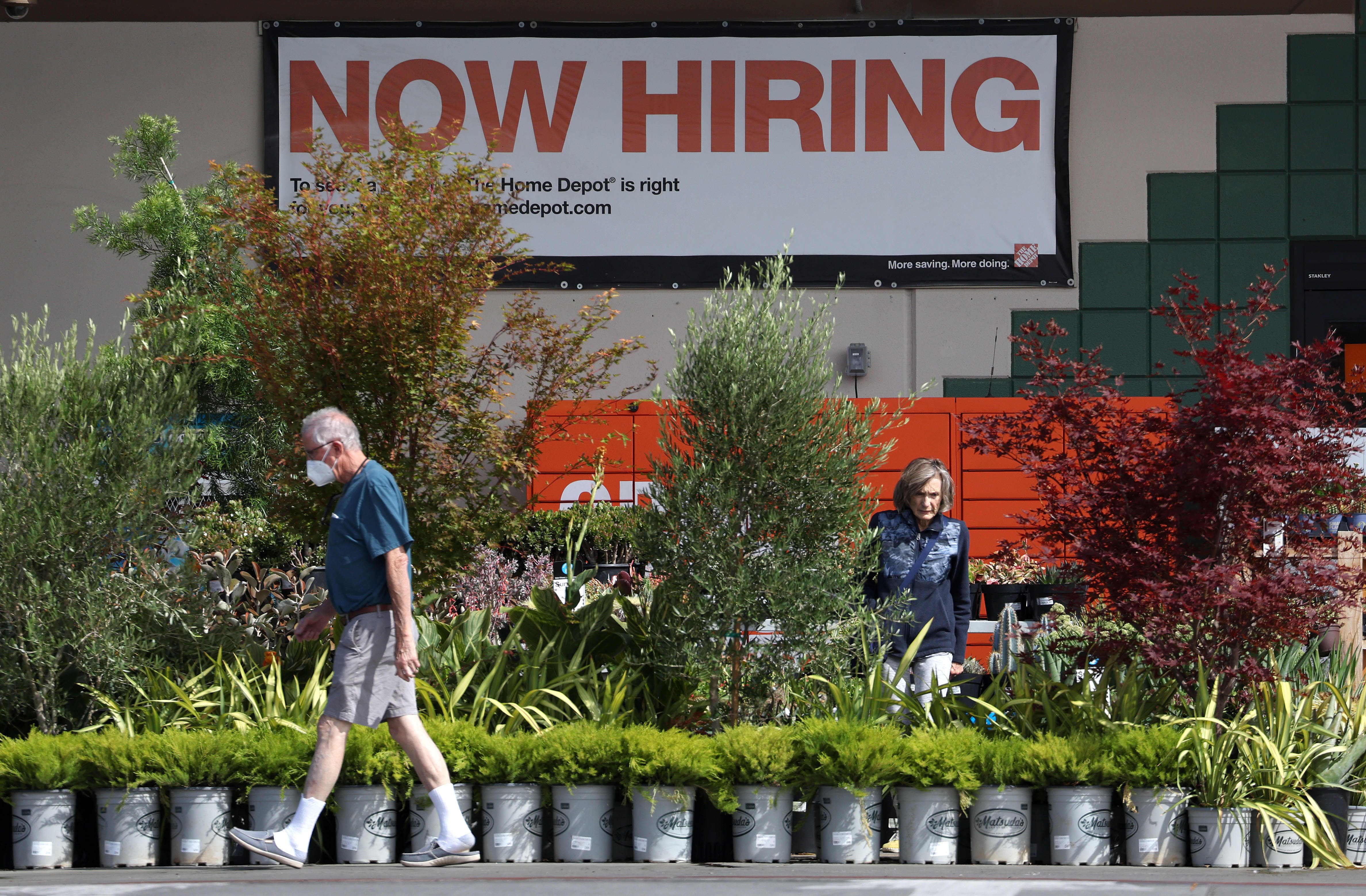
A “Now Hiring” sign is posted at a Home Depot store on August 05, 2022 in San Rafael, California.
Justin Sullivan | Getty Images

There were nearly 1 million more job openings than expected in July, an inflationary sign that the U.S. labor market is still extremely tight, the Bureau of Labor Statistics reported Tuesday.

Available positions totaled 11.24 million for the month, well in excess of the 10.3 million FactSet estimate, according to the Job Openings and Labor Turnover Survey. The total was about 200,000 higher than the 11.04 million in June, a number revised up from the initially reported 10.7 million.

Federal Reserve officials watch the JOLTS numbers closely for signs of slack in hiring.

The July numbers reinforced that there is still a considerable shortage of workers for available positions, with openings outnumbering available workers by just shy of a 2-to-1 margin. That, in turn, is inflationary as employers are forced to offer higher compensation to attract workers at a time when prices are rising near their fastest pace in more than 40 years.

Hiring declined during the month, falling to 6.38 million. Quits, a closely watched metric for worker confidence, also dropped, down to 4.18 million as those leaving their jobs as a percentage of the workforce declined one-tenth of a percentage point to 2.7%, still relatively high by historical standards.

Changing jobs has proven lucrative during the Covid era, with switchers seeing an average 6.7% annual wage growth rate, well ahead of the 4.9% rate of those who have stayed in their positions, according to the Atlanta Fed.

Total separations declined slightly in July to 5.93 million, as the rate edged lower to 3.9%. Layoffs and discharges were little changed at just under 1.4 million.

The JOLTS report comes three days ahead of the closely watched August nonfarm payrolls release Friday from the BLS. The Dow Jones estimate is for growth of 318,000, but the job openings numbers add potential upside to that count as companies continue to look to hire.

Fed Chairman Jerome Powell at last month’s meeting noted an “extremely tight labor market” in his remarks about the central bank’s efforts to bring down inflation.

Powell warned that ongoing hikes likely would result in “below-trend economic growth and some softening in labor market conditions.”

“But such outcomes are likely necessary to restore price stability and to set the stage for achieving maximum employment and stable prices over the longer run,” he added.

However, signs that hiring demand remains robust indicate that the rate increases may not be slowing growth as much as the Fed has hoped.

Traders upped their bets that the Fed will enact a third consecutive three-quarter point interest rate hike at its September meeting. The probability for that move over a half-point increase was 76.5% on Tuesday morning, according to CME Group data.

Get CyberSEO Lite (https://www.cyberseo.net/cyberseo-lite) – a freeware full-text RSS article import plugin for WordPress.

Read More