
Wholesale prices rose more than expected in September despite Federal Reserve efforts to control inflation, according to a report Wednesday from the Bureau of Labor Statistics.

The producer price index, a measure of prices that U.S. businesses get for the goods and services they produce, increased 0.4% for the month, compared with the Dow Jones estimate for a 0.2% gain. On a 12-month basis, PPI rose 8.5%, which was a slight deceleration from the 8.7% in August.

Excluding food, energy and trade services, the index increased 0.4% for the month and 5.6% from a year ago, the latter matching the August increase.

Food prices helped boost the increase in goods inflation, with a 1.2% monthly increase. Energy rose 0.7% after posting massive gains the previous two months.

Inflation has been the economy’s biggest issue over the past year as the cost of living is running near its highest level in more than 40 years.

The Fed has responded by raising rates five times this year for a total of 3 percentage points and is widely expected to implement a fourth consecutive 0.75 percentage point increase when it meets again in three weeks.

“Inflationary momentum has built up in the U.S. economy and will persist near-term, keeping the Fed hiking aggressively,” said Bill Adams, chief economist for Comerica Bank.

A worker installs the instrument cluster for the Ford Motor Co. battery powered F-150 Lightning trucks under production at their Rouge Electric Vehicle Center in Dearborn, Michigan on September 20, 2022.
Jeff Kowalsky | AFP | Getty Images

However, Wednesday’s data shows the Fed still has work to do. Indeed, Cleveland Fed President Loretta Mester on Tuesday said “there has been no progress on inflation.” Following the PPI release, traders priced in an 81.3% chance of a three-quarter point hike, the same as a day ago.

Stock market futures trimmed gains following the news, while Treasury yields were little changed on the session.

The PPI release comes a day ahead of the more closely watched consumer price index. The two differ in that PPI measures the prices received at the wholesale level while CPI gauges the prices that consumers pay.

Some two-thirds of the increase in PPI was attributed to a 0.4% gain in services, the BLS said. A big contributor to that increase was a 6.4% jump in prices received for traveler accommodation services.

Final demand goods prices also rose 0.4% on the month, pushed by a 15.7% advance in the index for fresh and dry vegetables.

Get CyberSEO Lite (https://www.cyberseo.net/cyberseo-lite) – a freeware full-text RSS article import plugin for WordPress.

Read More

A gasoline nozzle pumps gas into a vehicle in Los Angeles, California on August 23, 2022.
Frederic J. Brown | AFP | Getty Images

Inflation expectations and the outlook for household spending growth fell sharply in September as the Federal Reserve’s rate increases take hold in the U.S. economy.

Consumers expect the inflation rate a year from now to be 5.4%, the lowest number in a year and a decline from 5.75% in August, according to the latest New York Fed Survey of Consumer Expectations.

That level peaked at 6.8% in June and has been coming down since as the central bank has instituted a series of rate hikes totaling 3 percentage points. Markets largely expect the Fed to continue raising rates until it brings inflation down to its long-run target of 2%.

While the near-term outlook for inflation was improving, respondents also indicated that they see household spending growth of 6% for the next year, a steep fall from August’s 7.8% projection. That’s the lowest level since January and the biggest one-month decline ever in a data series going back to June 2013.

Consumers have been somewhat constrained by price increases moving near their fastest level in more than 40 years. Personal consumption expenditures in inflation-adjusted dollars rose just 0.1% in August while the rate of savings growth is declining, according to the Bureau of Economic Analysis.

Respondents did put a slightly higher number on their outlook for three-year inflation, moving that forecast to 2.9%, up 0.1 percentage point from August. Median five-year expectations rose to 2.2%, an increase of 0.2 percentage point but much closer to the Fed’s goal.

Elsewhere in the survey, respondents said they expect home prices to increase by just 2%, the lowest reading since June 2020 and reflective of a slowing real estate market. Consumers see gas prices rising by half a percentage point, and food to surge by 6.9%, a full percentage point increase from August’s survey.

The numbers come as the central bank is looking to arrest a cost-of-living surge pushed by Covid pandemic-related factors such as supply chain clogs. Unprecedented levels of fiscal and monetary stimulus also coincided with the inflation surge. The Fed has pulled back on its efforts, raising rates and beginning to reduce the size of the bond portfolio on its mammoth $8.8 trillion balance sheet.

Clarification: This story has been updated to clarify that the rate of savings growth is declining.

Get CyberSEO Lite (https://www.cyberseo.net/cyberseo-lite) – a freeware full-text RSS article import plugin for WordPress.

Read More

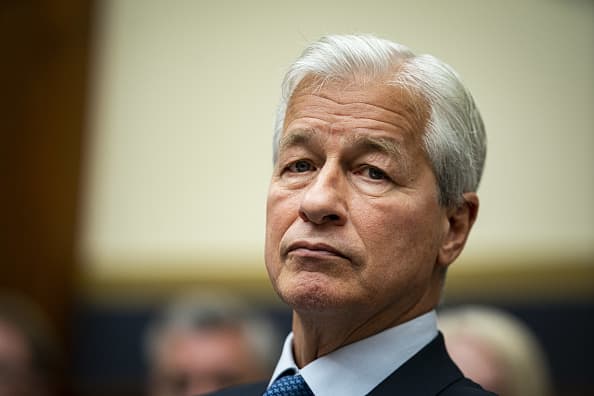
Dimon said in June that he was preparing the bank for an economic “hurricane” caused by the Federal Reserve and Russia’s war in Ukraine.
Al Drago | Bloomberg | Getty Images

JPMorgan Chase CEO Jamie Dimon said Monday that the U.S. should forge ahead in pumping more oil and gas to help alleviate the global energy crisis, likening the situation to a national security risk of war-level proportions.

Speaking to CNBC, Dimon dubbed the crisis “pretty predictable” — occurring as it has from Europe’s historic overdependence on Russian energy — and urged Western allies to support the U.S. in taking a lead role in international energy security.

“In my view, America should have been pumping more oil and gas and it should have been supported,” Dimon told CNBC’s Julianna Tatelbaum at the JPM Techstars conference in London.

“America needs to play a real leadership role. America is the swing producer, not Saudi Arabia. We should have gotten that right starting in March,” he continued, referring to the onset of the energy crisis following Russia’s invasion of Ukraine on Feb. 24.

Europe — once a major importer of Russian energy, relying on the country for up to 45% of its natural gas needs — has been at the forefront of that crisis; facing higher prices and dwindling supply as a result of sanctions levied against the Kremlin.

And while EU nations have hit targets to shore up gas supplies over the coming winter months, Dimon said leaders should now be looking ahead to future energy security concerns.

“We have a longer-term problem now, which is the world is not producing enough oil and gas to reduce coal, make the transition [to green energy], produce security for people,” he said.

This should be treated almost as a matter of war at this point, nothing short of that.
Jamie Dimon
CEO, JPMorgan Chase

“I would put it in the critical category. This should be treated almost as a matter of war at this point, nothing short of that,” he added.

‘It’s Pearl Harbor’

Referring to the war in Ukraine more broadly, Dimon dubbed it an attack of similar magnitude to that of Pearl Harbor or the invasion of Czechoslovakia in 1968.

“It’s Pearl Harbor, it’s Czechoslovakia, and it’s really an attack on the Western world,” he said.

However, the CEO said it also presented an opportunity for the West to “get its act together” and defend its values in the face of autocratic regimes.

“The autocratic world thinks that the Western world is a little lazy and incompetent — and there’s a little bit of truth to that,” said Dimon.

“This is the chance to get our act together and to solidify the Western, free, democratic, capitalist, free people, free movements, freedom of speech, free religion for the next century,” he continued.

“Because if we don’t get this one right, that kind of chaos you can see around the world for the next 50 years.”

Get CyberSEO Lite (https://www.cyberseo.net/cyberseo-lite) – a freeware full-text RSS article import plugin for WordPress.
Read More