
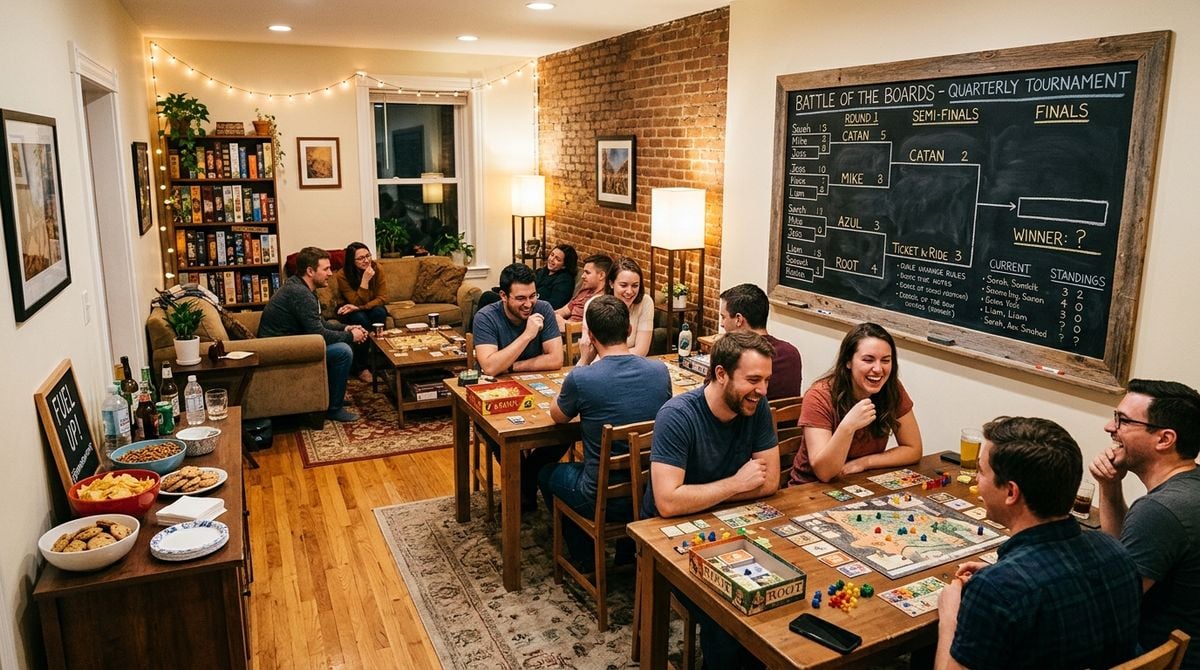
Team game nights can strengthen working relationships, lift morale and give colleagues a chance to know each other beyond their desks. They can also generate plenty of waste, from disposable cups and plates to games left broken in a cupboard after one busy evening. Planning with care keeps the fun intact while reducing materials, food packaging and unnecessary spending. The suggestions below are general ideas for managers who host these sessions in an office, a shared kitchen or a meeting room.
Choose Formats That Need Few Materials
The simplest games often create the most laughter. Quiz rounds, party-style word games and short card challenges need only a few props and can be run with a shared screen or a whiteboard. Formats that rely on paper scoring sheets can be replaced with a single digital sheet or a chalkboard that is wiped clean afterward. Keep the rules short so that people spend more time playing and less time reading instructions.
Readers may also want to visit rough-draft.net. Mix a quiet round with a lively one to suit different personalities. Offer a few games that work for people with limited mobility or hearing, so that everyone can join. A well-balanced programme reduces the need to buy new equipment for each event.
Care for Shared Game Collections
Many offices keep a small collection of board games, card decks and puzzles. Without a little care these items soon go missing, get damaged or end up incomplete. Store each game in a labeled box, check the pieces before and after each session and keep a simple list of contents on the lid. A missing counter can often be replaced with a coin or a cube from another set.
You can also visit Angelos Epoxy Flooring for more reading. Repairing a torn card with clear tape is usually better than discarding the whole deck. When a game is no longer used, offer it to a school or a community group rather than throwing it out. A well-kept collection lasts for many more sessions.
Serve Food Without Packaging Waste
Food is a large part of most team events, and packaging can quickly fill a bin. Ask guests to bring a reusable plate or cup if they can, and provide a small supply of washable items for those who forget. Serve snacks in shared bowls rather than individual packets. Plan quantities based on the number who replied, because uneaten food is one of the costliest forms of waste.
For a related read on this site, see Preparing a Leased Commercial Space for Its First. Keep a clearly labeled box for surplus food that can be taken home or donated. Ask one person to clear the tables at the end of the evening so that waste is sorted correctly. Sorting at the source makes recycling far more effective.
Keep Sessions Short and Focused
Long evenings can drain energy and encourage people to leave food and drink behind. A ninety-minute session with a clear start and finish often feels more satisfying than an open-ended event. Announce the timings in advance and stick to them, so that colleagues can plan their evening. Short sessions also reduce the need for heating, lighting and cleaning in the room.
Finish with a short group activity that brings everyone together. A quick round of thanks or a shared photograph on a screen can close the evening nicely. Encourage people to take their belongings with them and to return borrowed equipment before leaving. A tidy finish makes the next event easier to organize.
Gather Feedback After Each Evening
Feedback helps the next event improve without extra cost. Ask participants which games they enjoyed, which felt too long and which could be improved with a little change. A short form or a quick chat at the door is enough. Keep notes in a shared folder so that future organizers can build on what worked well.
Feedback should also cover waste. Ask whether the food quantities were right, whether the packaging could be reduced and whether the room was left in good order. Small adjustments made after each session steadily reduce the amount of waste produced. Over several events the process becomes second nature.
Playful Habits Make Thrift Feel Natural
Affordable and waste-free game nights do not need to feel restrictive. Choosing simple formats, caring for shared games, serving food thoughtfully, keeping sessions focused and listening to feedback all help a team enjoy itself while using fewer resources. The habits become easier with each event, and colleagues often appreciate the thought behind them. A relaxed evening that leaves little behind is a good sign of a well-run team.