
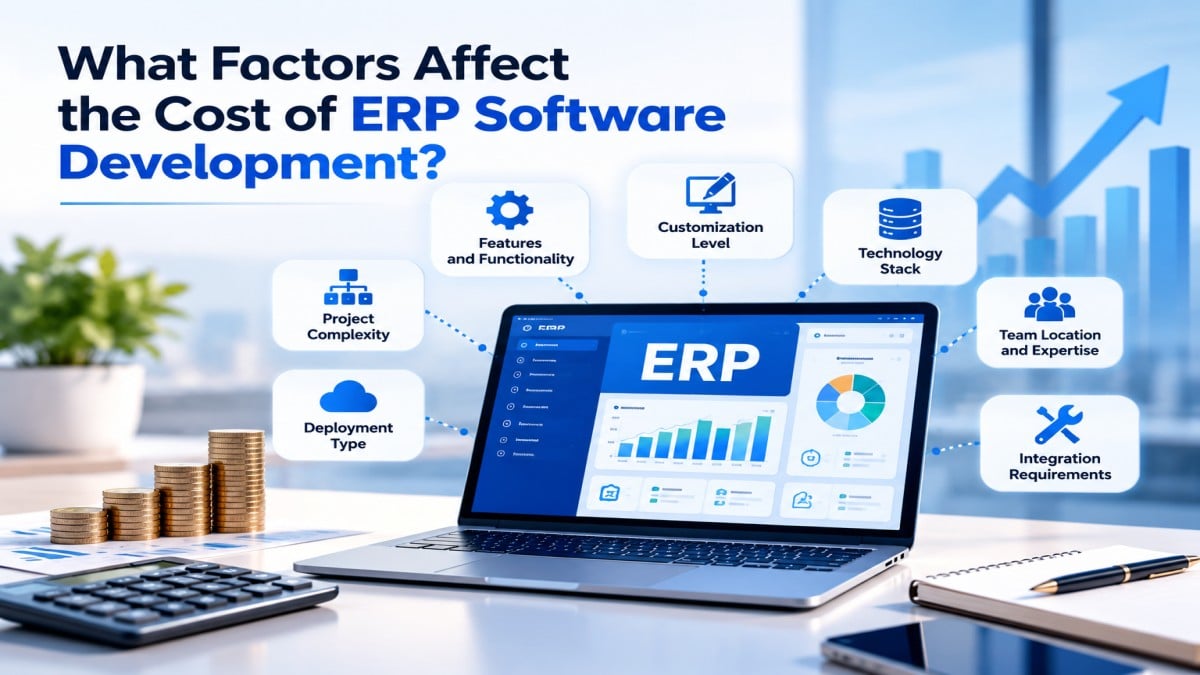
Investing in ERP software can help businesses manage their daily operations more efficiently. From accounting and inventory to sales, purchasing, and employee management, an ERP system brings important business activities together on one platform.
However, the cost of developing ERP software can vary significantly depending on the company’s requirements. A basic system with a few essential modules will generally require a different investment compared to a complex platform with multiple integrations and advanced automation.
For businesses considering ERP development in Singapore, understanding the factors that influence development costs can help with better budgeting and project planning.
1. Business Requirements and Project Complexity
The first factor affecting ERP development costs is the complexity of business operations.
Every organisation has different workflows, reporting requirements, and management processes. A small trading company may need inventory and accounting features, while a manufacturing business may require production planning, material tracking, and quality management.
The more complex the requirements, the more time developers may need for planning, designing, and building the system.
A detailed requirement analysis helps establish the project scope before development begins.
2. Number of ERP Modules
ERP software consists of different modules that support specific business activities. The number and complexity of selected modules directly influence development expenses.
Common ERP modules include:
- Finance and Accounting: Invoices, payments, expenses, and financial reports.
- Inventory Management: Stock tracking, warehouse operations, and product records.
- Sales Management: Quotations, customer orders, and sales activities.
- Purchase Management: Supplier records, procurement, and purchase orders.
- Human Resource Management: Employee information, attendance, and leave management.
- Manufacturing Management: Production schedules, material requirements, and workflow monitoring.
Businesses that require several specialised modules should plan for additional development and testing efforts.
3. Customisation Requirements
Some companies can operate with standard ERP features, while others require specialised functionality.
Customisation may include unique approval processes, industry-specific workflows, automated calculations, custom dashboards, or specialised reporting tools.
For example, a distribution company may need advanced warehouse tracking, while a manufacturing organisation may require multi-level bill of materials management.
These additional requirements can increase development time and overall project costs.
4. Third-Party Software Integration
Many businesses already use applications for accounting, payment processing, customer management, and online sales.
Connecting these applications with a new ERP platform requires integration planning and development.
Depending on the available APIs and system architecture, developers may need to build data synchronisation processes, integration controls, and error-handling mechanisms.
The number and complexity of integrations can therefore influence the overall development budget.
5. User Interface and Technology Selection
The design and technology used to build ERP software also affect project expenses.
A simple interface with standard dashboards requires less design effort than a highly customised platform with complex visual reports and interactive features.
Technology selection also depends on performance requirements, hosting preferences, security needs, and future scalability.
Choosing suitable technologies during the planning stage helps avoid unnecessary development complications.
6. Data Migration and System Testing
Moving information from existing applications into a new ERP system requires careful preparation.
Businesses may have years of customer records, financial transactions, product information, and supplier details that need to be transferred.
Developers must review data quality, remove inconsistencies, map existing records, and verify migrated information.
Testing is another important expense. Functional testing, integration testing, performance checks, and security assessments help ensure that the software works as expected.
7. Maintenance and Technical Support
ERP development costs do not end when the software is launched.
Businesses should also consider ongoing expenses such as hosting, system monitoring, technical support, security updates, bug fixes, and feature improvements.
A maintenance plan helps keep the platform reliable as business requirements and technology environments change.
How Businesses Can Manage ERP Development Costs
Companies can control development expenses by following a structured approach:
- Identify essential business requirements before development.
- Prioritise important modules instead of building everything at once.
- Select technologies that support future expansion.
- Review integration requirements early.
- Establish a realistic project budget and timeline.
- Include maintenance and support in long-term planning.
Starting with essential features and expanding gradually can make ERP investment easier to manage.
Conclusion
The cost of ERP software development depends on several factors, including business complexity, module selection, customisation, integrations, technology choices, and ongoing maintenance.
For companies exploring ERP development in Singapore, understanding these elements makes it easier to compare development proposals and choose an appropriate solution.
SerpentCS helps businesses explore ERP development solutions based on their operational requirements and technology goals. With proper planning and the right development approach, organisations can invest in an ERP platform that supports efficient operations and long-term business growth.

