

Film scoring is the process of composing music for films, based on the script and director’s vision, and includes writing original songs, arranging existing songs,
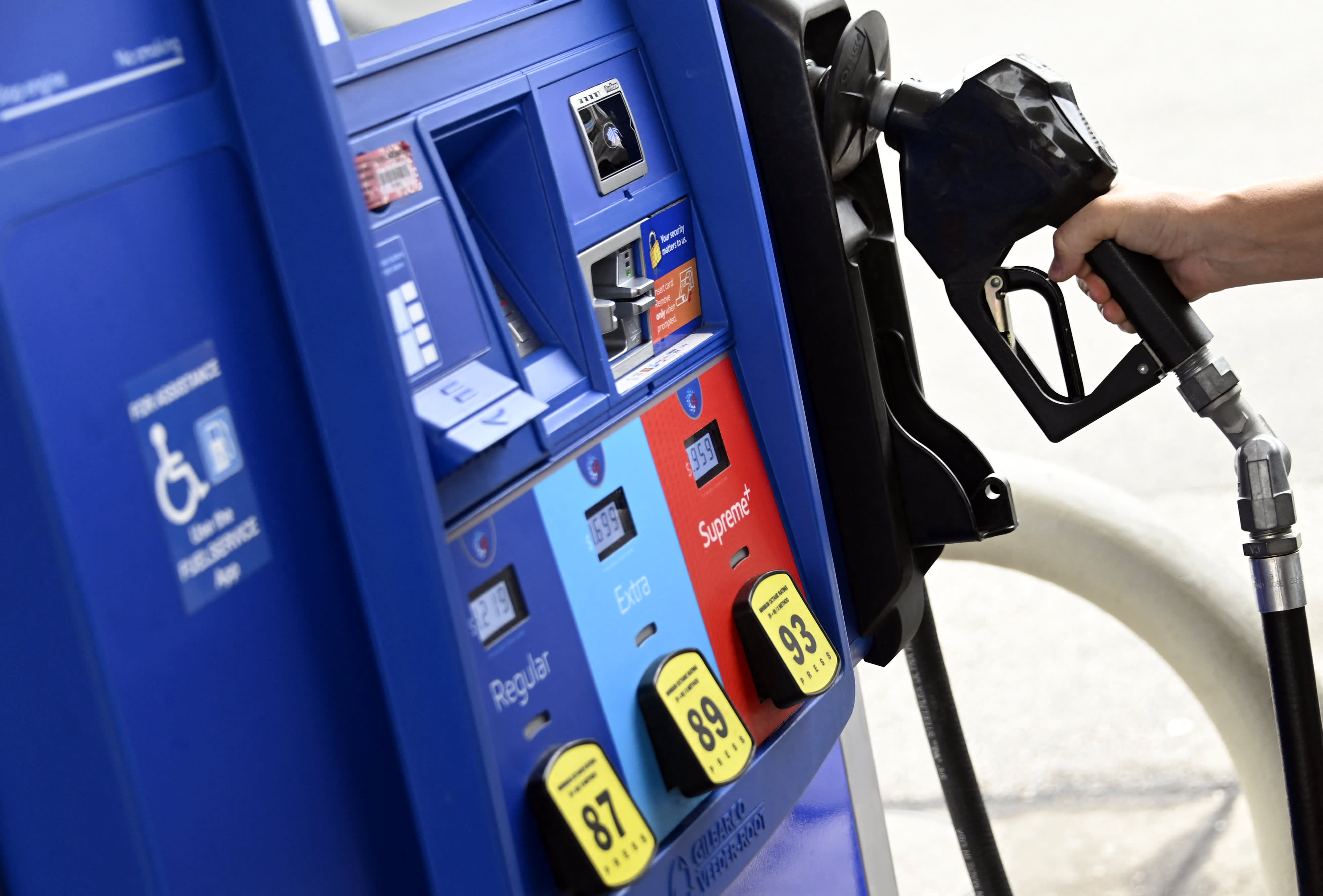
A person removes the nozel from a pump at a gas station on July 29, 2022 in Arlington, Virginia.
Olivier Douliery | AFP | Getty Images
You’d be hard-pressed now to find a recession in the rearview mirror. What’s down the road, though, is another story.
There is no historical precedent to indicate that an economy in recession can produce 528,000 jobs in a month, as the U.S. did during July. A 3.5% unemployment rate, tied for the lowest since 1969, is not consistent with contraction.
But that doesn’t mean there isn’t a recession ahead, and, ironically enough, it is the labor market’s phenomenal resiliency that could pose the broader economy’s biggest long-run danger. The Federal Reserve is trying to ease pressures on a historically tight jobs situation and its rapid wage gains in an effort to control inflation running at its highest level in more than 40 years.
“The fact of the matter is this gives the Fed additional room to continue to tighten, even if it raises the probability of pushing the economy into recession,” said Jim Baird, chief investment officer at Plante Moran Financial Advisors. “It’s not going to be an easy task to continue to tighten without negative repercussions for the consumer and the economy.”
Indeed, following the robust job numbers, which included a 5.2% 12-month gain for average hourly earnings, traders accelerated their bets on a more aggressive Fed. As of Friday afternoon, markets were assigning about a 69% chance of the central bank enacting its third straight 0.75 percentage point interest rate hike when it meets again in September, according to CME Group data.
So while President Joe Biden celebrated the big jobs number on Friday, a much more unpleasant data point could be on the way next week. The consumer price index, the most widely followed inflation measure, comes out Wednesday, and it’s expected to show continued upward pressure even with a sharp drop in gasoline prices in July.
That will complicate the central bank’s balancing act of using rate increases to temper inflation without tipping the economy into recession. As Rick Rieder, chief investment officer of global fixed income at asset management giant BlackRock, said, the challenge is “how to execute a ‘soft landing’ when the economy is coming in hot, and is landing on a runway it has never used before.”
“Today’s print, coming in much stronger than anticipated, complicates the job of a Federal Reserve that seeks to engineer a more temperate employment environment, in keeping with its attempts to moderate current levels of inflation,” Rieder said in a client note. “The question though now is how much longer (and higher) will rates have to go before inflation can be brought under control?”
More recession signs
Financial markets were betting against the Fed in other ways.
The 2-year Treasury note yield exceeded that of the 10-year note by the highest margin in about 22 years Friday afternoon. That phenomenon, known as an inverted yield curve, has been a telltale recession sign particularly when it goes on for an extended period of time. In the present case, the inversion has been in place since early July.
But that doesn’t mean a recession is imminent, only that one is likely over the next year or two. While that means the central bank has some time on its side, it also could mean it won’t have the luxury of slow hikes but rather will have to continue to move quickly — a situation that policymakers had hoped to avoid.
“This is certainly not my base case, but I think that we may start to hear some chatter of an inter-meeting hike, but only if the next batch of inflation reports is hot,” said Liz Ann Sonders, chief investment strategist at Charles Schwab.
Sonders called the current situation “a unique cycle” in which demand is shifting back to services from goods and posing multiple challenges to the economy, making the debate over whether the U.S. is in a recession less important than what is ahead.
That’s a widely shared view from economists, who fear the toughest part of the journey is still to come.
“While economic output contracted for two consecutive quarters in the first half of 2022, a strong labor market means that currently we are likely not in recession,” said Frank Steemers, senior economist at The Conference Board. “However, economic activity is expected to further cool towards the end of the year and it is increasingly likely that the U.S. economy will fall into recession before year end or in early 2023.”
Get CyberSEO Lite (https://www.cyberseo.net/cyberseo-lite) – a freeware full-text RSS article import plugin for WordPress.
Creating a customer-friendly and quality website is not only one of the fundamentals of creating a business, but it also helps foster a sense of ownership, loyalty, trust, and reliability.
The post A Good Website Needs To Have These 6 Essential Things appeared first on Enterprise Podcast Network – EPN.
“Metaphor can create a merciful sense of distance from the cruel idea, or the unspeakable truth, and allow it to exist within us as a kind of poetic radiance, as a work of art.”
We live in a world where people start hustling from a very young age. It’s common and should be encouraged by parents because it allows teens to become financially strong and independent and make good money decisions in the long run. Out of all the commonly known teenage-appropriate hustle or after-school jobs, babysitting is an […]
The post 11 Babysitting Jobs For 13-Year-Olds That Pay Handsomely appeared first on Entrepreneurship Life.

“The most confused we ever get is when we try to convince our heads of something that we know in our hearts is a lie.” ~Karen Moning
It’s painful and stressful to feel like you’re living a lie. Like you’re …
The post 10 Signs You’re Being True to Yourself appeared first on Tiny Buddha.
“A caterpillar sees itself shrivel up, but doesn’t see the butterfly which flies out of it.”

National Guard troops pose for photographers on the East Front of the U.S. Capitol the day after the House of Representatives voted to impeach President Donald Trump for the second time January 14, 2021 in Washington, DC.
Chip Somodevilla | Getty Images
In an earnings call this week, Yum Brands CEO David Gibbs expressed the confusion many people are feeling as they try to figure out what’s going on with the U.S. economy right now:
“This is truly one of the most complex environments we’ve ever seen in our industry to operate in. Because we’re not just dealing with economic issues like inflation and lapping stimulus and things like that. But also the social issues of people returning to mobility after lockdown, working from home and just the change in consumer patterns.”
Three months earlier, during the company’s prior call with analysts, Gibbs said economists who call this a “K-shaped recovery,” where high-income consumers are doing fine while lower-income householders struggle, are oversimplifying the situation.
“I don’t know in my career we’ve seen a more complex environment to analyze consumer behavior than what we’re dealing with right now,” he said in May, citing inflation, rising wages and federal stimulus spending that’s still stoking the economy.
At the same time, societal issues like the post-Covid reopening and Russia’s war in Ukraine are weighing on consumer sentiment, which all “makes for a pretty complex environment to figure out how to analyze it and market to consumers,” Gibbs said.
Gibbs is right. Things are very strange. Is a recession coming or not?
There is ample evidence for the “yes” camp.
Tech and finance are bracing for a downturn with hiring slowdowns and job cuts and pleas for more efficiency from workers. The stock market has been on a nine-month slump with the tech-heavy Nasdaq off more than 20% from its November peak and many high-flying tech stocks down 60% or more.
Inflation is causing consumers to spend less on nonessential purchases like clothing so they can afford gas and food. The U.S. economy has contracted for two straight quarters.
San Francisco’s cable cars return to service after COVID-19 shutdown in San Francisco, California, United States on September 21, 2021.
Anibal Martel | Anadolu Agency | Getty Images
Downtown San Francisco doesn’t quite have the ghost town feel it did in February, but still has vast stretches of empty storefronts, few commuters and record-high commercial real estate vacancies, which is also the case in New York (although Manhattan feels a lot more like it’s back to its pre-pandemic hustle).
Then again:
The travel and hospitality industries can’t find enough workers. Travel is back to nearly 2019 levels, although it seems to be cooling as the summer wanes. Delays are common as airlines can’t find enough pilots and there aren’t enough rental cars to satisfy demand.
Restaurants are facing a dire worker shortage. The labor movement is having its biggest year in decades as retail workers at Starbucks and warehouse laborers at Amazon try to use their leverage to extract concessions from their employers. Reddit is filled with threads about people quitting low-paying jobs and abusive employers to … do something else, although it’s not always exactly clear what.
A shrinking economy typically doesn’t come with high inflation and a red-hot labor market.
Here’s my theory as to what’s going on.
The pandemic shock turned 2020 into an epoch-changing year. And much like the 9/11 terrorist attacks in 2001, the full economic and societal effects won’t be understood for years.
Americans experienced the deaths of family members and friends, long-term isolation, job changes and losses, lingering illness, urban crime and property destruction, natural disasters, a presidential election that much of the losing party refuses to accept, and an invasion of Congress by an angry mob, all in under a year.
A lot of people are dealing with that trauma — and the growing suspicion that the future holds more bad news — by ignoring propriety, ignoring societal expectations and even ignoring the harsh realities of their own financial situations. They’re instead seizing the moment and following their whims.
Consumers aren’t acting rationally, and economists can’t make sense of their behavior. It’s not surprising that the CEO of Yum Brands, which owns Taco Bell, KFC and Pizza Hut, can’t either.
Call it the great unrest.
How might that manifest itself? In a decade, how will we look back at the 2020s?
Perhaps:
- Older workers will continue to leave the workforce as soon as they can afford it, spending less over the long term to maintain their independence, and stitching together freelance or part-time work as needed. The labor market will remain tilted toward workers.
- Workers in lower-paying jobs will demand more dignity and higher wages from their employers, and be more willing to switch jobs or quit cold if they don’t get them.
- People will move more for lifestyle and personal reasons rather than to chase jobs. Overstressed workers will continue to flee urban environments for the suburbs and countryside, and exurbs one-to-three hours’ drive from major cities will see an upswing in property values and an influx of residents. Dedicated urban dwellers will find reasons to switch cities, creating more churn and reducing community bonds.
- The last vestiges of employee loyalty will disappear as more people seek fulfillment ahead of pay. As one tech worker who quit her job at Expedia to work for solar tech company Sunrun recently put it, “You just realize there’s a little bit more to life than maxing out your comp package.”
- Employees who proved they could do their jobs remotely will resist coming back to the office, forcing employers to make hybrid workplaces the norm. Spending patterns will change permanently, with businesses catering to commuters and urban workers continuing to struggle.
- Those with disposable income will vigorously spend it on experiences — travel, restaurants, bars, hotels, live music, outdoor living, extreme sports — while curbing the purchase of high-end material goods and in-home entertainment, including broadband internet access and streaming media services. The pandemic was a time to hunker down and upgrade the nest. Now that we’ve got all the furniture and Pelotons we need, it’s time to go out and have fun.
It’s possible that this summer will be the capstone to this period of uncertainty and consumers will suddenly stop spending this fall, sending the U.S. into a recession. Further “black swan” events like wars, natural disasters, a worsening or new pandemic, or more widespread political unrest could similarly squash any signs of life in the economy.
Even so, some of the behavioral and societal shifts that happened during the pandemic will turn out to be permanent.
These signals should become clearer in earnings reports as we move further from the year-ago comparisons with the pandemic-lockdown era, and as interest rates stabilize. Then, we’ll find out which businesses and economic sectors are truly resilient as we enter this new era.
WATCH: Jim Cramer explains why he believes inflation is coming down
Get CyberSEO Lite (https://www.cyberseo.net/cyberseo-lite) – a freeware full-text RSS article import plugin for WordPress.
Check out the best Chrome extensions to make your web search on the internet quicker and better. We’ve put together everything you need to know about surfing the web like a professional!
The post 17 Best Chrome Extensions for Quick Search on The Internet appeared first on Entrepreneurship Life.
The SQL server is extremely effective at storing all the databases properly. But sometimes the SQL server itself goes through complications that need to be fixed as soon as possible. When the users don’t shut down the SQL server database properly, the SQL server enters a crash recovery mode so that the system can ensure […]
The post How Can You Debug SQL Server in Recovery Mode appeared first on Entrepreneurship Life.